




Why Are Shipping Containers So Strong?
Shipping containers are strong because they are engineered as a steel-frame system, not just a metal box. Their corner structures distribute stress, allowing them to endure stacking, wind, and cargo weight safely.
TRUSUS structural insight: container strength comes from system logic, not from thickness alone.
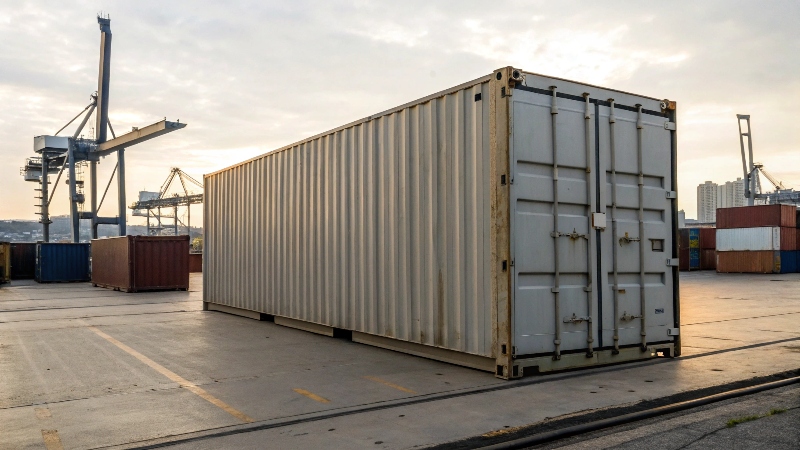
Each container is built from Corten steel plates welded to reinforced corner posts and top rails. These elements form a rigid skeleton that keeps its shape even under tons of pressure at sea or in large stack formations.
Strength Design Framework
| Component | Material | Function | Contribution |
|---|---|---|---|
| Corner Castings | Cast steel | Load transfer | Vertical stacking |
| Side Walls | Corrugated Corten steel | Flex absorption | Torsion resistance |
| Roof & Floor | Cross-frame structure | Support & stiffness | Dynamic balance |
| Door System | Reinforced frame | Access and sealing | Impact protection |
It’s this balanced geometry and material science that make containers survive ocean storms and constant lifting cycles.
Why Are Shipping Containers So Heavy?
Containers are heavy because weight equals stability and safety. A standard 20-foot container weighs about 2 tons due to its robust steel frame.
TRUSUS engineering insight: the heaviness is not excess—it’s controlled safety mass.
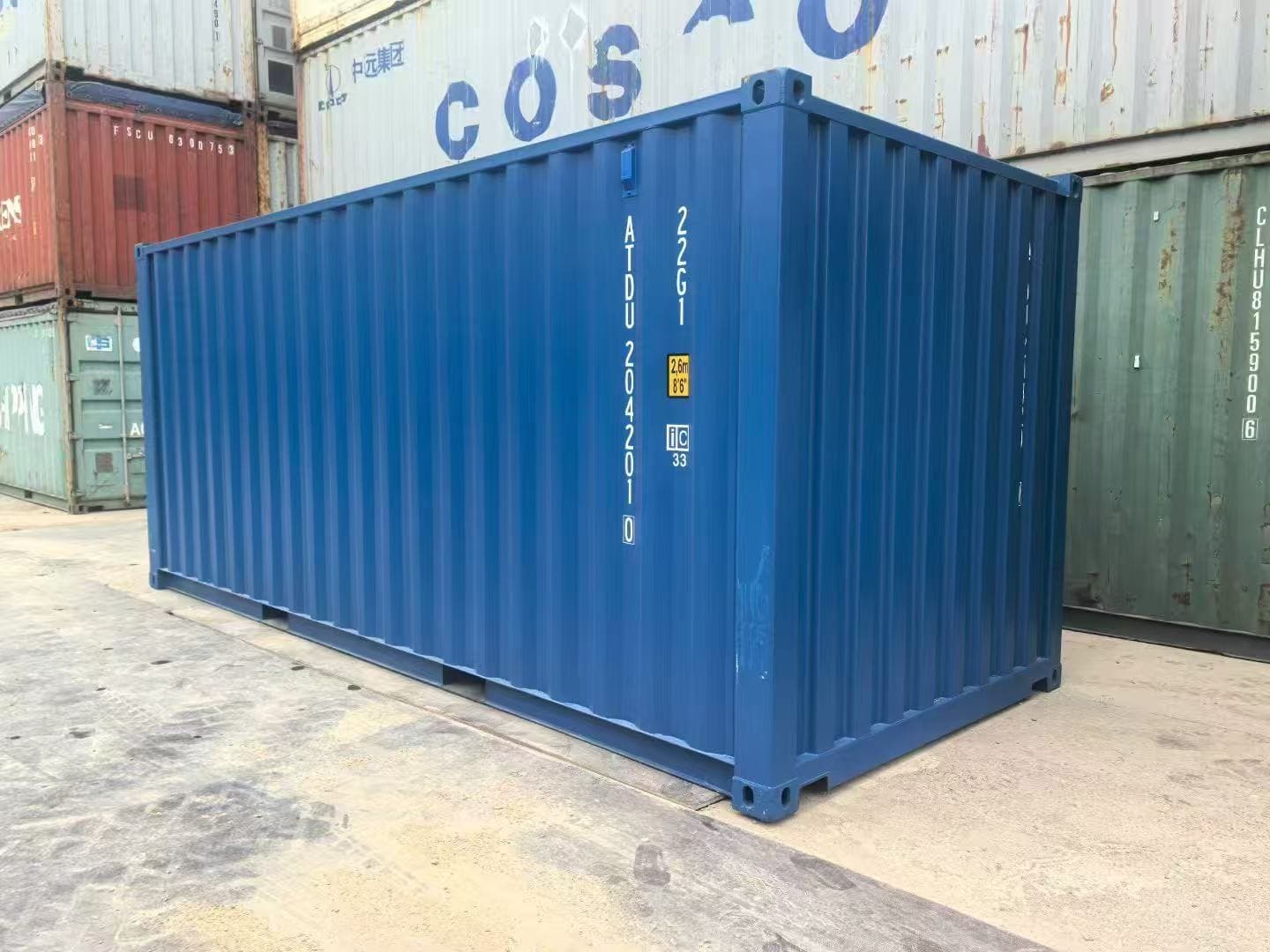
Weight Reasoning Table
| Feature | Explanation | Purpose |
|---|---|---|
| Steel Density | Corten steel has high tensile strength | Prevents deformation |
| Structural Redundancy | Extra ribs and joints | Distributes long-term stress |
| Low Center of Gravity | Mass toward base | Keeps container stable during motion |
| Marine Safety Rule | Must resist wind, wave, and crane swing | Security in transport |
The weight ensures that containers stay stable when stacked high or lifted by cranes, resisting the sway caused by wind or the sea.
How Do Shipping Containers Not Fall Over?
Shipping containers stay upright due to their corner-locking system and center-of-gravity alignment. They interlock vertically through twist locks, forming a single, unified stack structure.
TRUSUS stability insight: containers don’t resist alone—each connects to others through engineered geometry.
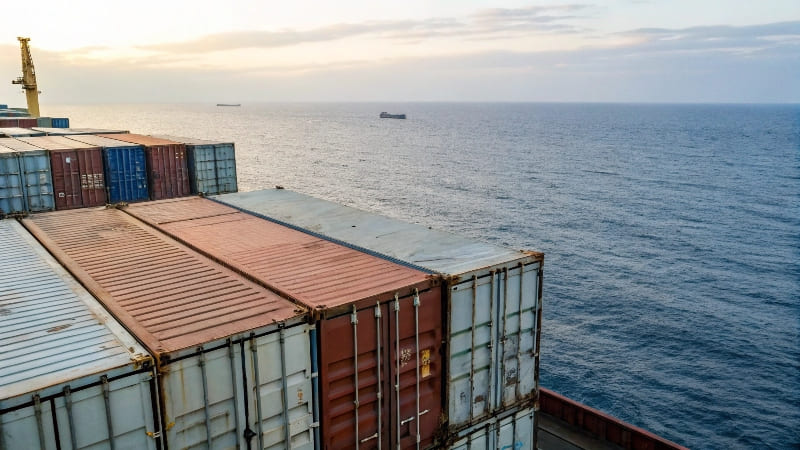
Anti-Tipping Structure
| Stability Factor | Description | Effect |
|---|---|---|
| Corner Castings | Locked with twist systems | Prevents slide or tilt |
| Stack Symmetry | Weight centered | Maintains alignment |
| Ship Cell Guides | Rails in vessel hold | Channel vertical stacking |
| Gravitational Design | Low balance point | Resists roll during swell |
The design allows hundreds of containers to stack safely on deck, sharing stress through their vertical posts instead of side walls.
Is It Possible for a Shipping Container to Float?
Yes, an empty container can float temporarily because its air-filled interior creates buoyancy. But it’s not built as a permanent floating device, and heavy damage or water entry will sink it.
TRUSUS maritime insight: it floats not by intent, but by engineered coincidence of airtight volume.
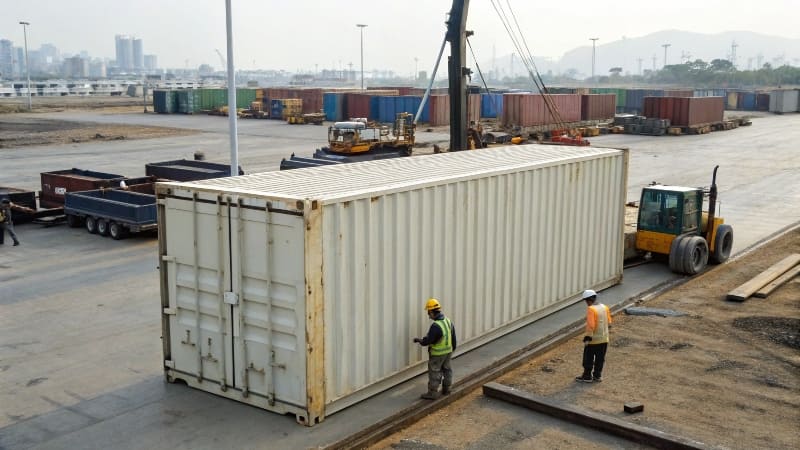
Floating Conditions
| Situation | Cause | Duration | Note |
|---|---|---|---|
| Empty Container | Air inside sealed volume | Short-term buoyancy | May list or flip |
| Partial Damage | Water leaks | Minutes to hours | Depends on seal condition |
| Full Flooding | Pressure exceeds buoyancy | Sinks steadily | Non‑recoverable buoyancy |
| Salvage Recovery | Pump and land | Possible reuse | If steel remains intact |
This emergency buoyancy adds resilience in accidents, helping with retrieval and recycling after marine incidents.
Conclusion
At TRUSUS, I see each steel container as a symbol of design discipline—heavy yet agile, strong yet adaptable. Its weight, strength, stability, and limited buoyancy together tell a story of global engineering built for safety, function, and endless reuse.
