




What is the Cost of a 20 ft Container?
Many assume container prices follow simple linear patterns, but understanding pricing factors reveals complex market dynamics affecting container costs. Container pricing depends on condition, location, supply-demand balance, and market cycles rather than fixed standard rates.
A 20-foot container costs approximately $3,000-$8,000 for new units and $1,500-$4,000 for used containers, with prices varying significantly based on condition, location, market demand, and seasonal factors affecting global container availability.
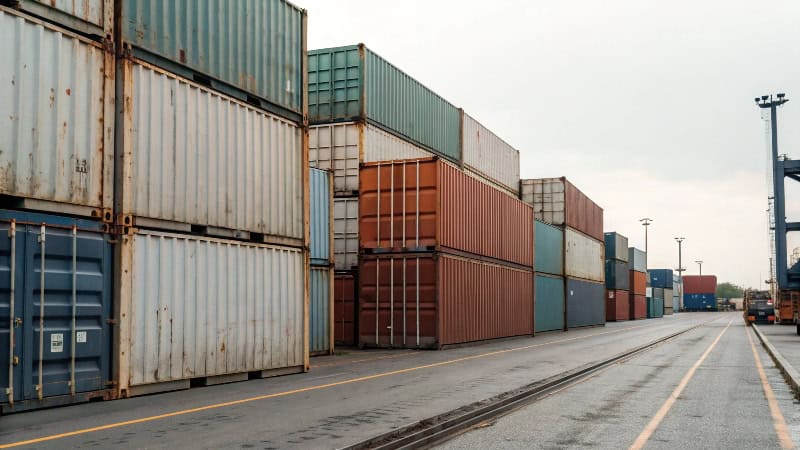
Through years of container sales and market analysis, I learned that container pricing represents asset flow dynamics rather than simple commodity pricing, with costs reflecting global supply chains, regional demand patterns, and container lifecycle economics that create significant price variations across markets and time periods.
What is the Price Difference for a 20ft and 40ft Container?
Understanding container size pricing relationships helps optimize equipment selection and budget planning. Container size pricing involves capacity utilization, handling efficiency, and market demand factors that create complex pricing relationships between different container sizes.
The price difference between 20-foot and 40-foot containers typically ranges from 60-80% higher for 40-foot units, meaning a 40-foot container costs approximately $4,800-$12,800 new versus $3,000-$8,000 for 20-foot units, with the premium reflecting increased capacity and market demand patterns.
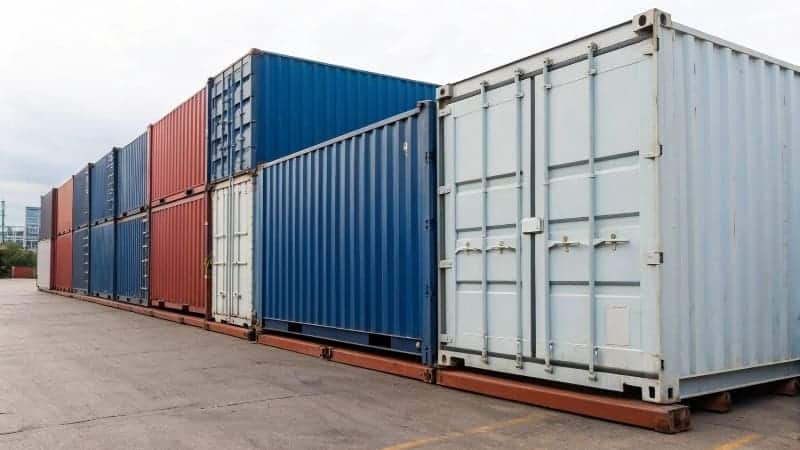
Comprehensive Container Size Pricing Analysis and Economic Considerations
Container size pricing differentials involve complex market dynamics and utilization factors that determine relative value propositions for different applications. During my experience working with container procurement and fleet optimization, I learned that size pricing reflects capacity economics, handling efficiency, and regional demand patterns rather than simple dimensional scaling.
Capacity economics show 40-foot containers providing double the cargo space of 20-foot units while typically costing only 60-80% more, creating better value per cubic foot for applications that can utilize full capacity. Capacity utilization efficiency strongly influences size selection decisions.
Material cost differential reflects the additional steel, manufacturing time, and handling requirements for larger containers while achieving economies of scale through shared structural components. Material costs increase less than proportionally with size, contributing to better value in larger units.
Manufacturing efficiency benefits larger containers through shared production processes, similar handling requirements, and economies of scale that reduce per-unit costs. Manufacturing efficiency translates to better value proposition for customers requiring maximum capacity.
Market demand patterns affect size pricing through regional preferences, trade route requirements, and cargo characteristics that influence container availability and pricing. High-demand markets may see different size premiums than surplus markets.
Transportation economics favor 40-foot containers for many applications through better payload efficiency, reduced per-unit handling costs, and improved space utilization on ships and trucks. Transportation advantages contribute to market preference for larger units.
Handling costs remain similar between container sizes for terminal operations, loading equipment, and storage requirements while providing double capacity in 40-foot units. Similar handling costs improve economic efficiency of larger containers.
Storage efficiency benefits 40-foot containers through better space utilization per ground footprint while requiring similar foundation and infrastructure investments. Storage considerations favor larger units for many applications.
Regional variations show different size preferences based on local infrastructure, cargo types, and transportation networks that affect pricing relationships. Some markets may show smaller size premiums due to handling limitations or preferences.
Application suitability determines optimal size selection with 20-foot containers better suited for heavy cargo, limited access situations, or partial load requirements while 40-foot units optimize light, voluminous cargo and full container loads.
Resale value considerations show market preferences affecting long-term value retention with 40-foot containers generally maintaining stronger resale markets due to versatility and demand patterns. Resale considerations influence total cost of ownership calculations.
| Container Size | New Price Range | Used Price Range | Price per Cubic Foot | Best Applications |
|---|---|---|---|---|
| 20-foot standard | $3,000-$8,000 | $1,500-$4,000 | $2.50-$6.67 | Heavy cargo, tight access |
| 40-foot standard | $4,800-$12,800 | $2,400-$6,400 | $1.50-$4.00 | General cargo, full loads |
| 40-foot high cube | $5,200-$13,500 | $2,600-$6,750 | $1.35-$3.50 | Voluminous cargo |
| 20-foot high cube | $3,200-$8,500 | $1,600-$4,250 | $2.25-$6.00 | Space-optimized applications |
| Price differential | +60% to +80% | +60% to +80% | -40% to -50% | Capacity optimization |
What Are the Three Types of Containers?
Understanding container classifications helps optimize equipment selection and application planning. Container types reflect functional requirements and specialized features designed for different cargo characteristics and transportation needs in global trade.
The three main container types are dry containers for general cargo, refrigerated containers for temperature-controlled goods, and specialized containers including tank, flat rack, and open-top containers designed for specific cargo requirements and handling needs.
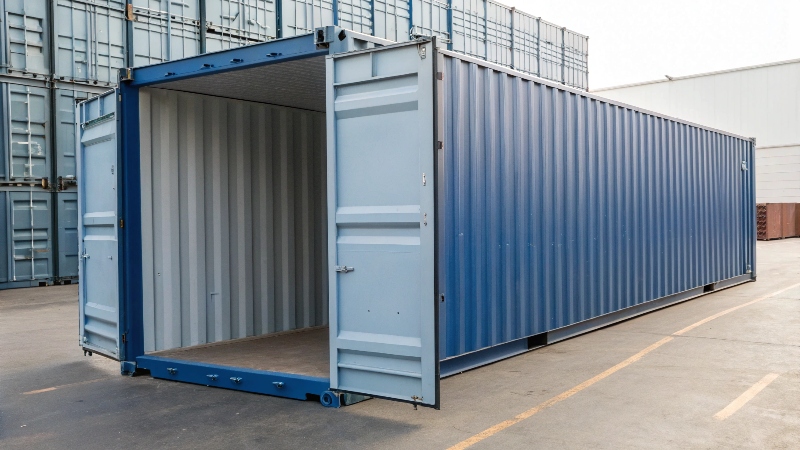
Detailed Container Type Analysis and Application Guidelines
Container type classification involves functional characteristics, specialized equipment, and cargo compatibility requirements that determine appropriate selection for specific transportation and storage needs. During my experience working with diverse container applications and customer requirements, I learned that understanding type differences optimizes equipment utilization while ensuring cargo safety and cost efficiency.
Dry containers represent the most common container type designed for general cargo including manufactured goods, textiles, consumer products, and non-perishable items requiring basic weather protection. Standard construction provides adequate protection for most cargo types while maintaining cost efficiency.
Dry container variations include standard height and high cube versions with 20-foot and 40-foot lengths being most common configurations. Size variations accommodate different cargo volumes and weight distributions while maintaining compatibility with standard handling equipment.
Construction features for dry containers include steel framework, corrugated steel walls, and marine plywood or bamboo flooring that provide weather protection, structural integrity, and cargo security. Standard construction balances protection with cost efficiency for general applications.
Refrigerated containers serve temperature-sensitive cargo including fresh produce, frozen foods, pharmaceuticals, and chemicals requiring precise temperature and humidity control throughout transportation and storage. Integrated refrigeration systems maintain cargo quality while providing monitoring capabilities.
Reefer container capabilities include heating and cooling functions, humidity control, fresh air exchange, and data logging systems that accommodate diverse temperature-sensitive cargo requirements. Advanced control systems ensure cargo integrity while providing operational flexibility.
Power requirements for refrigerated containers include electrical connections, fuel systems, and backup power options that maintain temperature control throughout transportation cycles. Power system reliability ensures cargo protection while providing operational flexibility.
Specialized containers accommodate cargo that cannot fit standard dry or refrigerated containers including oversized items, bulk liquids, hazardous materials, and cargo requiring special handling procedures. Specialized designs address specific industry requirements while maintaining transportation compatibility.
Tank containers transport bulk liquids including chemicals, food products, and industrial materials through specialized cylindrical tanks mounted in standard container frames. Tank construction meets safety standards while providing efficient liquid transport capabilities.
Flat rack containers accommodate oversized or irregularly shaped cargo through collapsible end walls and open side construction that allows loading of machinery, vehicles, and construction equipment. Flat racks enable transport of cargo exceeding standard container dimensions.
Open-top containers serve cargo requiring top loading through removable roof structures that accommodate tall or bulky items. Tarpaulin covers provide weather protection while allowing flexible loading options for specialized cargo requirements.
| Container Type | Primary Function | Key Features | Typical Applications |
|---|---|---|---|
| Dry Containers | General cargo transport | Weather protection, secure closure | Manufactured goods, consumer products |
| Standard dry | Basic cargo protection | Steel construction, standard dimensions | General merchandise, textiles |
| High cube dry | Volume-optimized transport | Extra height (9'6") | Light, bulky goods |
| Refrigerated Containers | Temperature-controlled transport | Active cooling/heating systems | Perishable goods, pharmaceuticals |
| Standard reefer | Perishable cargo | Precise temperature control | Fresh produce, dairy products |
| Controlled atmosphere | Specialized perishables | Gas composition control | High-value produce, flowers |
| Specialized Containers | Special cargo requirements | Purpose-built designs | Unique transportation needs |
| Tank containers | Bulk liquid transport | Pressurized cylindrical tanks | Chemicals, food liquids |
| Flat rack containers | Oversized cargo | Open sides, collapsible ends | Heavy machinery, vehicles |
| Open-top containers | Top-loading requirements | Removable roof, tarp cover | Bulk materials, tall equipment |
Which Moving Container is the Cheapest?
Understanding cost factors for moving containers helps optimize relocation budgets and service selection. Moving container costs involve rental duration, distance, size requirements, and service level factors that create significant price variations across different options.
Standard 20-foot dry containers typically offer the cheapest moving option at $150-$400 per month rental plus transportation costs, with total moving costs ranging $800-$3,000 depending on distance, duration, and service requirements compared to higher costs for specialized or larger units.
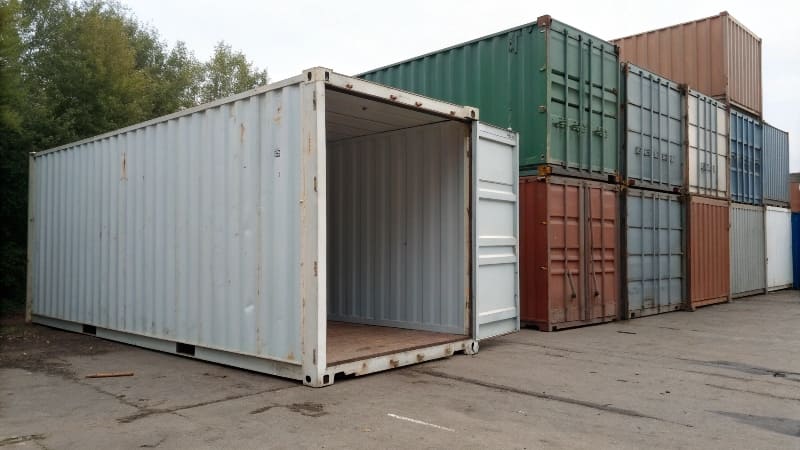
Comprehensive Moving Container Cost Analysis and Selection Strategy
Moving container costs involve multiple factors including container type, rental duration, transportation distance, and service levels that significantly affect total moving expenses. During my experience working with moving container applications and customer cost optimization, I learned that identifying the cheapest option requires understanding all cost components while balancing price with service requirements.
Container size affects moving costs through rental rates, transportation charges, and loading efficiency with smaller containers generally offering lower base costs while larger containers providing better value for full household moves. Size selection should balance cost with capacity requirements.
20-foot containers typically provide the lowest entry cost for moving applications through reduced rental rates and transportation costs while accommodating smaller households or partial moves. Smaller containers work well for studio or one-bedroom relocations.
40-foot containers offer better value for larger moves through improved capacity utilization despite higher base costs, often providing lower cost per cubic foot for full household relocations. Larger containers optimize cost efficiency for bigger moves.
Rental duration significantly affects total costs with longer rentals typically offering better daily rates while providing more time for packing and moving activities. Extended rentals may reduce overall costs through better daily rates and reduced time pressure.
Transportation distance creates major cost variations through fuel costs, driver time, and equipment positioning that can represent 50-80% of total moving costs. Local moves cost significantly less than long-distance relocations.
Service level options affect costs through full-service delivery and pickup versus drop-off and pickup services, with self-service options reducing costs while requiring customer participation in container positioning and handling.
Seasonal demand influences moving container costs through peak moving seasons (summer months) typically commanding higher rates while off-season moves may offer reduced pricing. Timing flexibility can provide significant cost savings.
Regional availability affects pricing through container supply and demand imbalances in different markets, with some areas offering better rates due to surplus containers while others may have premium pricing due to limited availability.
Condition requirements influence costs with used containers typically offering lower rates than new units while providing adequate service for moving applications. Condition selection should balance cost with appearance and functionality requirements.
Additional services including packing supplies, labor assistance, and storage options create additional costs that should be considered in total moving budget planning. Service bundling may provide cost efficiencies for comprehensive moving needs.
Alternative options including portable storage units, truck rentals, and traditional moving services should be compared with container options to ensure optimal cost and service balance for specific moving requirements.
| Moving Option | Typical Cost Range | Best Applications | Cost Factors |
|---|---|---|---|
| 20-foot container rental | $150-$400/month | Small moves, studios | Size, duration, distance |
| 40-foot container rental | $200-$600/month | Full household moves | Capacity utilization |
| Local delivery service | $800-$2,000 total | Regional relocations | Distance, fuel costs |
| Long-distance service | $2,000-$5,000+ | Cross-country moves | Mileage, positioning |
| Storage combination | $300-$800/month | Temporary storage needs | Duration, location |
| Full-service moving | $1,500-$8,000+ | Complete relocation | Service level, distance |
Conclusion
A 20-foot container costs $3,000-$8,000 new or $1,500-$4,000 used, 40-foot containers cost 60-80% more while providing double capacity, the three main types are dry, refrigerated, and specialized containers, and 20-foot dry containers typically offer the cheapest moving option at $800-$3,000 total cost depending on distance and duration.
