




What Is the Cheapest Way to Move a Container?
Container moving costs vary significantly based on transportation method, distance, and site accessibility factors.
Cheapest way to move a container is using flatbed truck transport for short distances with direct ground placement. Flatbed transport costs $3-8 per mile compared to crane services adding $150-400 per lift while tilt-bed trailers eliminate crane needs for accessible locations reducing total costs by 30-50%. Consolidating multiple container moves provides significant cost savings through shared transportation.
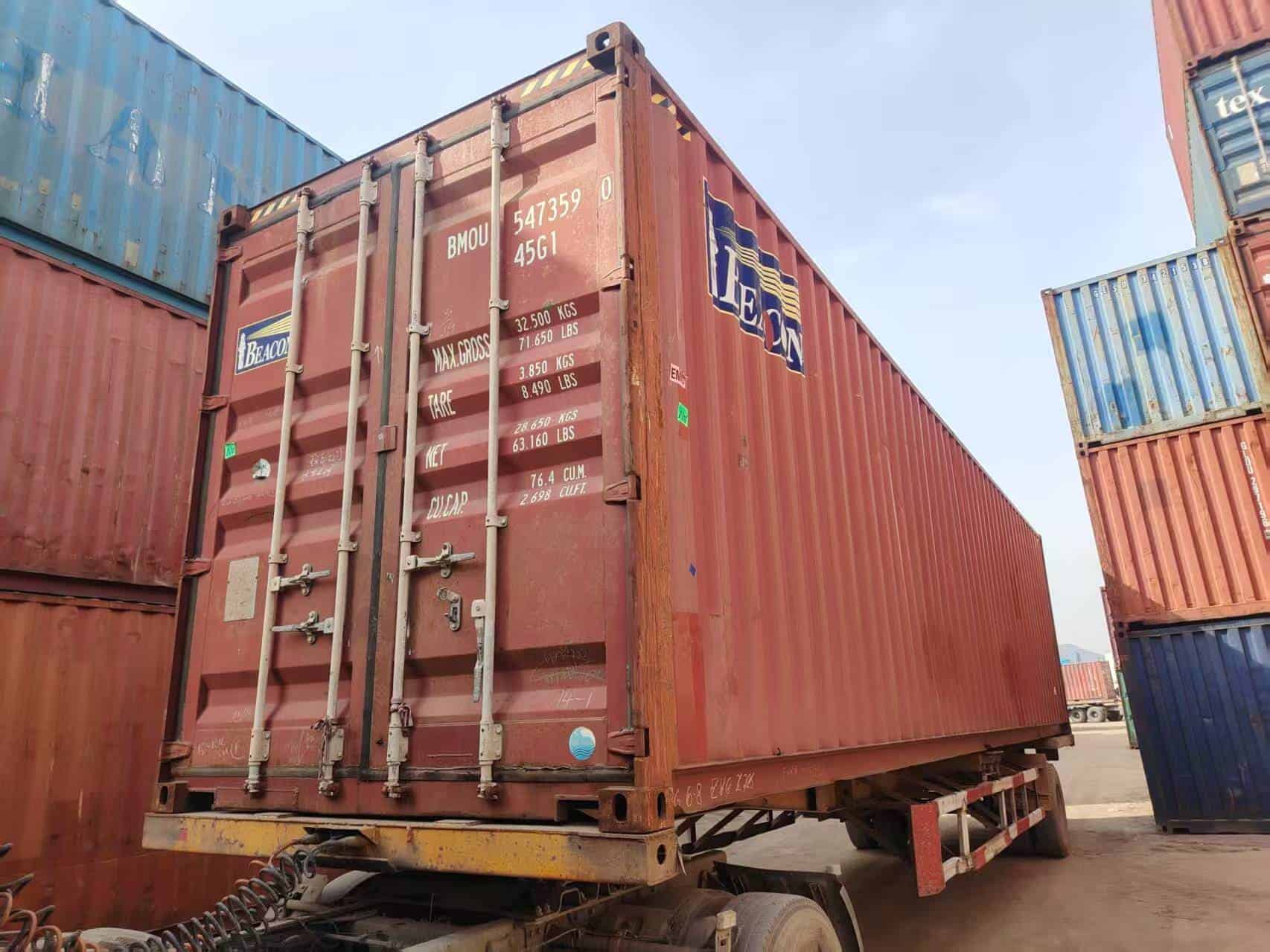
From my experience in new and used container sales, I've learned that container mobility represents more than transportation costs—it reflects the unique asset flexibility that makes containers valuable space units capable of redeployment across different applications and locations.
How to Move a 20ft Container?
Moving a 20ft container requires proper equipment selection and site preparation for safe transportation.
Move 20ft containers using appropriate transport equipment including flatbed trucks, tilt-bed trailers, or crane services based on site conditions and placement requirements. Container weighs 5,000-67,000 lbs loaded requiring commercial transport equipment and proper securing methods with twist locks and chain restraints ensuring safe highway transport compliance. Site accessibility determines equipment selection and total moving complexity.

Equipment Selection Matrix
Different transport equipment serves specific site conditions and placement requirements for container moving projects.
| Equipment Type | Weight Capacity | Site Requirements | Cost Range | Best Applications |
|---|---|---|---|---|
| Flatbed Truck | 80,000 lbs | Level access | $200-600 | Standard transport |
| Tilt-Bed Trailer | 40,000 lbs | Ground placement | $250-500 | No crane access |
| Side-Loader Truck | 30,000 lbs | Side placement | $300-700 | Tight spaces |
| Crane Service | Variable | Any placement | $150-400/lift | Precision placement |
| Roll-Off Truck | 40,000 lbs | Roll-off placement | $200-500 | Temporary use |
Tilt-bed trailers provide the most cost-effective solution for containers requiring ground-level placement without crane access.
Site Preparation Requirements
Proper site preparation ensures safe container placement and prevents equipment damage during moving operations.
| Preparation Factor | Requirements | Impact on Cost | Safety Importance | Planning Timeframe |
|---|---|---|---|---|
| Ground Conditions | Level, solid surface | Medium | High | 1-3 days |
| Access Routes | 14' height clearance | High | Critical | Site survey |
| Utility Clearance | Power line clearance | Variable | Critical | Utility coordination |
| Permits | Oversize load permits | Low-Medium | Legal requirement | 2-5 days |
| Foundation Prep | Concrete pads/blocks | Medium-High | Structural | 3-7 days |
Access route clearance represents the most critical factor affecting equipment selection and transport feasibility.
Weight and Dimension Considerations
Container weight variations significantly impact transport equipment selection and regulatory compliance requirements.
| Container Condition | Weight Range | Transport Method | Permit Requirements | Cost Impact |
|---|---|---|---|---|
| Empty Container | 5,000 lbs | Standard truck | None | Minimum cost |
| Loaded Container | 67,000 lbs max | Heavy haul | Overweight permits | +50-100% |
| Modified Container | Variable | Case-by-case | Dimension permits | Variable |
| Stacked Containers | Combined weight | Specialized equipment | Multiple permits | Maximum cost |
Empty container transport provides the most economical moving option with minimal regulatory requirements.
How Much to Move a 20ft Container?
Container moving costs depend on distance, equipment requirements, and site accessibility factors.
Cost to move 20ft container ranges $500-2000 for local moves within 50 miles including transport and placement. Distance charges $3-8 per mile with crane services adding $150-400 per lift while difficult access sites increase costs 25-50%. Regional variations affect pricing significantly with urban areas typically 20-30% higher than rural transportation costs.

Distance-Based Pricing Structure
Transportation costs scale with distance while fixed costs remain constant regardless of move distance.
| Distance Range | Base Cost | Per Mile Rate | Total Range | Equipment Type |
|---|---|---|---|---|
| Local (0-25 miles) | $300-500 | $8-12/mile | $500-800 | Local truck |
| Regional (25-100 miles) | $400-600 | $5-8/mile | $700-1400 | Regional carrier |
| Long Distance (100-300 miles) | $500-800 | $3-6/mile | $1000-2600 | Long haul |
| Cross Country (300+ miles) | $800-1200 | $2-4/mile | $1500-4000+ | Specialized carrier |
Regional moves (25-100 miles) typically provide the best value per mile for container transportation services.
Service Component Analysis
Moving costs break down into specific service components affecting total project investment.
| Cost Component | Percentage of Total | Price Range | Variability | Value Impact |
|---|---|---|---|---|
| Base Transport | 60-70% | $300-800 | Low | Core service |
| Loading/Unloading | 15-25% | $150-400 | High | Site dependent |
| Permits/Documentation | 2-5% | $25-100 | Low | Regulatory |
| Additional Equipment | 10-20% | $100-300 | High | Site specific |
| Waiting Time | 5-10% | $50-150/hour | Variable | Efficiency factor |
Base transport costs represent the most predictable component of container moving expenses.
Geographic Price Variations
Regional market conditions significantly affect container transportation pricing and service availability.
| Geographic Region | Cost Multiplier | Market Characteristics | Service Availability | Typical Challenges |
|---|---|---|---|---|
| Major Urban Areas | 1.2-1.5x | High demand, regulations | Excellent | Traffic, permits |
| Suburban Areas | 1.0x | Balanced market | Good | Standard access |
| Rural Areas | 0.8-1.0x | Limited competition | Limited | Distance, access |
| Remote Locations | 1.5-2.0x | Specialized service | Poor | Equipment availability |
Suburban areas typically offer optimal balance of service availability and competitive pricing.
How Much Does It Cost to Relocate a Container?
Container relocation costs encompass transportation, site preparation, and placement service components.
Container relocation costs $800-3000 total including transportation, permits, site preparation, and placement services. Transportation represents 50-60% of total cost while site preparation adds $200-800 and crane placement services cost $150-400 per lift. Complete relocation projects require coordination of multiple services affecting total timeline and cost structure.

Full-Service Relocation Components
Complete container relocation involves coordinated services beyond simple transportation requirements.
| Service Component | Cost Range | Duration | Coordination Level | Quality Impact |
|---|---|---|---|---|
| Site Survey | $100-300 | 1-2 hours | Planning phase | Critical |
| Permit Acquisition | $50-200 | 2-5 days | Administrative | Required |
| Site Preparation | $200-800 | 1-3 days | Construction coordination | High |
| Transportation | $400-1500 | 4-8 hours | Logistics | Core service |
| Placement/Setup | $150-500 | 2-4 hours | Technical | Final quality |
Site preparation quality significantly affects long-term container performance and stability.
Project Complexity Factors
Relocation complexity affects both cost and timeline for container moving projects.
| Complexity Level | Cost Multiplier | Timeline Impact | Coordination Needs | Risk Factors |
|---|---|---|---|---|
| Simple Ground Placement | 1.0x | Standard | Minimal | Low |
| Foundation Installation | 1.3-1.5x | +2-3 days | Contractor coordination | Medium |
| Utility Connections | 1.4-1.8x | +3-5 days | Multiple trades | Medium-High |
| Site Modifications | 1.5-2.0x | +5-10 days | Complex coordination | High |
| Multi-Container Projects | 1.2-1.6x | Variable | Project management | Variable |
Simple ground placement provides the most predictable and cost-effective relocation approach.
Regional Service Variations
Container relocation services vary significantly by geographic region and local market conditions.
| Market Factor | Urban Impact | Rural Impact | Service Quality | Cost Variation |
|---|---|---|---|---|
| Service Competition | High competition | Limited options | Variable | ±30% |
| Equipment Availability | Readily available | Limited access | Affects scheduling | ±20% |
| Regulatory Environment | Complex permits | Minimal regulation | Compliance costs | ±40% |
| Transportation Infrastructure | Good access | Poor access | Affects efficiency | ±25% |
Service competition levels create the largest cost variations between different geographic markets.
Value-Added Services
Additional services can improve relocation outcomes while affecting total project investment.
| Value-Added Service | Cost Impact | Benefit Level | Typical Applications | ROI Timeframe |
|---|---|---|---|---|
| Professional Survey | +$200-500 | High | Complex placements | Immediate |
| Foundation Design | +$300-800 | Very High | Permanent installations | Long-term |
| Utility Coordination | +$150-400 | High | Functional containers | Immediate |
| Modification Services | Variable | Variable | Custom applications | Variable |
| Maintenance Planning | +$100-300 | Medium | Long-term use | Annual savings |
Professional survey services provide the highest immediate value for complex container relocation projects.
Cost Optimization Strategies
Strategic planning reduces container relocation costs while maintaining service quality and project outcomes.
| Optimization Strategy | Potential Savings | Implementation Effort | Risk Level | Best Applications |
|---|---|---|---|---|
| Multiple Container Moves | 20-30% | Low | Low | Volume projects |
| Flexible Timing | 10-15% | Medium | Low | Non-urgent moves |
| Self-Site Preparation | 15-25% | High | Medium | DIY capability |
| Equipment Consolidation | 10-20% | Medium | Medium | Coordinated moves |
| Regional Provider Selection | 5-15% | Low | Low | Market research |
Multiple container coordination provides the largest cost savings opportunity for container relocation projects.
Conclusion
Cheapest way to move containers uses flatbed truck transport costing $3-8 per mile with tilt-bed trailers eliminating crane needs reducing total costs by 30-50% for accessible locations while consolidating multiple moves provides significant savings. Moving 20ft containers requires appropriate transport equipment based on site conditions with containers weighing 5,000-67,000 lbs loaded requiring commercial transport and proper securing methods ensuring highway compliance. Cost to move 20ft containers ranges $500-2000 locally within 50 miles with distance charges $3-8 per mile and crane services adding $150-400 per lift while difficult access increases costs 25-50%. Container relocation costs $800-3000 total including transportation, site preparation, and placement with transportation representing 50-60% of costs and complete projects requiring coordination of multiple services. Success with container moving depends on understanding that containers represent mobile assets with inherent flexibility, making transportation costs an investment in asset redeployment capability rather than simple moving expenses.
