




What is the Cheapest Way to Cool a Shipping Container?
The cheapest way to cool a shipping container is combining reflective roof coating ($50-150), basic insulation ($300-800), strategic ventilation ($100-300), and shade structures ($200-500), which can reduce interior temperatures by 15-25°F for under $1,500 compared to $3,000-8,000 for air conditioning systems.
Reflective roof coatings cost $50-150 providing 10-15°F temperature reduction through solar heat reflection. Basic insulation using rigid foam boards costs $300-800 for DIY installation in 20-foot containers. Exhaust fans and intake vents cost $100-300 creating natural air circulation and heat removal. Simple shade structures using tarps cost $200-500 blocking direct solar exposure. Combining these methods achieves 15-25°F cooling for total investment under $1,500.
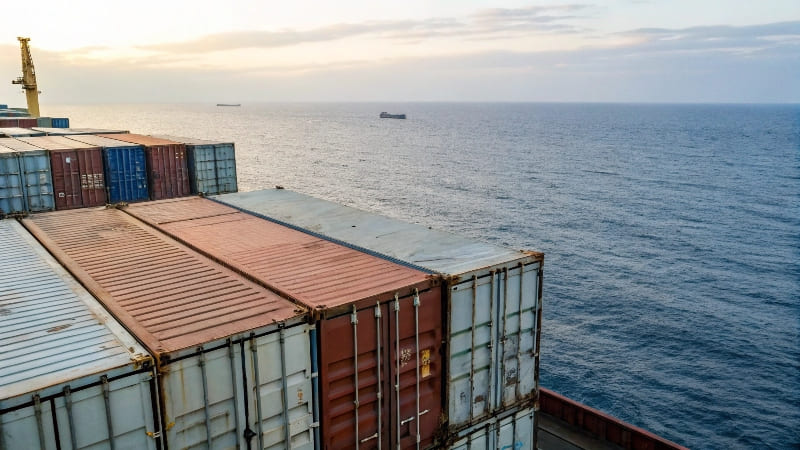
From my extensive experience in container modifications, I've learned that the most cost-effective cooling strategies focus on preventing heat gain rather than removing heat after it accumulates.
How to Keep a Shipping Container Cool in the Summer?
To keep shipping containers cool in summer, install comprehensive insulation, reflective roof treatments, strategic ventilation systems, shade structures, and efficient cooling equipment, creating multi-layered heat management that can maintain comfortable temperatures even in extreme heat conditions.
Comprehensive insulation using spray foam costs $1,500-3,000 providing R-13 to R-19 values eliminating thermal bridging through steel structure. Reflective roof coatings reduce surface temperatures by 20-30°F preventing radiant heat absorption. Cross-ventilation systems using intake and exhaust fans create air movement removing accumulated heat. External shade structures block solar radiation before reaching container surfaces. Efficient air conditioning sized 12,000-18,000 BTU provides active cooling for extreme conditions.
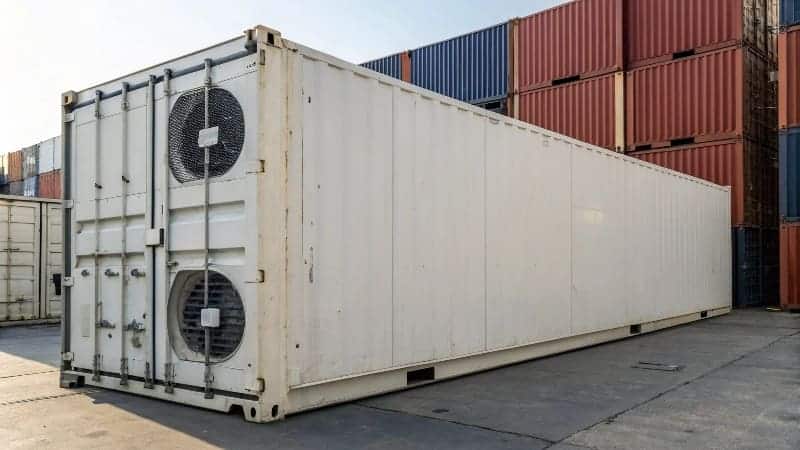
Heat Prevention Strategies
Effective container cooling starts with preventing heat accumulation rather than removing it.
| Heat Prevention Method | Cost Range | Temperature Reduction | Installation Difficulty | Energy Savings |
|---|---|---|---|---|
| Reflective Roof Coating | $50-200 | 10-20°F surface | DIY friendly | 20-30% cooling load |
| Exterior Insulation | $800-2,000 | 15-25°F interior | Moderate skill | 40-60% reduction |
| Shade Structures | $200-1,000 | 5-15°F | Simple installation | 15-25% savings |
| Reflective Side Panels | $300-800 | 5-10°F | Moderate effort | 10-20% improvement |
| Landscaping/Trees | $500-2,000 | 3-8°F ambient | Professional planting | Long-term benefits |
Exterior insulation provides the most significant temperature reduction and energy savings.
Ventilation System Design
Strategic ventilation removes heat buildup and improves air quality inside containers.
| Ventilation Method | Airflow Capacity | Power Consumption | Cost Range | Effectiveness |
|---|---|---|---|---|
| Ridge Vents | Passive airflow | No power required | $100-300 | Moderate |
| Exhaust Fans | 1,000-3,000 CFM | 50-150 watts | $150-500 | Good |
| Intake/Exhaust Systems | 2,000-5,000 CFM | 100-300 watts | $300-800 | Excellent |
| Solar-Powered Fans | 800-2,000 CFM | Solar energy | $400-1,200 | Very Good |
| Evaporative Coolers | Variable CFM | 200-600 watts | $800-2,500 | Climate dependent |
Intake/exhaust systems provide optimal air circulation for heat removal and comfort.
Cooling Equipment Options
Different cooling systems suit various container applications and budget requirements.
| Cooling System | Capacity Range | Energy Consumption | Installation Cost | Operating Cost |
|---|---|---|---|---|
| Window AC Units | 5,000-12,000 BTU | 500-1,500 watts | $300-800 | $50-150/month |
| Mini-Split Systems | 9,000-18,000 BTU | 600-1,800 watts | $1,200-3,000 | $60-180/month |
| Portable Units | 8,000-14,000 BTU | 800-1,600 watts | $400-1,000 | $70-160/month |
| Evaporative Coolers | Variable capacity | 200-600 watts | $300-1,500 | $20-60/month |
| Solar AC Systems | 9,000-24,000 BTU | Solar powered | $3,000-8,000 | $10-30/month |
Mini-split systems offer the best balance of efficiency, capacity, and installation flexibility.
How Hot Do Shipping Containers Get in the Summer?
Shipping containers can reach interior temperatures of 120-160°F in summer heat, with exterior surfaces exceeding 150-180°F in direct sunlight, making unmodified containers extremely uncomfortable and potentially dangerous for human occupancy or temperature-sensitive storage without proper cooling measures.
Uninsulated containers reach 120-140°F interiors when ambient temperatures hit 90-100°F due to solar radiation and metal heat conduction. Exterior surfaces exceed 150-180°F in direct sunlight creating severe thermal bridging. Black or dark containers absorb more heat reaching 10-20°F higher temperatures than light-colored surfaces. Closed containers without ventilation experience heat accumulation throughout daylight hours. Geographic location affects peak temperatures with desert climates reaching extreme interior conditions.
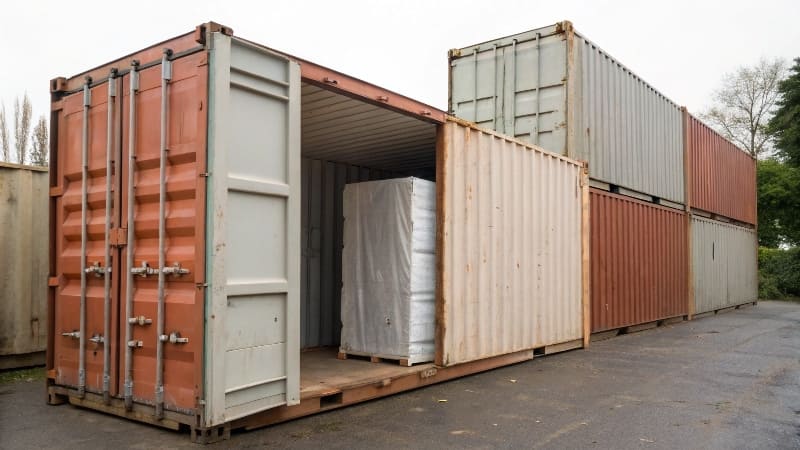
Temperature Measurement Data
Actual temperature measurements demonstrate extreme heat conditions in unmodified containers.
| Container Condition | Ambient Temp | Interior Temp | Surface Temp | Heat Index | Safety Level |
|---|---|---|---|---|---|
| Standard Uninsulated | 85°F | 115-125°F | 140-160°F | Dangerous | Unsafe |
| Dark Colored | 90°F | 125-140°F | 160-180°F | Extreme | Life threatening |
| Light Colored | 90°F | 115-130°F | 145-165°F | Very dangerous | Unsafe |
| Partial Shade | 85°F | 105-115°F | 125-145°F | Dangerous | Unsafe |
| Full Shade | 85°F | 95-105°F | 100-120°F | Caution | Short exposure |
All unmodified containers present dangerous temperature conditions during summer heat.
Geographic Temperature Variations
Different climates create varying levels of container heat problems throughout summer months.
| Climate Zone | Peak Ambient | Interior Range | Duration | Severity Level | Cooling Priority |
|---|---|---|---|---|---|
| Desert Southwest | 110-120°F | 140-160°F | 4-6 months | Extreme | Critical |
| Hot Humid | 95-105°F | 120-140°F | 3-5 months | Severe | High |
| Temperate | 85-95°F | 110-125°F | 2-4 months | Moderate | Important |
| Coastal | 75-85°F | 95-110°F | 2-3 months | Mild | Beneficial |
| Northern | 70-80°F | 85-100°F | 1-2 months | Low | Optional |
Desert southwest conditions create the most extreme container heating problems.
Health and Safety Implications
Extreme container temperatures pose serious health risks and equipment damage concerns.
| Temperature Range | Health Risk | Exposure Limit | Equipment Impact | Safety Measures |
|---|---|---|---|---|
| Above 140°F | Life threatening | Minutes only | Severe damage | Immediate evacuation |
| 120-140°F | Heat exhaustion | 15-30 minutes | Equipment failure | Emergency cooling |
| 100-120°F | Heat stress | 1-2 hours | Performance loss | Active cooling |
| 90-100°F | Discomfort | Several hours | Reduced lifespan | Ventilation required |
| 80-90°F | Acceptable | Extended periods | Normal operation | Basic comfort |
Temperatures above 120°F require immediate cooling intervention for human safety.
How Much Would it Cost to Insulate a 40 ft Shipping Container?
Insulating a 40-foot shipping container costs $3,000-8,000 depending on insulation type and installation method, with spray foam ranging $4,000-6,000, rigid board systems $3,000-5,000, and premium solutions reaching $6,000-8,000 including professional installation and vapor barrier systems.
Spray foam insulation costs $4,000-6,000 for complete coverage providing R-13 to R-19 values with excellent air sealing. Rigid foam board systems cost $3,000-5,000 using polyiso or XPS panels with mechanical attachment. Reflective barrier systems cost $2,000-3,500 combining radiant barriers with basic insulation. Premium solutions reach $6,000-8,000 including advanced vapor barriers and thermal bridge elimination. Professional installation adds $1,000-2,500 ensuring proper coverage and moisture management.
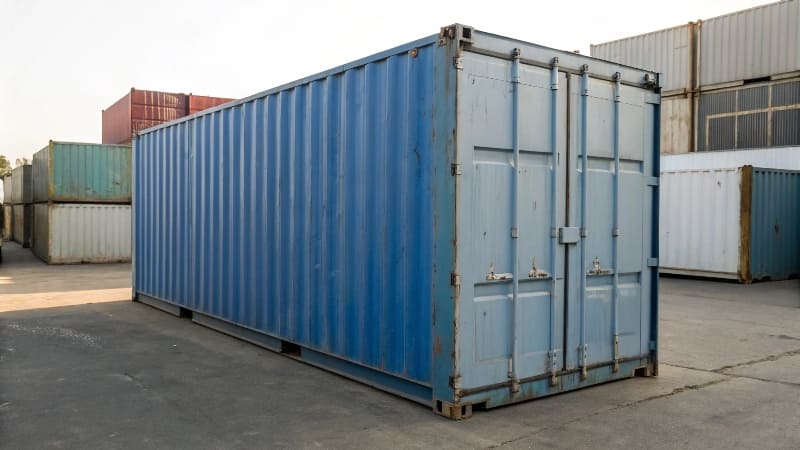
Insulation System Comparison
Different insulation approaches provide varying performance levels and cost structures.
| Insulation Type | Material Cost | Labor Cost | Total Range | R-Value | Performance Benefits |
|---|---|---|---|---|---|
| Spray Foam | $2,500-4,000 | $1,500-2,000 | $4,000-6,000 | R-6/inch | Best air sealing |
| Rigid Board | $1,500-2,500 | $1,500-2,500 | $3,000-5,000 | R-5/inch | Precise installation |
| Reflective Systems | $800-1,500 | $1,200-2,000 | $2,000-3,500 | R-3 to R-11 | Radiant barrier |
| Blown-in Fiberglass | $1,000-1,800 | $1,500-2,200 | $2,500-4,000 | R-3.5/inch | Cost effective |
| Hybrid Systems | $3,000-5,000 | $2,000-3,000 | $5,000-8,000 | Variable | Maximum performance |
Spray foam systems provide superior performance despite higher initial investment.
Cost Factors and Variables
Multiple factors influence total insulation costs for container projects.
| Cost Factor | Impact Range | Description | Mitigation Strategy | Budget Planning |
|---|---|---|---|---|
| Container Condition | ±20% | Rust/prep work | Inspect before purchase | Include prep costs |
| Access Difficulty | ±30% | Site constraints | Plan installation access | Site preparation |
| Electrical Integration | +$500-1,500 | Wiring protection | Coordinate trades | Integrated planning |
| Regional Labor | ±40% | Local wage rates | Multiple quotes | Market research |
| Seasonal Timing | ±15% | Weather/demand | Schedule flexibility | Off-season planning |
Regional labor rates create the most significant cost variations across different markets.
Return on Investment Analysis
Insulation investment provides measurable energy savings and comfort improvements.
| Investment Level | Annual Savings | Payback Period | Comfort Improvement | Property Value |
|---|---|---|---|---|
| Basic System | $800-1,500 | 3-5 years | Moderate | $2,000-4,000 |
| Standard Installation | $1,200-2,000 | 2-4 years | Good | $3,000-6,000 |
| Premium System | $1,500-2,500 | 3-4 years | Excellent | $4,000-8,000 |
| High-Performance | $2,000-3,000 | 3-5 years | Superior | $5,000-10,000 |
Standard installation typically provides the best balance of performance and return on investment.
Conclusion
The cheapest container cooling combines reflective coating ($50-150), basic insulation ($300-800), ventilation ($100-300), and shade structures ($200-500) achieving 15-25°F temperature reduction for under $1,500 compared to $3,000-8,000 for AC systems. Keep containers cool using comprehensive insulation, reflective roof treatments, strategic ventilation, shade structures, and efficient cooling equipment creating multi-layered heat management maintaining comfortable temperatures in extreme conditions. Containers reach 120-160°F interiors in summer heat with exterior surfaces exceeding 150-180°F making unmodified containers dangerous for human occupancy without proper cooling measures. Insulating 40-foot containers costs $3,000-8,000 with spray foam $4,000-6,000, rigid board systems $3,000-5,000, and professional installation adding $1,000-2,500 for proper coverage and moisture management. Success with container cooling requires understanding that effective temperature management combines heat prevention, removal, and comfort strategies, with proper insulation providing the foundation for all other cooling efforts, while cost-effective solutions focus on preventing heat gain rather than expensive heat removal systems across residential, commercial, and industrial container applications.
