




What is an NOR container?
Many importers do not fully understand NOR containers. Wrong assumptions often cause costly shipping errors.
An NOR (Non-Operating Reefer) container is a refrigerated container used without active cooling, functioning as a standard dry container.
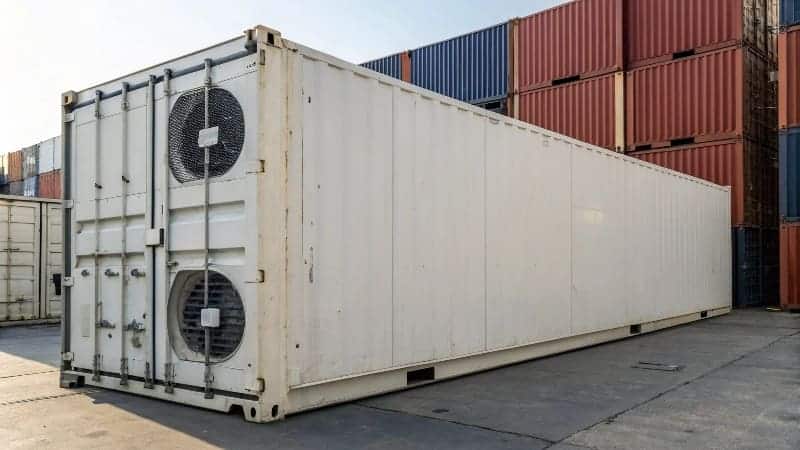
NOR containers are created when refrigeration units are turned off. They are then used to transport dry cargo. These units often appear in trade routes with excess refrigerated container availability. Because they started as reefers, their internal space is slightly smaller than standard dry containers. On certain routes, they can be cheaper to use.
What is a 40 NOR container?
Many shippers assume all 40ft containers are the same size inside, but NOR containers differ.
A 40 NOR container is a non-operating refrigerated container with around 67.5 cubic meters of usable cargo space.
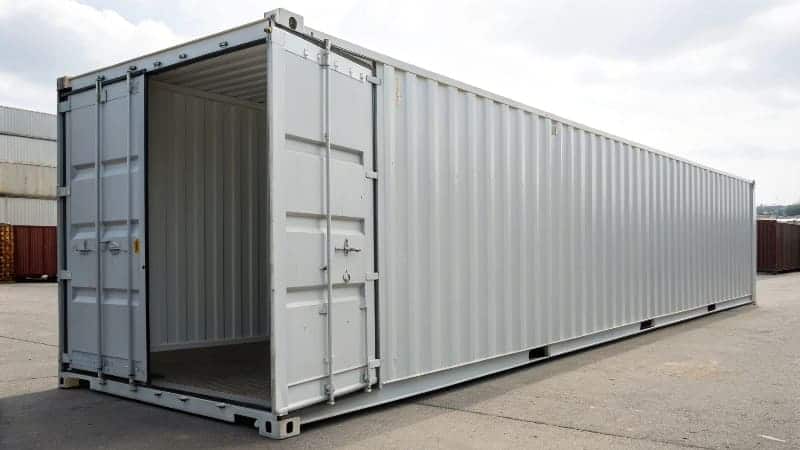
In my work, I frequently see planning mistakes caused by this size difference. A standard 40ft high cube (HC) container holds about 76 cubic meters, giving roughly 9.5 cubic meters more than a NOR. NOR’s reduced space comes from thicker insulated walls designed for cold storage. Their advantage is cost savings—on routes returning from Asia to Europe or North America, they can be about 10–15% cheaper. Shipping companies often rent them at lower rates rather than sending them back empty. For cargo that fits within their reduced capacity, NOR containers can be an effective cost-saving option.
How many cbm is in a 40 NOR?
Exact container volumes matter for accurate loading plans and avoiding capacity problems.
A 40 NOR container offers around 67.5 cubic meters (CBM) of cargo space due to insulation thickness.

The internal capacity of a NOR container is determined after removing the refrigeration unit but leaving insulated walls intact. This insulation improves thermal stability but reduces cargo space. I have seen companies plan based on 40ft HC volumes only to discover they cannot fit the full load, causing repacking or using extra containers. Realizing that NOR containers have less CBM ensures accurate logistics planning, especially for dense or large-volume cargo. On cost-sensitive routes with excess reefer supply, using NOR containers can offset their smaller capacity through reduced freight rates.
What are the types of shipping containers?
Many businesses focus only on standard dry containers, yet the industry offers several specialized types.
Main container types include Dry Container (DC), High Cube (HC), Reefer (RF), Open Top (OT), Flat Rack (FR), and Platform (FL) containers.
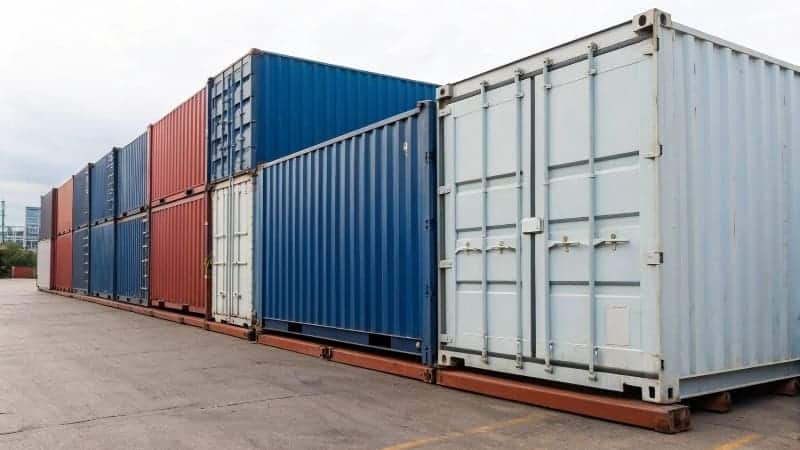
Below is a simple breakdown of container types and their uses:
| Type | Main Use | Key Feature |
|---|---|---|
| DC | General cargo | Standard ISO box |
| HC | Larger volume cargo | Extra height (+1ft) |
| RF | Perishable goods | Temperature-controlled |
| NOR | Dry cargo on return reefer routes | Lower cost, insulated walls |
| OT | Tall or awkward cargo | Removable roof for top loading |
| FR | Heavy machinery | Collapsible or fixed ends |
| FL | Oversized structures | No sides, flat floor |
Special containers solve problems for specific cargo types. For machinery needing crane loading, OT or FR containers simplify handling despite higher rental cost. Platform containers work for goods that exceed standard dimensions. Learning container types allows better cost control and faster loading/unloading. For SMEs trading often, selecting the correct container type—not just the cheapest one—can improve delivery performance and lower damage risk.
Conclusion
NOR containers offer less space but often lower freight rates. Knowing container types and capacities avoids costly mistakes and improves logistics efficiency.
