




What Is a Container and Its Types?
A shipping container is a standardized steel or aluminum box used for storing and transporting goods across sea, rail, and road. Containers are built to be durable, stackable, and compatible with multiple transport modes.
TRUSUS logistics insight: a container is not just cargo space—it’s a global module of movement.
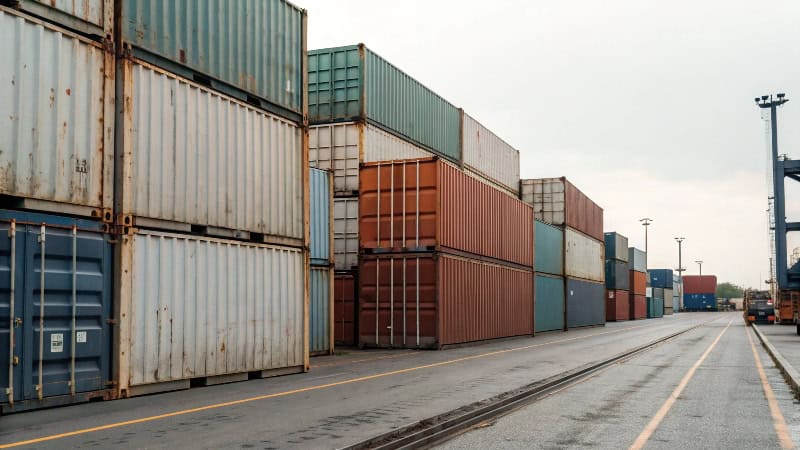
Main Types of Shipping Containers
| Type | Description | Common Use |
|---|---|---|
| Dry Container | Fully enclosed standard box | General cargo |
| Reefer Container | Temperature-controlled unit | Perishable goods |
| Open-Top Container | Top opening for oversized cargo | Machinery, timber |
| Flat Rack / Platform | Foldable sides and open frame | Heavy or extra-wide loads |
| Tank Container | Cylindrical tank inside a frame | Liquids and chemicals |
| High Cube | Extra height (9’6”) | Voluminous goods |
| Collapsible or Foldable | Space-saving design | Empty repositioning efficiency |
Each type reflects how the logistics system adapts to cargo diversity and portability needs.
What Are the Fundamental Container Architecture Elements?
A shipping container’s architecture includes corner castings, steel frame, corrugated wall panels, roof, flooring, and locking mechanisms. Each component ensures structural integrity under heavy loads and rough handling.
structural insight: the strength of a container lies not in its walls, but in how its geometry carries stress.
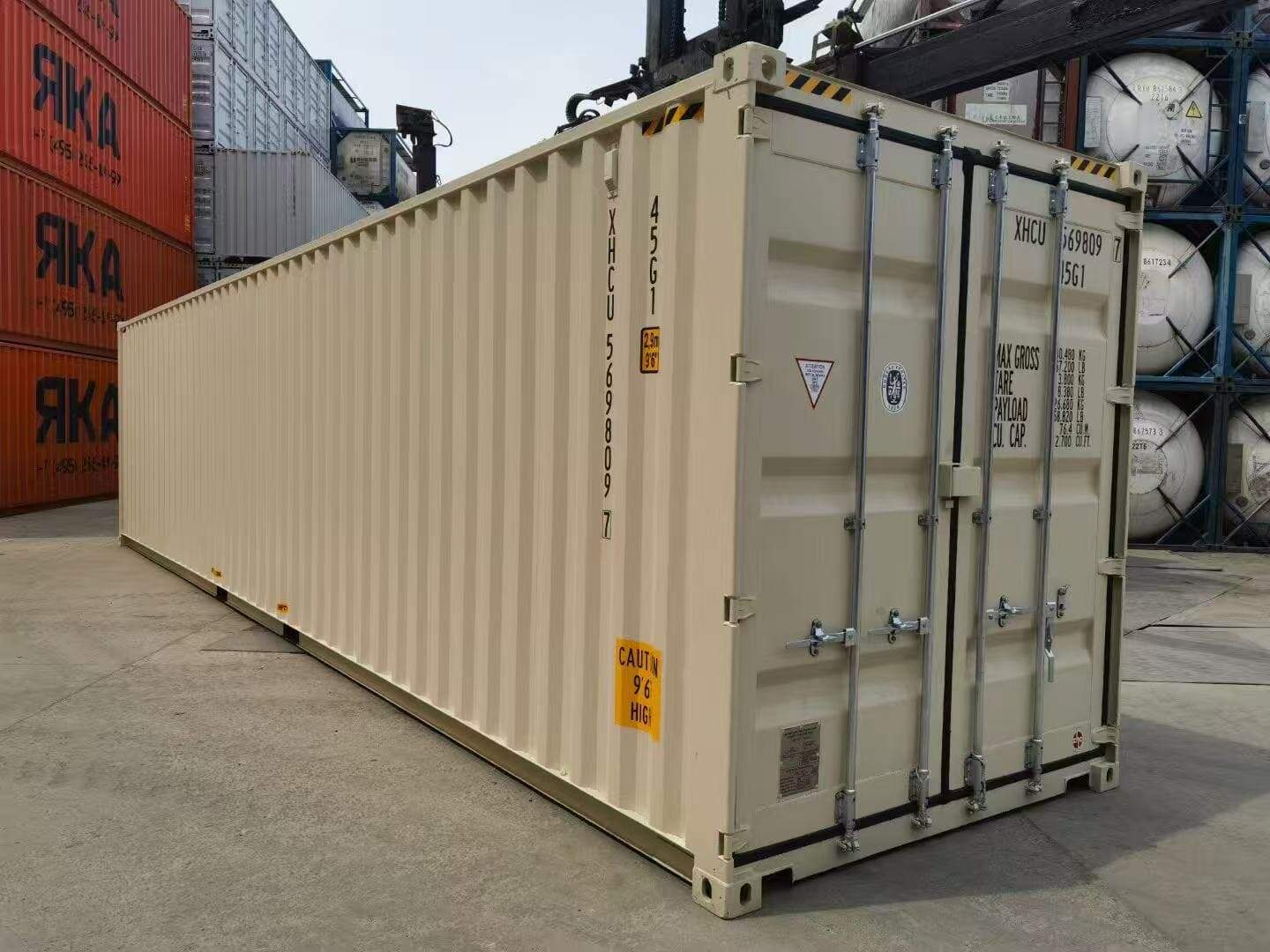
Container Architecture Overview
| Element | Function | Material |
|---|---|---|
| Corner Castings | Lifting, stacking, and securing points | Forged steel |
| Corner Posts | Load-bearing vertical members | High-tensile steel |
| Top & Bottom Rails | Structural frame connection | Rolled steel channels |
| Side & Roof Panels | Provide enclosure and rigidity | Corrugated Corten steel |
| Floor Structure | Load distribution | Steel cross members + plywood deck |
| Door Assembly | Access and sealing | Locking rods, hinges, rubber gasket |
These parts together create a system that resists torsion, absorbs impact, and maintains perfect modularity during global reuse cycles.
Can a Helicopter Lift a Shipping Container?
Yes, a powerful heavy-lift helicopter can lift a small or empty shipping container, but this operation is expensive and limited. For example, military or heavy-lift models like the CH-47 Chinook can handle loads around 10–12 tons.
operational insight: airlifting a container is more about logistics drama than efficiency.

Helicopter Lift Parameters
| Container Type | Average Weight (Empty) | Helicopter Capability |
|---|---|---|
| 20 ft Dry | 2.2 tons | Possible with medium or heavy helicopter |
| 40 ft Dry | 3.8–4.2 tons | Limited to military or specialized lift |
| 20 ft Loaded | 20–25 tons | Not feasible |
| 40 ft Loaded | 30 tons+ | Impossible by helicopter |
In most practical cases, helicopters move containers for emergency or remote-site operations, not routine transport.
How to Move a Shipping Container Without Machinery?
You can move a shipping container without machinery by using rollers, jacks, levers, and towing straps. The principle is to reduce friction and gradually reposition it over a controlled surface.
handling insight: a container moves not with force, but with method.
Manual Movement Method
| Step | Action | Purpose |
|---|---|---|
| 1 | Use a hydraulic jack to lift one corner slightly | Create space for rollers |
| 2 | Place sturdy steel pipes or rollers underneath | Enable smooth motion |
| 3 | Push or pull carefully using winches or vehicle | Maintain stability |
| 4 | Reposition rollers as you advance | Continuous controlled travel |
| 5 | Ensure level ground and wheel stops | Prevent slipping or overturning |
With patience and caution, even a 20 ft unit can be relocated over short distances by a small team.
Conclusion
At TRUSUS, I see each container as more than steel—it’s a structural language of movement. From architecture to aviation, from hand tools to global trade, every container tells a story of reusable strength and systemic intelligence. What we trade is not a box, but a framework of possibility.
