




What Are The Disadvantages Of A Shipping Container Sound Studio?
Shipping container sound studios can suffer from limited interior space, steel wall resonance, poor natural acoustics, thermal instability, ventilation noise, and difficult vibration isolation. Without proper acoustic engineering, container studios may struggle to achieve professional recording quality.
TRUSUS studio insight: container studios are no longer simple conversion projects. They are becoming precision acoustic environments that require integrated engineering and environmental control.
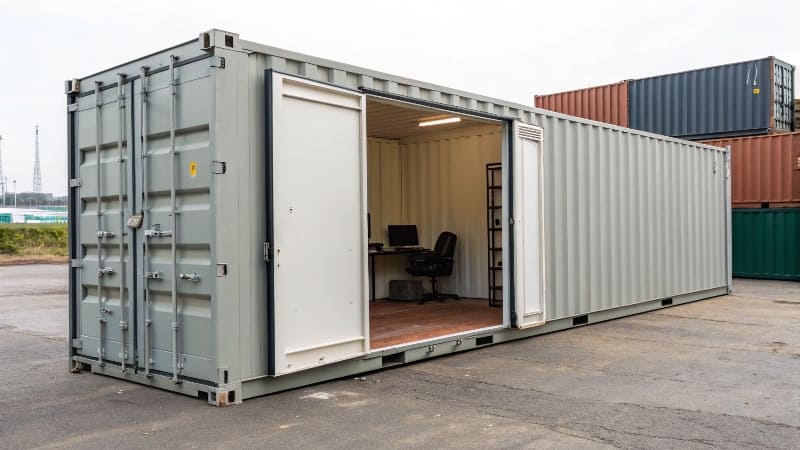
I increasingly see creators asking deeper technical questions before investing in container studios.
This reflects a larger shift from basic space conversion toward specialized creative environments.
Common Acoustic Problems In Container Studios
| Acoustic Issue | Recording Impact |
|---|---|
| Steel wall reflections | Harsh sound coloration |
| Structural resonance | Low-frequency vibration |
| Parallel wall surfaces | Standing wave buildup |
Raw containers are acoustically unsuitable without treatment.
Space Limitation Challenges
| Space Constraint | Operational Problem |
|---|---|
| Narrow interior width | Limited equipment layout |
| Low ceiling height | Reduced acoustic optimization |
| Restricted isolation room options | Less recording flexibility |
Professional studios need careful spatial planning.
Thermal And Ventilation Problems
| Environmental Issue | Studio Effect |
|---|---|
| Heat buildup | Equipment instability |
| Poor airflow | User discomfort |
| Loud ventilation systems | Noise contamination |
Silent climate control becomes essential.
Structural Vibration Concerns
| Vibration Source | Possible Problem |
|---|---|
| External traffic vibration | Recording interference |
| HVAC mechanical noise | Background rumble |
| Steel frame transmission | Structural sound leakage |
Vibration control is as important as sound absorption.
Why Creative Professionals Still Choose Container Studios
| Traditional Recording Studios | Container Recording Studios |
|---|---|
| High construction costs | Lower entry investment |
| Permanent fixed locations | Flexible placement |
| Long construction timelines | Faster deployment |
Many independent creators value mobility and scalability.
Why This Market Is Growing
| Earlier Container Applications | Modern Creative Applications |
|---|---|
| Basic storage and offices | Specialized creative environments |
| Utility-driven modifications | Performance-driven modifications |
| Standardized conversions | Precision-engineered systems |
I increasingly see container modification evolving into highly specialized environmental engineering.
What Floating Floor System Is Essential For Container Acoustics?
A proper container studio floating floor system typically includes vibration isolation pads, resilient layers, dense floating panels, acoustic insulation, and decoupled framing systems. This structure reduces vibration transfer and improves low-frequency acoustic isolation.
TRUSUS acoustic insight: floating floors are one of the most critical elements in professional container studio construction.
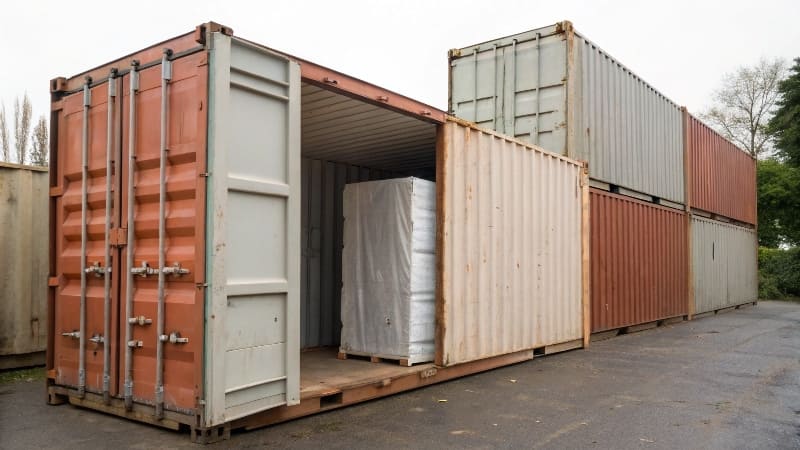
Many clients underestimate how much vibration travels through steel structures.
Without floor isolation, even expensive acoustic treatment may perform poorly.
Typical Floating Floor Structure
| Floor Layer | Acoustic Function |
|---|---|
| Isolation pads | Reduce structural vibration |
| Resilient membrane | Decoupling support |
| Dense floating panel | Mass-based sound blocking |
| Acoustic insulation | Cavity absorption |
Multiple layers work together as one acoustic system.
Why Floating Floors Matter
| Acoustic Problem | Floating Floor Benefit |
|---|---|
| Footstep vibration | Reduced structure-borne noise |
| Low-frequency resonance | Better bass isolation |
| Equipment vibration | Cleaner recordings |
Low-frequency control is especially important in steel containers.
Common Isolation Materials
| Isolation Material | Typical Use |
|---|---|
| Rubber pads | Structural decoupling |
| Mineral wool insulation | Acoustic absorption |
| Acoustic mats | Vibration reduction |
Material selection depends on studio performance goals.
Why Direct Floor Attachment Creates Problems
| Direct Connection Issue | Result |
|---|---|
| Steel-to-wood contact | Vibration transfer |
| Rigid mounting systems | Increased resonance |
| Inadequate isolation | Reduced recording quality |
Mechanical separation improves acoustic performance.
Why Modern Studio Clients Demand Better Engineering
| Earlier DIY Studio Expectations | Modern Creator Expectations |
|---|---|
| Basic sound treatment | Professional acoustic control |
| Temporary recording setups | Long-term production environments |
| Minimal technical integration | Precision acoustic engineering |
Content creators increasingly expect commercial-level quality.
The Industry Upgrade Happening Now
| Traditional Container Conversion | Professional Acoustic System Integration |
|---|---|
| Basic interior finishing | Engineered vibration control |
| General-purpose modifications | Specialized acoustic construction |
| Utility-focused spaces | Precision creative environments |
I believe floating floor engineering will become standard in serious container studio projects.
Can You Drill Through Acoustic Panels Into The Container Steel?
Yes, you technically can drill through acoustic panels into container steel, but direct fastening often creates sound bridges that reduce acoustic isolation performance. Most professional studios use decoupled framing systems instead of direct steel attachment.
TRUSUS installation insight: acoustic isolation depends heavily on controlling mechanical connections inside steel structures.
Many first-time studio builders assume stronger mounting always improves performance.
In acoustics, direct rigid connections can actually reduce sound isolation.
Why Direct Steel Fastening Is Problematic
| Direct Connection Problem | Acoustic Effect |
|---|---|
| Structural sound transfer | Increased vibration leakage |
| Sound bridge creation | Reduced isolation performance |
| Steel resonance activation | Added low-frequency coloration |
Steel transfers vibration very efficiently.
Preferred Acoustic Installation Methods
| Installation Method | Benefit |
|---|---|
| Independent framing systems | Better acoustic decoupling |
| Resilient channels | Reduced vibration transfer |
| Isolation clips | Improved sound separation |
Decoupling is a core acoustic design principle.
When Limited Steel Fastening May Be Necessary
| Installation Situation | Recommended Solution |
|---|---|
| Heavy acoustic panels | Isolated anchor systems |
| Equipment mounting | Vibration-isolated supports |
| Structural reinforcement | Controlled connection points |
Some structural attachment may still be required.
Why Acoustic Isolation Is More Complex In Containers
| Standard Buildings | Steel Container Structures |
|---|---|
| Heavier wall mass | Thin steel shell |
| Less vibration transfer | Strong structural resonance |
| More natural damping | Highly conductive surfaces |
Container acoustics require more aggressive isolation strategies.
Why Technical Installation Knowledge Is Increasingly Important
| Earlier Conversion Approaches | Modern Professional Studio Standards |
|---|---|
| Simple wall treatments | Full-system acoustic engineering |
| Basic insulation methods | Precision vibration management |
| Appearance-focused interiors | Performance-focused construction |
Clients increasingly expect measurable acoustic performance.
The Business Transformation Behind This Trend
| Traditional Container Sales | Professional Acoustic Solution Services |
|---|---|
| Product-only transactions | Design and engineering integration |
| Simple modifications | Specialized performance systems |
| General construction focus | Creative industry support services |
I increasingly see container companies becoming technical partners for creative professionals.
Is A Shipping Container Studio Sound-Proof Against Outside Noise?
A shipping container studio can achieve strong sound isolation against outside noise, but it is not naturally soundproof without specialized acoustic treatment, structural decoupling, and ventilation control systems. Professional performance requires layered acoustic engineering.
TRUSUS soundproofing insight: soundproofing is not achieved by steel walls alone. It depends on mass, isolation, sealing, and vibration control working together.
Many people assume containers naturally block sound because they are made from steel.
In reality, untreated steel often amplifies vibration problems.
What Determines Container Sound Isolation
| Soundproofing Factor | Acoustic Role |
|---|---|
| Structural mass | Sound blocking |
| Decoupled assemblies | Vibration isolation |
| Airtight sealing | Noise leakage control |
| Acoustic ventilation | Quiet airflow management |
Soundproofing requires system-wide coordination.
Common Noise Leakage Areas
| Weak Point | Noise Problem |
|---|---|
| Door seals | Airborne leakage |
| Ventilation penetrations | External noise intrusion |
| Floor connections | Structural vibration transfer |
Small gaps can greatly reduce isolation performance.
Why Ventilation Is A Major Challenge
| Ventilation Problem | Studio Effect |
|---|---|
| Fan noise | Recording contamination |
| Air turbulence | Audible background noise |
| Poor airflow design | Heat buildup |
Silent airflow systems are critical in recording spaces.
Typical Soundproofing Layers
| Acoustic Layer | Function |
|---|---|
| Mass-loaded barriers | Sound blocking |
| Mineral wool insulation | Mid-frequency absorption |
| Double-wall systems | Decoupling performance |
Multiple acoustic layers improve isolation results.
Why Modern Creators Need Flexible Professional Spaces
| Traditional Studio Industry | Modern Creator Economy |
|---|---|
| Large commercial facilities | Independent production spaces |
| Fixed-location investments | Mobile creative infrastructure |
| High operational costs | Flexible scalable setups |
Digital content growth is driving demand for compact professional studios.
Why Container Studios Represent A Larger Industry Shift
| Earlier Container Markets | Emerging Specialized Environment Markets |
|---|---|
| General-purpose spaces | Precision functional environments |
| Construction-focused modifications | Industry-specific technical systems |
| Cost-saving positioning | Performance-driven positioning |
I increasingly see container studios becoming part of a broader movement toward modular professional environments.
The Future Of Container Creative Spaces
| Traditional Modular Structures | Intelligent Creative Production Environments |
|---|---|
| Simple converted rooms | Fully integrated acoustic ecosystems |
| Basic utility spaces | Smart controlled production systems |
| Temporary structures | Professional long-term creative infrastructure |
Future container studios will likely combine acoustic engineering, environmental control, smart technology, and modular flexibility into one integrated creative platform.
Conclusion
At TRUSUS, I see container sound studios evolving from experimental conversions into highly engineered creative environments. Future success will depend on acoustic precision, vibration control, smart environmental systems, and the ability to support flexible professional content production.
