




Should I Buy A 20ft Or 40ft Shipping Container?
Container size selection depends on space requirements, budget constraints, site conditions, and delivery logistics: 20ft containers offer flexibility and easier handling while 40ft containers provide better space efficiency and cost per square meter for larger applications.
Optimal choice requires analyzing specific use requirements and site constraints.
TRUSUS sizing insight: container selection requires comprehensive analysis of spatial needs, economic factors, site limitations, and future expansion plans rather than simple cost comparison.
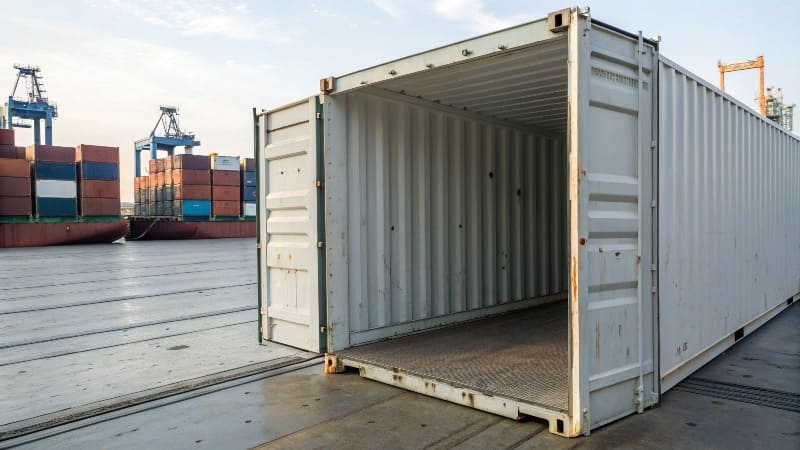
I increasingly see clients make sizing decisions based on comprehensive use-case analysis rather than initial cost considerations alone.
Proper sizing analysis ensures optimal space utilization and investment return for specific applications.
Size Comparison Analysis
| Dimension | 20ft Container | 40ft Container | Advantage |
|---|---|---|---|
| Length | 6.1m (20ft) | 12.2m (40ft) | 40ft: Double length |
| Width | 2.4m (8ft) | 2.4m (8ft) | Equal width |
| Height | 2.6m (8.6ft) | 2.6m (8.6ft) | Equal height |
| Floor area | 14.2m² (153 sq ft) | 28.3m² (304 sq ft) | 40ft: 100% more space |
40ft containers provide exactly double the floor area of 20ft units.
Cost-Efficiency Analysis
| Cost Factor | 20ft Container | 40ft Container | Economic Advantage |
|---|---|---|---|
| Purchase price | Lower initial cost | Higher initial investment | 20ft: Lower entry barrier |
| Cost per m² | Higher per unit area | Lower per unit area | 40ft: Better space economy |
| Transport cost | Single unit delivery | Same delivery cost | 40ft: Better transport efficiency |
| Site preparation | Smaller foundation | Larger foundation needed | 20ft: Simpler preparation |
40ft containers offer better space economy but require higher initial investment.
Application Suitability
| Use Case | 20ft Preference | 40ft Preference | Selection Logic |
|---|---|---|---|
| Personal storage | Small to medium needs | Large storage requirements | Space quantity driven |
| Business storage | Flexible inventory | Bulk storage needs | Business scale driven |
| Office conversion | Individual/small team | Large team workspace | Occupancy driven |
| Workshop space | Specialized equipment | Large equipment/assembly | Activity type driven |
Different applications favor different container sizes based on spatial requirements.
Site Constraint Considerations
| Constraint Factor | 20ft Advantage | 40ft Limitation | Impact on Selection |
|---|---|---|---|
| Access roads | Easier navigation | Requires wider access | Critical for tight sites |
| Property size | Fits smaller lots | Needs larger area | Determines feasibility |
| Delivery complexity | Simpler placement | Complex maneuvering | Affects delivery cost |
| Future relocation | More portable | Permanent installation | Long-term flexibility |
Site limitations often determine container size feasibility regardless of preferences.
Multi-Container Strategies
| Strategy | Configuration | Benefits | Considerations |
|---|---|---|---|
| Multiple 20ft units | Modular arrangement | Flexibility, phased expansion | Higher per-area cost |
| Single 40ft unit | Consolidated space | Cost efficiency, simple setup | Less flexibility |
| Mixed sizing | Combination approach | Optimized for different functions | Complex planning |
Multiple smaller units provide flexibility while single large units offer efficiency.
Decision Framework
| Decision Factor | 20ft Selection | 40ft Selection | Evaluation Method |
|---|---|---|---|
| Space needs | <150 sq ft | >200 sq ft | Area calculation |
| Budget priority | Lower initial cost | Better long-term value | Cost analysis |
| Site access | Restricted access | Open site conditions | Physical assessment |
| Future plans | Uncertain/flexible | Established/permanent | Planning analysis |
Systematic evaluation ensures optimal container size selection.
Why Size Selection Matters
| Poor Size Selection | Optimal Size Selection |
|---|---|
| Inefficient space utilization | Maximum value from investment |
| Higher costs per unit area | Optimized cost efficiency |
| Site compatibility issues | Seamless installation |
Proper sizing analysis ensures both economic efficiency and functional success.
The Industry Shift Behind Sizing Questions
| Traditional Container Selection | Modern Analytical Approach |
|---|---|
| Simple cost comparison | Comprehensive use-case analysis |
| Standard size assumptions | Application-specific optimization |
| Basic space consideration | Holistic value assessment |
I increasingly see clients implement systematic container sizing analysis that considers spatial requirements, economic factors, site constraints, and long-term planning for optimal selection decisions.
Which Container Size Is Best For Storage?
For storage applications, container size selection depends on storage volume, item types, and access patterns: 20ft containers excel for small-medium volumes, frequent access, and diverse inventory while 40ft containers optimize large-volume, long-term storage with consistent item types.
Storage optimization requires matching container size to specific storage characteristics and operational patterns.
storage insight: optimal storage container sizing requires analyzing storage volume, item characteristics, access frequency, and inventory management patterns rather than simple capacity comparison.
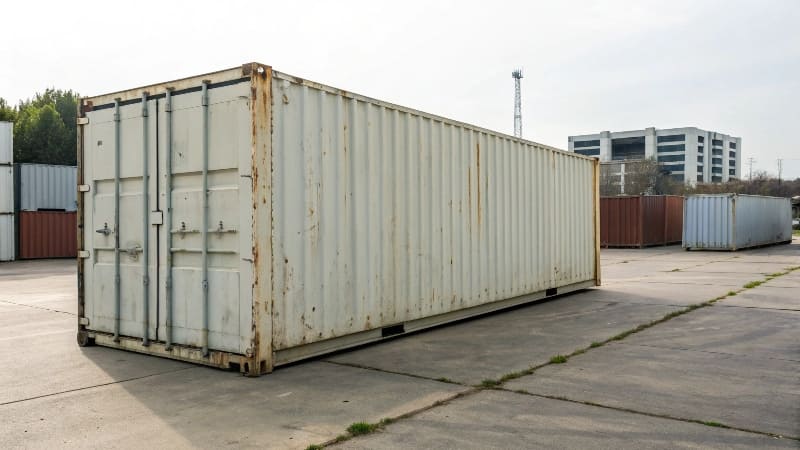
I increasingly see storage operators select container sizes based on comprehensive operational analysis rather than maximum capacity considerations alone.
Storage optimization requires matching container characteristics to specific inventory and access requirements.
Storage Volume Analysis
| Storage Volume | 20ft Container | 40ft Container | Optimal Selection |
|---|---|---|---|
| Small (0-10m³) | Ample capacity | Underutilized space | 20ft preferred |
| Medium (10-20m³) | Efficient utilization | Good capacity | Either size viable |
| Large (20-35m³) | Near capacity | Efficient use | 40ft preferred |
| Extra Large (35m³+) | Insufficient | Optimal capacity | 40ft required |
Storage volume directly influences optimal container size selection.
Item Type Considerations
| Item Characteristics | 20ft Advantage | 40ft Advantage | Selection Driver |
|---|---|---|---|
| Small, diverse items | Better organization zones | Large single space | Access and sorting |
| Large, bulky items | Adequate for moderate qty | Handles large quantities | Volume requirements |
| Seasonal items | Flexible access | Bulk storage efficiency | Usage patterns |
| High-value items | Easier security monitoring | Cost-efficient security | Security priorities |
Item characteristics influence both storage efficiency and operational convenience.
Access Pattern Optimization
| Access Frequency | 20ft Benefits | 40ft Benefits | Operational Impact |
|---|---|---|---|
| Daily access | Quicker location/retrieval | More items per location | Efficiency varies by layout |
| Weekly access | Manageable organization | Efficient bulk access | Layout optimization critical |
| Monthly access | Easy inventory control | Maximum storage density | Long-term organization |
| Seasonal access | Flexible space management | Cost-effective bulk storage | Economic optimization |
Access patterns significantly influence storage system efficiency and container selection.
Inventory Management Systems
| Management Approach | 20ft Suitability | 40ft Suitability | System Requirements |
|---|---|---|---|
| Zone-based storage | Excellent flexibility | Requires internal division | Organizational structure |
| Bulk storage | Limited capacity | Optimal efficiency | Volume-driven needs |
| Mixed inventory | Superior organization | Challenging management | Complexity handling |
| Specialized storage | Dedicated space control | Large specialized areas | Purpose-specific design |
Storage management systems influence optimal container size and configuration.
Climate Control Considerations
| Climate Requirement | 20ft Advantage | 40ft Advantage | Selection Impact |
|---|---|---|---|
| HVAC systems | Lower conditioning cost | Better energy efficiency | Operating cost analysis |
| Insulation needs | Easier temperature control | Larger thermal mass | Climate stability |
| Moisture control | Simpler dehumidification | Economy of scale | Environmental management |
| Temperature monitoring | Focused control zones | Comprehensive coverage | Monitoring complexity |
Climate control requirements affect both installation costs and operational efficiency.
Security And Access Control
| Security Aspect | 20ft Benefits | 40ft Benefits | Security Priority |
|---|---|---|---|
| Access control | Single entry monitoring | Centralized security | Control simplicity |
| Surveillance | Comprehensive camera coverage | Cost-effective monitoring | Monitoring efficiency |
| Inventory security | Easier loss prevention | Bulk security systems | Risk management |
| Physical security | Enhanced structural control | Economy of security investment | Protection level |
Security requirements influence both container selection and system design.
Why Storage Optimization Matters
| Generic Container Selection | Optimized Storage Selection |
|---|---|
| Underutilized or overcrowded space | Efficient space utilization |
| Poor operational efficiency | Streamlined storage operations |
| Higher operational costs | Optimized cost performance |
Storage-specific optimization ensures both operational efficiency and economic performance.
The Industry Shift Behind Storage Questions
| Traditional Storage Approach | Modern Storage Optimization |
|---|---|
| Maximum capacity focus | Operational efficiency priority |
| Simple size comparison | Comprehensive system analysis |
| Generic storage solutions | Application-specific optimization |
I increasingly see storage operators implement comprehensive analysis systems that optimize container selection based on storage volume, item characteristics, access patterns, and operational efficiency requirements.
How Much More Space Does A 40ft Container Give You Than A 20ft?
A 40ft container provides exactly double the floor area (28.3m² vs 14.2m²) and internal volume (67.7m³ vs 33.2m³) compared to a 20ft container, but the elongated shape creates different spatial dynamics affecting layout options and functional arrangements.
Space increase is quantitative but qualitative spatial characteristics differ significantly.
TRUSUS space insight: while 40ft containers provide 100% more area and volume, the elongated proportions create different spatial opportunities and constraints requiring layout consideration.
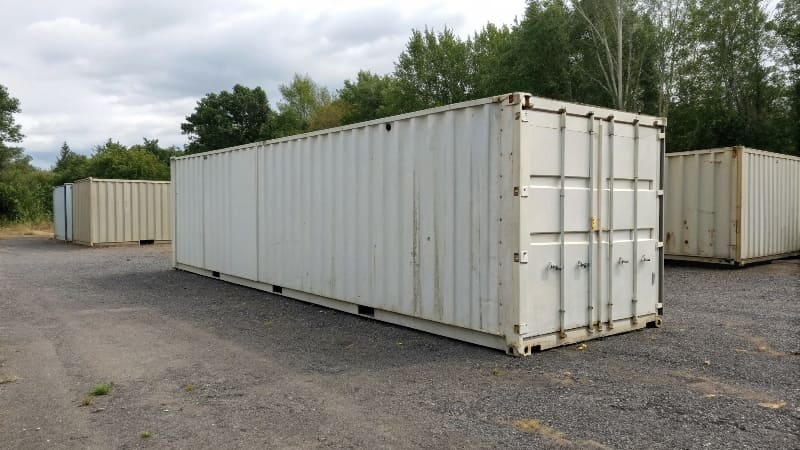
I increasingly see clients require detailed spatial analysis beyond basic area calculations to understand layout implications and functional possibilities.
Understanding spatial characteristics enables optimal layout design and functional planning for container applications.
Detailed Space Comparison
| Measurement | 20ft Container | 40ft Container | Increase |
|---|---|---|---|
| Internal length | 5.9m (19.4ft) | 12.0m (39.5ft) | 103% longer |
| Internal width | 2.35m (7.7ft) | 2.35m (7.7ft) | No change |
| Internal height | 2.39m (7.8ft) | 2.39m (7.8ft) | No change |
| Floor area | 14.2m² (153 sq ft) | 28.3m² (304 sq ft) | 100% more area |
| Internal volume | 33.2m³ (1,172 cu ft) | 67.7m³ (2,390 cu ft) | 104% more volume |
40ft containers double floor area and volume while maintaining width and height.
Spatial Proportion Analysis
| Proportion Factor | 20ft Container | 40ft Container | Layout Impact |
|---|---|---|---|
| Length-to-width ratio | 2.5:1 | 5.1:1 | 40ft: Very elongated |
| Width limitations | 2.35m throughout | 2.35m throughout | Consistent constraint |
| Zone potential | 2-3 functional zones | 4-6 functional zones | More subdivision options |
| Circulation space | Compact pathways | Extended circulation | Different flow patterns |
Elongated proportions in 40ft containers create unique layout opportunities and challenges.
Functional Layout Comparison
| Layout Type | 20ft Effectiveness | 40ft Effectiveness | Design Consideration |
|---|---|---|---|
| Open workspace | Efficient utilization | Potential for long, narrow feel | Spatial perception |
| Divided spaces | 2-3 rooms maximum | 4-5 rooms possible | Subdivision flexibility |
| Workshop layout | Compact arrangement | Linear workflow possible | Process optimization |
| Storage systems | Concentrated zones | Extended organization | Access patterns |
Different container sizes enable different functional layout strategies.
Storage Capacity Analysis
| Storage Method | 20ft Capacity | 40ft Capacity | Efficiency Gain |
|---|---|---|---|
| Floor stacking | 14.2m² coverage | 28.3m² coverage | 100% more area |
| Shelving systems | 3-4 aisle configuration | 6-8 aisle configuration | Enhanced organization |
| Bulk storage | 25-30m³ usable | 55-65m³ usable | 120% increase |
| Mixed storage | Limited zones | Multiple zones | Better segregation |
40ft containers enable more sophisticated storage organization and capacity.
Workspace Configuration
| Workspace Type | 20ft Configuration | 40ft Configuration | Occupancy Impact |
|---|---|---|---|
| Office space | 2-4 workstations | 6-10 workstations | Significant increase |
| Workshop area | Single work zone | Multiple work zones | Process separation |
| Retail space | Compact showroom | Extended retail area | Customer experience |
| Living space | Studio/1-bedroom | 2-3 bedroom potential | Lifestyle improvement |
Doubled space enables significantly enhanced workspace and living configurations.
Access And Circulation
| Circulation Aspect | 20ft Characteristics | 40ft Characteristics | Movement Efficiency |
|---|---|---|---|
| Entry to exit | Short transit | Extended transit | Distance consideration |
| Internal movement | Compact navigation | Linear circulation | Flow pattern design |
| Work efficiency | Concentrated activity | Distributed activity | Productivity impact |
| Emergency egress | Quick exit | Longer exit paths | Safety planning |
Extended length affects internal circulation patterns and movement efficiency.
Why Space Analysis Matters
| Basic Area Calculation | Comprehensive Space Analysis |
|---|---|
| Simple doubling assumption | Layout-specific optimization |
| Generic space planning | Functional design consideration |
| Area-only focus | Spatial quality assessment |
Detailed space analysis enables optimal layout design and functional planning.
The Industry Shift Behind Space Questions
| Traditional Space Thinking | Modern Spatial Design |
|---|---|
| Area-focused calculations | Proportional space analysis |
| Generic space assumptions | Layout-specific planning |
| Simple capacity comparison | Functional optimization |
I increasingly see clients implement sophisticated spatial analysis that considers layout implications, circulation patterns, and functional effectiveness beyond basic area calculations.
Is A 40ft Container Too Big For Residential Delivery?
40ft container residential delivery faces significant constraints including road width requirements (minimum 4 meters), turning radius limitations, crane access needs, and neighborhood impact considerations, making delivery challenging or impossible in many residential areas.
Delivery feasibility requires comprehensive site assessment and logistics planning.
TRUSUS delivery insight: 40ft container residential delivery requires extensive pre-delivery assessment of access routes, site conditions, and equipment requirements beyond standard delivery capabilities.
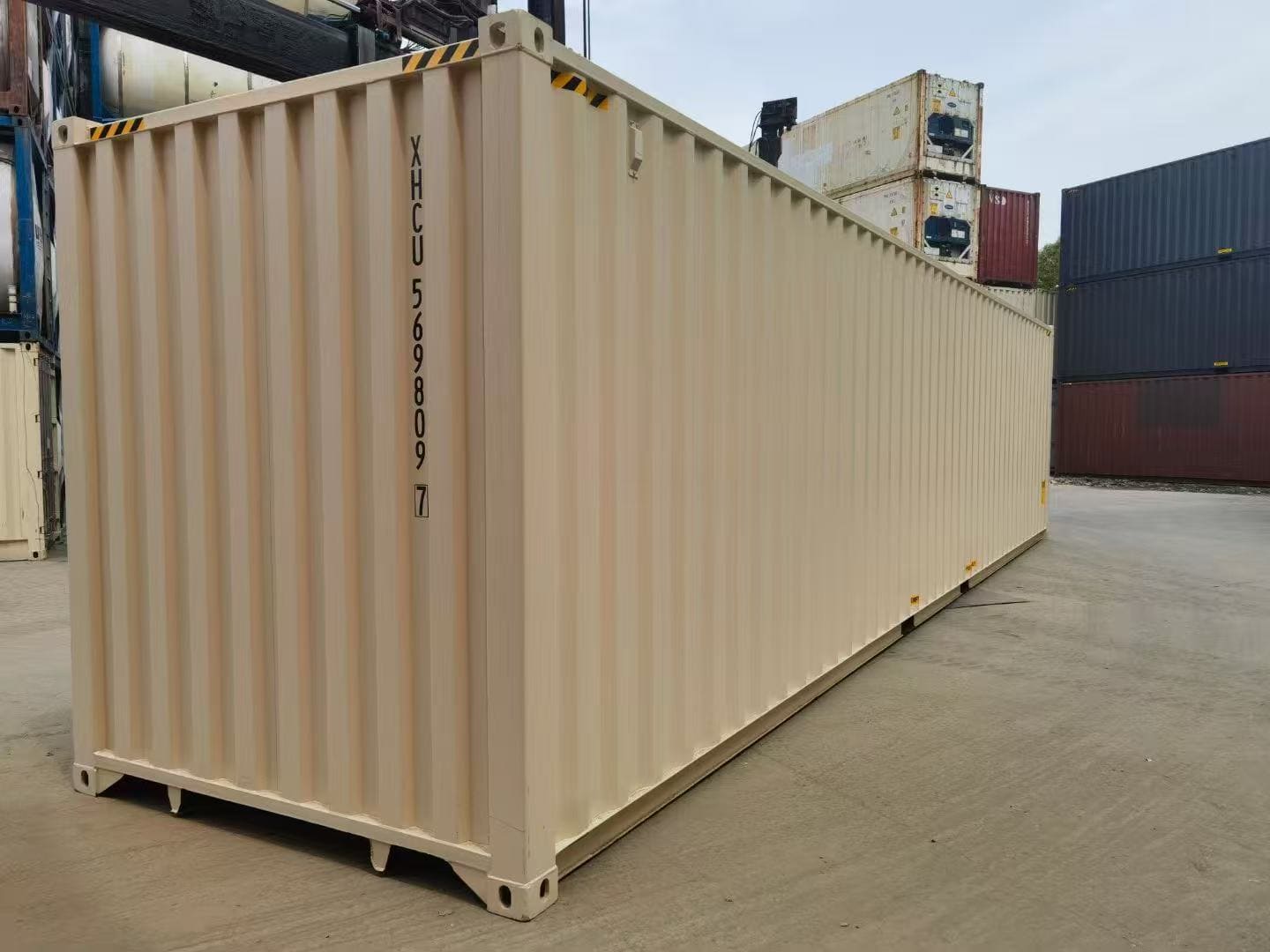
I increasingly see residential delivery projects require detailed logistics assessment after initial delivery attempts fail due to access constraints.
Comprehensive delivery assessment prevents costly delivery failures and ensures successful container placement.
Access Route Requirements
| Route Factor | 20ft Container | 40ft Container | Constraint Impact |
|---|---|---|---|
| Road width | 3.5m minimum | 4.0m+ required | Significant limitation |
| Turning radius | 8m radius | 15m+ radius | Major restriction |
| Overhead clearance | 4.2m height | 4.2m height | Equal requirement |
| Weight limits | 20-25 tons | 25-30 tons | Increased restriction |
40ft containers require significantly more demanding access conditions.
Residential Area Constraints
| Constraint Type | Common Limitations | 40ft Impact | Feasibility |
|---|---|---|---|
| Street width | 6-8m typical residential | Marginal clearance | Often inadequate |
| Cul-de-sac delivery | Limited turning space | Impossible turning | Delivery blocked |
| Neighborhood streets | Narrow, parked cars | Blocked passage | Requires coordination |
| Gated communities | Restricted access | Size limitations | Often prohibited |
Most residential areas present significant challenges for 40ft container delivery.
Equipment Requirements
| Equipment Type | 20ft Handling | 40ft Handling | Complexity Increase |
|---|---|---|---|
| Delivery truck | Standard truck | Extended trailer | Larger vehicle needs |
| Crane requirements | 20-ton capacity | 30-ton+ capacity | Heavier equipment |
| Setup space | Compact area | Extended setup zone | Larger footprint |
| Ground conditions | Standard bearing | Enhanced bearing capacity | Site preparation |
40ft containers require significantly more substantial handling equipment.
Site Preparation Needs
| Site Factor | 20ft Requirements | 40ft Requirements | Preparation Difference |
|---|---|---|---|
| Foundation area | 6.1m x 2.4m pad | 12.2m x 2.4m pad | Double foundation |
| Access clearance | 8m approach | 15m approach | Extended clearance |
| Crane positioning | Compact setup | Large setup area | Substantial space |
| Utility clearance | Standard clearance | Extended clearance | More coordination |
40ft containers require substantially more site preparation and clearance.
Neighborhood Impact
| Impact Factor | 20ft Delivery | 40ft Delivery | Community Consideration |
|---|---|---|---|
| Delivery duration | 1-2 hours | 2-4 hours | Extended disruption |
| Equipment size | Moderate machinery | Large machinery | Increased disturbance |
| Street blocking | Limited impact | Significant impact | Neighbor coordination |
| Noise levels | Moderate noise | Extended noise | Community relations |
40ft deliveries create substantially more neighborhood disruption requiring coordination.
Alternative Delivery Solutions
| Solution | Application | Benefits | Limitations |
|---|---|---|---|
| Crane delivery | Lift over obstacles | Access challenging sites | High cost, space needs |
| Specialized transport | Modified trailers | Enhanced maneuverability | Limited availability |
| Staged delivery | Deliver to accessible location | Overcome access issues | Additional transport cost |
| Modified containers | Sectional delivery | Fit restricted access | Custom fabrication needed |
Alternative solutions can enable delivery but at increased cost and complexity.
Pre-Delivery Assessment
| Assessment Area | Evaluation Method | Critical Factors | Decision Impact |
|---|---|---|---|
| Route survey | Physical inspection | Width, turns, clearances | Delivery feasibility |
| Site evaluation | Dimensional analysis | Space, access, preparation | Placement possibility |
| Equipment planning | Capacity calculation | Crane size, positioning | Operational requirements |
| Permit requirements | Regulatory check | Road use, oversized loads | Legal compliance |
Comprehensive assessment prevents delivery failures and unexpected costs.
Why Delivery Assessment Matters
| Inadequate Delivery Planning | Comprehensive Delivery Assessment |
|---|---|
| Failed delivery attempts | Successful first-time delivery |
| Unexpected costs | Accurate cost planning |
| Neighborhood conflicts | Community coordination |
Thorough delivery planning ensures successful container placement and community relations.
The Industry Shift Behind Delivery Questions
| Traditional Delivery Assumptions | Modern Delivery Engineering |
|---|---|
| Standard delivery expectations | Site-specific delivery planning |
| Basic access assumptions | Comprehensive route analysis |
| Generic delivery services | Specialized delivery solutions |
I increasingly see container projects implement detailed delivery feasibility studies that assess access routes, site conditions, equipment requirements, and community impact before committing to 40ft container installations.
Conclusion
At TRUSUS, I see container sizing decisions evolving from simple cost comparison toward comprehensive analysis of space requirements, storage optimization, spatial characteristics, and delivery feasibility considerations.
Success requires systematic evaluation of functional needs, site constraints, economic factors, and logistical requirements for optimal container selection and project success.
