




Is It Okay to Paint a Shipping Container?
Yes, it is absolutely okay to paint a shipping container. In fact, it’s essential for protecting the steel from rust, UV damage, and weathering, especially if the container is used on land for storage or building.
TRUSUS coating insight: paint is not decoration—it’s preservation.
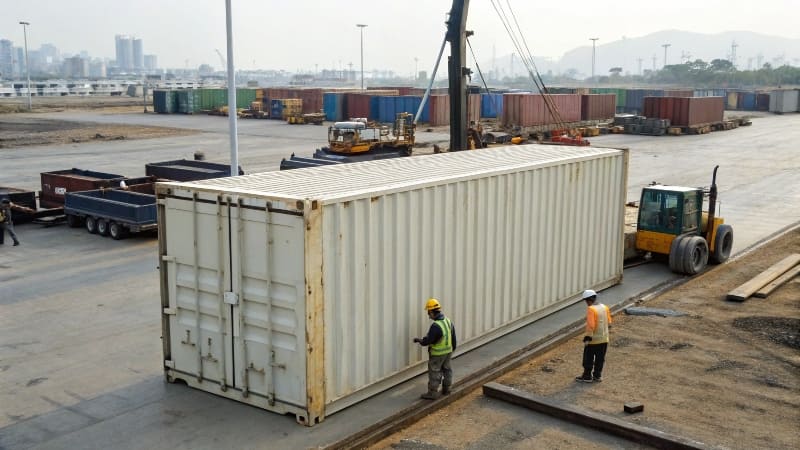
Painting extends the life of your container, improves appearance, and increases resistance to corrosion and fading.
How to Paint an Old Shipping Container?
To paint an old container, remove rust and loose paint, clean the surface with detergent or degreaser, apply primer, then finish with two coats of marine-grade or epoxy paint. Work on a dry, clean day for best adhesion.
restoration insight: every layer matters; what’s hidden beneath the paint defines its final strength.

Old Container Painting Steps
| Step | Action | Purpose |
|---|---|---|
| 1 | Clean the container with soapy water or pressure washer | Remove salt, dust, and grease |
| 2 | Scrape and sand rust spots | Create a smooth, stable surface |
| 3 | Apply anti-corrosive metal primer | Seal steel and block oxidation |
| 4 | Apply first coat of epoxy paint | Form protective base layer |
| 5 | Apply second coat after curing | Ensure durable, even coverage |
This process restores both the physical and visual stability of a weathered container, making it look newer and last longer.
How Much Paint Do I Need to Paint a 20ft Shipping Container?
A 20ft shipping container generally needs 10–12 liters (around 2.5–3 gallons) of paint for two coats, depending on surface condition and paint type. Rough or rusted exteriors may need slightly more.
estimation insight: accurate coverage starts with clean steel, not a thick brush.

Paint Quantity Guide
| Container Size | Surface Area (approx.) | Paint Needed (Two Coats) | Suggested Type |
|---|---|---|---|
| 10ft | 70–80 m² | 6–8 liters | Epoxy or marine paint |
| 20ft | 140–160 m² | 10–12 liters | Anti-corrosive enamel |
| 40ft | 300–320 m² | 20–24 liters | Epoxy coating or urethane |
Always check manufacturer coverage data, and err on the side of having extra paint for touch-ups or edge corrections.
Do You Need to Prime a Shipping Container Before Painting?
Yes, you must apply a primer before painting a shipping container, especially if it’s used or has exposed metal. Primer ensures strong adhesion, smooth appearance, and extra rust protection.
finishing insight: primer is not optional—it’s the secret handshake between steel and color.

Primer Application Table
| Purpose | Primer Type | Application Tip |
|---|---|---|
| Surface sealing | Epoxy-based or zinc phosphate | Use roller or sprayer for even layer |
| Adhesion improvement | Metal bonding primer | Light sanding before applying topcoat |
| Rust prevention | Anti-corrosive primer | Focus on welds and edges |
| Color base | Light grey or red oxide | Supports final color vibrancy |
Skipping primer reduces paint life, causes peeling, and speeds corrosion—especially in outdoor or coastal use.
Conclusion
Painting a container is more than cosmetic—it multiplies its usability and lifespan. At TRUSUS, I see every painted wall as evidence of renewal, where color meets protection, and steel meets its second life.
