




How to Prevent Salt-Air Rust on Containers Near the Guyana Seawall?
Prevent salt-air rust on containers near Guyana seawall by applying marine-grade epoxy primer followed by polyurethane topcoat, installing galvanic anodes for cathodic protection, maintaining proper ventilation to reduce moisture accumulation, washing containers monthly with fresh water, and conducting quarterly inspections for early rust detection, with complete recoating every 3-5 years depending on exposure severity.
Marine-grade epoxy primer creates barrier protection against salt penetration with superior adhesion to steel surfaces. Polyurethane topcoat provides UV resistance and chemical protection against salt spray and atmospheric corrosion. Galvanic anodes offer cathodic protection by sacrificial corrosion preventing electrochemical rust formation. Fresh water washing removes salt accumulation before corrosion initiation with monthly maintenance schedule. Quarterly inspections identify early rust spots for immediate treatment before structural damage occurs.
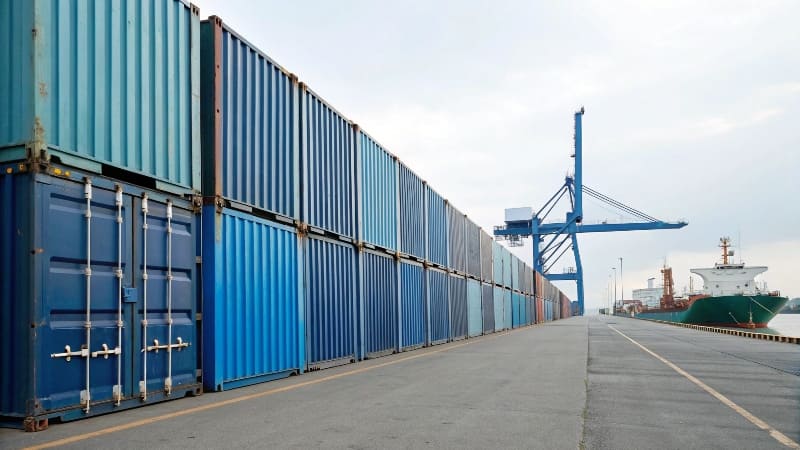
From my extensive experience with containers in coastal environments, I've learned that proactive protection systems are far more cost-effective than reactive repairs after corrosion damage occurs.
How Often Do I Need to Paint My Container Home in Guyana?
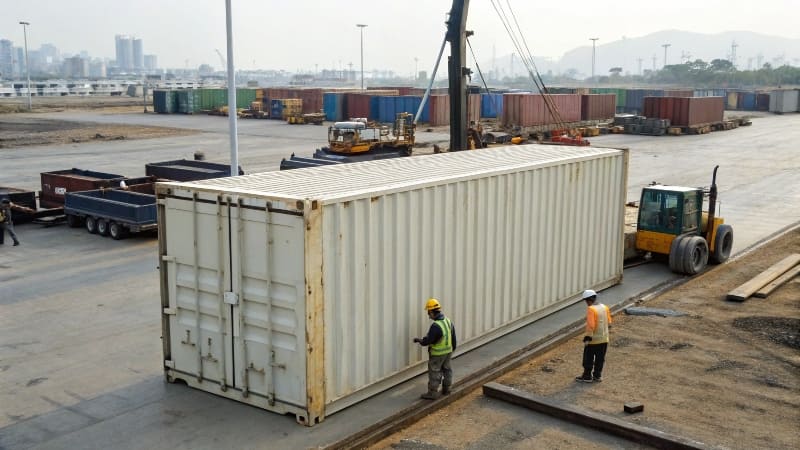
Container homes in Guyana require painting every 2-3 years for basic maintenance, with complete surface preparation and recoating every 5-7 years depending on paint quality and environmental exposure, using high-quality acrylic or polyurethane paints with proper primer systems, more frequent touch-ups needed for areas with heavy weather exposure or mechanical damage.
Basic maintenance painting every 2-3 years maintains surface protection and aesthetic appearance in tropical climate conditions. Complete recoating every 5-7 years includes surface preparation, primer application, and topcoat system for long-term protection. High-quality paints including acrylic or polyurethane formulations provide better durability against UV radiation and moisture penetration. Frequent touch-ups needed for high-wear areas including door frames, corner edges, and roof surfaces with weather exposure. Environmental factors including salt air, industrial pollution, and heavy rainfall accelerate paint degradation requiring adjusted schedules.
Paint System Selection
Recommended paint systems for container homes in Guyana's tropical coastal environment.
| Paint System | Service Life | Cost Factor | UV Resistance | Salt Resistance | Maintenance Level |
|---|---|---|---|---|---|
| Standard Acrylic | 2-3 years | 1.0x | Fair | Fair | High |
| Premium Acrylic | 3-5 years | 1.5x | Good | Good | Medium |
| Polyurethane | 5-7 years | 2.0x | Excellent | Very Good | Low |
| Epoxy-Polyurethane | 7-10 years | 2.5x | Excellent | Excellent | Very Low |
| Marine Coatings | 8-12 years | 3.0x | Excellent | Excellent | Minimal |
Epoxy-polyurethane systems provide best long-term value for coastal locations.
Environmental Impact Factors
Climate and environmental conditions affecting paint life in Guyana container applications.
| Environmental Factor | Impact Level | Degradation Rate | Mitigation Strategy | Cost Impact |
|---|---|---|---|---|
| UV Radiation | Very High | 30-40% faster | UV-resistant formulations | +20% paint cost |
| Salt Air | High | 25-35% faster | Marine-grade coatings | +30% paint cost |
| High Humidity | Moderate | 15-25% faster | Vapor-permeable systems | +15% paint cost |
| Heavy Rainfall | Moderate | 10-20% faster | Water-resistant topcoats | +10% paint cost |
| Industrial Pollution | Variable | 20-30% faster | Chemical-resistant coatings | +25% paint cost |
Coastal containers experience significantly accelerated paint degradation rates.
Maintenance Schedule by Zone
Painting frequency recommendations based on container location and exposure in Guyana.
| Location Zone | Basic Touch-up | Maintenance Paint | Complete Recoat | Special Considerations |
|---|---|---|---|---|
| Seawall Area | Every 6 months | Every 18 months | Every 3-4 years | Salt spray protection |
| Urban Coastal | Every 8 months | Every 2 years | Every 4-5 years | Pollution resistance |
| Inland Residential | Every 12 months | Every 3 years | Every 6-7 years | UV protection focus |
| Industrial Zone | Every 6 months | Every 18 months | Every 3-4 years | Chemical resistance |
| Rural Interior | Every 18 months | Every 4 years | Every 8-10 years | Standard protection |
Seawall locations require most frequent maintenance due to salt exposure.
How to Seal a Container Roof to Prevent Leaks During Guyana's Heavy Rains?
Seal container roof against Guyana heavy rains using elastomeric roof coating system applied in two coats, silicone sealant at all seams and penetrations, installing proper drainage slopes of minimum 1:50, adding gutters with adequate capacity for 150mm/hour rainfall, and applying reflective coating to reduce thermal expansion that causes seal failure.
Elastomeric roof coating provides flexible waterproof membrane that accommodates thermal expansion during temperature cycles. Silicone sealant at seams and penetrations creates watertight barriers with long-term flexibility and adhesion. Drainage slopes of minimum 1:50 ensure rapid water removal preventing ponding and seal stress. Gutter systems with capacity for 150mm/hour rainfall handle Guyana's intense storm conditions. Reflective coating reduces surface temperature minimizing thermal movement that causes seal failure.

Roof Sealing Materials
Performance comparison of different sealing materials for container roofs in heavy rainfall conditions.
| Sealing Material | Durability | Flexibility | UV Resistance | Application Method | Service Life |
|---|---|---|---|---|---|
| Elastomeric Acrylic | Good | Excellent | Good | Brush/roller | 5-8 years |
| Silicone Coating | Very Good | Excellent | Excellent | Spray application | 8-12 years |
| Polyurethane Membrane | Excellent | Good | Very Good | Professional install | 10-15 years |
| EPDM Rubber | Excellent | Excellent | Good | Adhesive system | 15-20 years |
| Modified Bitumen | Good | Fair | Fair | Heat application | 8-10 years |
Silicone coating provides best balance of performance and cost.
Drainage Design Requirements
Critical drainage specifications for container roofs in high-intensity rainfall areas.
| Drainage Element | Specification | Capacity | Installation | Maintenance |
|---|---|---|---|---|
| Roof Slope | 1:50 minimum | Positive drainage | Built-in design | None required |
| Gutter Size | 150mm minimum | 150mm/hour rainfall | Proper support | Monthly cleaning |
| Downspouts | 100mm diameter | Match gutter capacity | Secure mounting | Quarterly inspection |
| Overflow Drains | Secondary system | 200% primary capacity | Strategic placement | Annual testing |
| Splash Guards | Perimeter protection | Wind-driven rain | Simple installation | Visual inspection |
Proper slope essential for preventing water accumulation and seal stress.
Installation Process
Step-by-step procedure for professional container roof sealing installation.
| Installation Step | Process | Quality Control | Cure Time | Weather Conditions |
|---|---|---|---|---|
| Surface Preparation | Clean and prime | Moisture meter check | 4-6 hours | Dry conditions |
| First Coat Application | Uniform thickness | Wet film gauge | 12-24 hours | No rain forecast |
| Seam Reinforcement | Fabric embedding | Visual inspection | 4-8 hours | Low humidity |
| Second Coat Application | Full coverage | Color uniformity | 24-48 hours | Stable weather |
| Sealant Application | All penetrations | Water testing | 24 hours | Dry installation |
Weather conditions critical for successful sealing installation.
Can a Container Withstand the Heavy Vibrations of Guyana Industrial Zones?
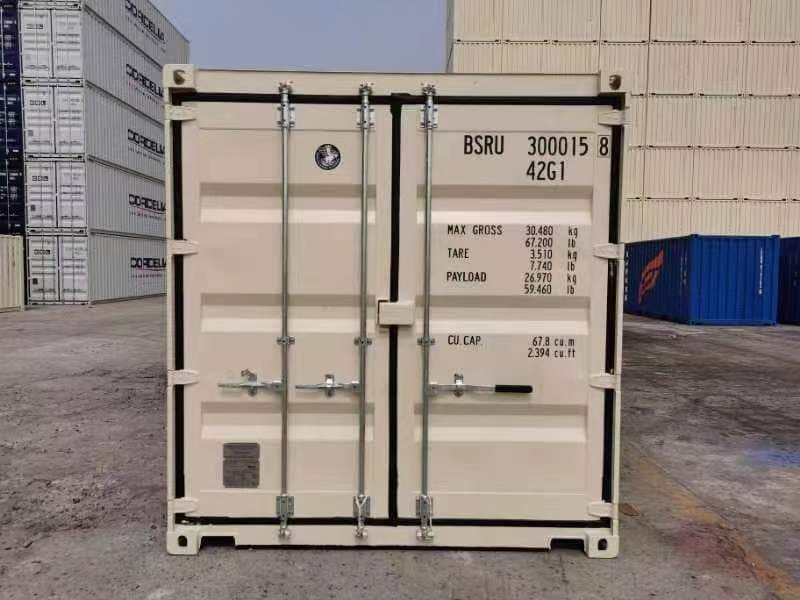
Standard containers can withstand heavy vibrations from Guyana industrial zones when properly anchored with concrete foundations, reinforced corner connections, and vibration dampening systems, handling frequencies up to 50Hz with proper structural modifications including internal bracing, flexible connections, and isolation mounts for sensitive applications requiring enhanced stability.
Proper anchoring with concrete foundations provides stable base for vibration resistance and prevents structural movement. Reinforced corner connections using additional steel plates strengthen weak points against dynamic loading. Vibration dampening systems including rubber isolators reduce transmitted vibrations to container structure. Internal bracing adds structural rigidity preventing panel fatigue from repetitive loading. Flexible connections for utilities prevent damage from differential movement between container and fixed systems.
Vibration Source Analysis
Common industrial vibration sources and their impact on container structures in Guyana.
| Vibration Source | Frequency Range | Amplitude | Distance Impact | Mitigation Required |
|---|---|---|---|---|
| Heavy Machinery | 10-30 Hz | High | 0-50m radius | Foundation isolation |
| Traffic/Railways | 5-20 Hz | Medium | 0-100m corridor | Vibration dampening |
| Construction Equipment | 15-50 Hz | Very High | 0-30m radius | Structural reinforcement |
| Industrial Processing | 20-60 Hz | Variable | Site-specific | Custom solutions |
| Port Operations | 5-25 Hz | High | 0-200m radius | Comprehensive protection |
Construction equipment creates highest vibration levels requiring maximum protection.
Structural Reinforcement Options
Enhancement methods for improving container resistance to industrial vibrations.
| Reinforcement Method | Effectiveness | Cost Factor | Installation Complexity | Maintenance |
|---|---|---|---|---|
| Corner Reinforcement | High | 1.2x | Moderate | Annual inspection |
| Internal Bracing | Very High | 1.5x | Complex | Minimal |
| Foundation Anchoring | Excellent | 1.8x | Professional | 5-year check |
| Vibration Isolators | Excellent | 2.0x | Specialized | Quarterly adjustment |
| Flexible Connections | Good | 1.3x | Moderate | Monthly check |
Foundation anchoring provides most effective vibration resistance.
Foundation Design Requirements
Specifications for container foundations in high-vibration industrial environments.
| Foundation Type | Load Capacity | Vibration Dampening | Installation Cost | Suitability |
|---|---|---|---|---|
| Concrete Pad | Standard | Minimal | Low | Light vibration |
| Reinforced Foundation | Enhanced | Good | Medium | Moderate vibration |
| Isolated Foundation | High | Excellent | High | Heavy vibration |
| Piled Foundation | Very High | Good | Very High | Extreme conditions |
| Floating Slab | Variable | Excellent | High | Sensitive equipment |
Isolated foundations recommended for heavy industrial vibration environments.
Performance Monitoring
Essential monitoring systems for containers in high-vibration industrial applications.
| Monitoring Aspect | Method | Frequency | Alert Threshold | Response Action |
|---|---|---|---|---|
| Structural Integrity | Visual inspection | Monthly | Visible damage | Immediate repair |
| Connection Tightness | Torque checking | Quarterly | Specification limits | Re-tightening |
| Vibration Levels | Accelerometer data | Continuous | Design limits | Dampening adjustment |
| Foundation Settlement | Survey monitoring | Semi-annual | 5mm movement | Foundation repair |
| Fatigue Cracking | NDT inspection | Annual | Any crack detection | Structural assessment |
Continuous monitoring essential for early problem detection and prevention.
Conclusion
Prevent salt-air rust on containers near Guyana seawall using marine-grade epoxy primer followed by polyurethane topcoat, galvanic anodes for cathodic protection, monthly fresh water washing, and quarterly inspections with complete recoating every 3-5 years. Container homes in Guyana require painting every 2-3 years for basic maintenance with complete recoating every 5-7 years using high-quality acrylic or polyurethane paints depending on environmental exposure. Seal container roof against heavy rains using elastomeric coating system in two coats, silicone sealant at seams, drainage slopes of 1:50 minimum, gutters with 150mm/hour rainfall capacity, and reflective coating for thermal protection. Containers withstand heavy industrial vibrations when properly anchored with concrete foundations, reinforced connections, vibration dampening systems, internal bracing, and isolation mounts for frequencies up to 50Hz. Success with containers in Guyana's challenging environment requires understanding that marine-grade protection systems are essential for coastal salt-air exposure, regular maintenance painting schedules must account for accelerated tropical degradation rates, comprehensive roof sealing systems are critical for surviving intense rainfall events, and proper structural reinforcement enables containers to function reliably in high-vibration industrial environments, making environmental adaptation and systematic maintenance the keys to long-term container performance and value retention.
