




How to Build a "Net-Zero" Container Home in the Guyana Hinterland?
Build a "Net-Zero" container home in Guyana hinterland by installing 8-12kW solar system with battery storage, implementing comprehensive insulation reducing energy demand by 60-70%, integrating rainwater harvesting and greywater recycling systems, using composting toilets and biogas generation, employing passive cooling design with natural ventilation, and monitoring energy production versus consumption for carbon neutrality.
Solar system sized 8-12kW with lithium battery storage provides complete energy independence for lighting, appliances, and climate control. Comprehensive insulation including spray foam, reflective barriers, and ventilation systems reduces energy demand by 60-70% compared to standard containers. Rainwater harvesting with filtration systems provides potable water eliminating external supply dependence. Composting toilets and greywater recycling create closed-loop waste management without septic systems. Passive cooling design with cross-ventilation and thermal mass minimizes air conditioning requirements. Energy monitoring systems track production versus consumption ensuring net-zero performance.
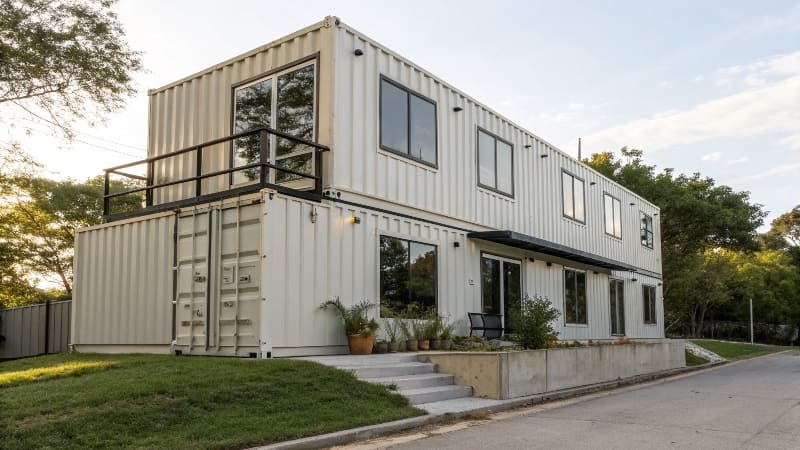
From my extensive experience with off-grid container installations in remote locations, I've learned that achieving true net-zero performance requires systematic integration of energy production, consumption reduction, and resource cycling systems working in harmony with local climate conditions.
Can Container Houses be Used for Eco-Tourism Lodges in Guyana's Interior?
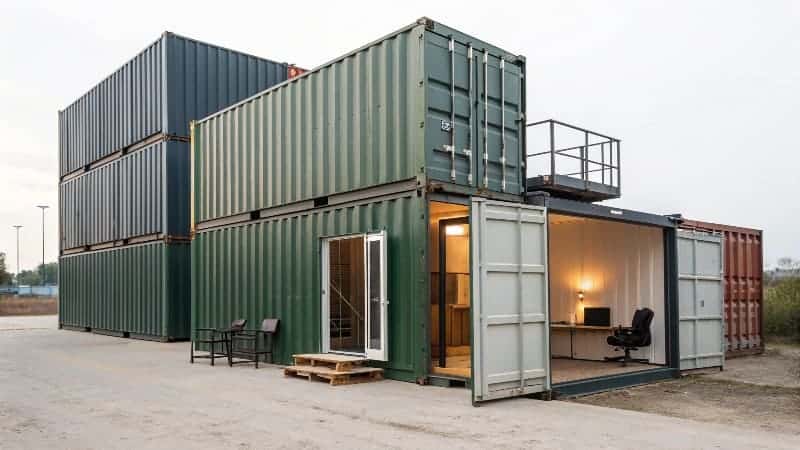
Yes, container houses are ideal for eco-tourism lodges in Guyana's interior providing minimal environmental impact, rapid deployment in remote locations, modular expansion capability, authentic industrial aesthetic appeal, integrated sustainability systems, and compliance with eco-certification standards while offering comfortable accommodation in pristine natural settings.
Minimal environmental impact through elevated foundations preserving forest floor ecosystem and reversible installation allowing site restoration. Rapid deployment in remote locations using helicopter or river transport reducing construction time from months to weeks. Modular expansion capability allows phased development matching tourism demand without over-building. Authentic aesthetic appeal combining industrial design with natural settings attracts adventure tourists. Integrated sustainability systems including solar power, water recycling, and waste management support eco-certification. Compliance standards meet international eco-lodge requirements for sustainable tourism operations.
Eco-Tourism Market Requirements
Market requirements and certification standards for sustainable tourism accommodations.
| Certification Standard | Key Requirements | Container Advantages | Compliance Level | Market Value |
|---|---|---|---|---|
| Green Key Certification | Energy/water efficiency | Solar integration capability | Easily achievable | Premium rates |
| EarthCheck Standards | Environmental management | Minimal site impact | High compliance | International recognition |
| LEED for Homes | Sustainable building | Recycled materials use | Certification possible | Market differentiation |
| Rainforest Alliance | Conservation focus | Reversible installation | Strong alignment | Eco-tourist appeal |
| Fair Trade Tourism | Community benefit | Local employment | Implementation dependent | Social responsibility |
Multiple certifications possible with properly designed container lodge systems.
Site Selection and Environmental Impact
Environmental considerations for container lodge placement in sensitive ecosystems.
| Environmental Factor | Impact Assessment | Mitigation Strategy | Monitoring Requirement | Restoration Capability |
|---|---|---|---|---|
| Forest Canopy | Minimal clearing needed | Elevated construction | Canopy cover monitoring | Complete restoration |
| Soil Compaction | Limited foundation area | Pier foundation system | Soil health assessment | Reversible impact |
| Wildlife Corridors | Maintained connectivity | Strategic placement | Animal movement tracking | Enhanced habitat |
| Water Resources | No contamination risk | Closed-loop systems | Water quality testing | Improved protection |
| Noise Impact | Construction disturbance | Rapid installation | Decibel monitoring | Temporary impact only |
Reversible installation maintains ecosystem integrity for future restoration.
Infrastructure Integration for Remote Locations
Infrastructure systems designed for off-grid container lodge operations.
| System Component | Capacity Specification | Technology Solution | Maintenance Requirement | Performance Standard |
|---|---|---|---|---|
| Power Generation | 15-25kW solar array | Grid-tie with battery backup | Monthly cleaning/inspection | 99% uptime target |
| Water Supply | 10,000L rainwater storage | Multi-stage filtration | Weekly testing | Potable water standard |
| Waste Management | Composting toilet systems | Aerobic decomposition | Bi-weekly maintenance | Zero discharge |
| Communication | Satellite internet/phone | High-gain antenna systems | Weather protection | 24/7 connectivity |
| Emergency Systems | Backup generator/medical kit | Redundant safety systems | Regular testing | Emergency response ready |
Redundant systems ensure reliable operation in challenging conditions.
How to Integrate Rainwater Harvesting with a Container Roof in Guyana?
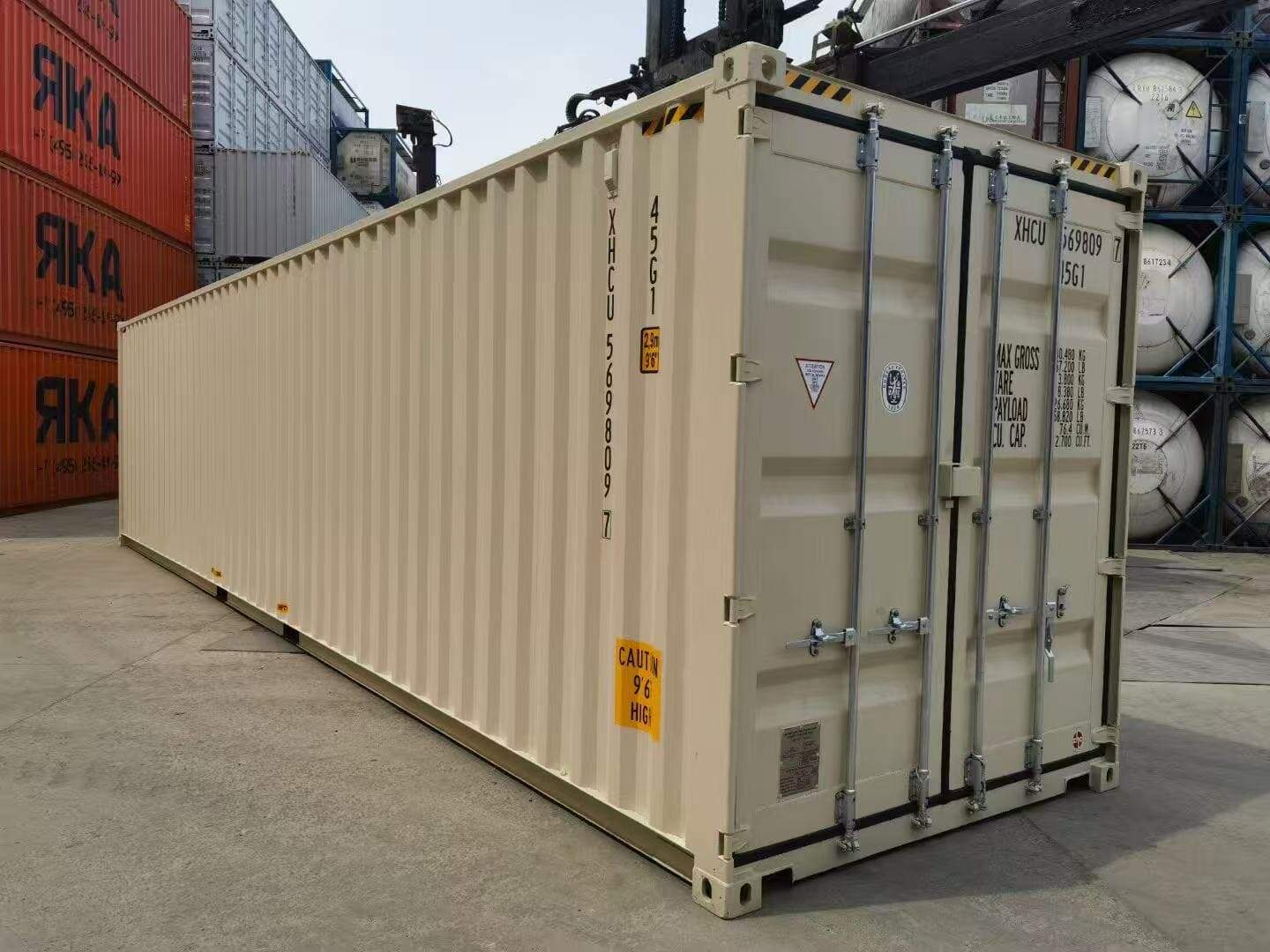
Integrate rainwater harvesting with container roof by installing guttering systems with 150mm PVC gutters, first-flush diverters removing initial contaminated water, storage tanks sized for 3,000-5,000L capacity based on roof area, multi-stage filtration including sediment and carbon filters, and distribution pumps providing pressurized water supply throughout the container home.
Guttering systems using 150mm PVC gutters collect maximum rainfall from corrugated roof surface with 2-3% slope toward collection points. First-flush diverters automatically discard initial 20-40 liters removing dust, debris, and bird droppings for cleaner collection. Storage capacity of 3,000-5,000 liters based on roof area and rainfall patterns provides adequate supply during dry periods. Multi-stage filtration including sediment filters, carbon filters, and UV sterilization ensures potable water quality. Distribution pumps provide pressurized supply at 2-3 bar for showers, taps, and appliances.
Rainfall Collection Calculations
Rainfall collection capacity calculations for different container roof configurations.
| Container Configuration | Roof Area (m²) | Annual Rainfall (mm) | Collection Potential (L) | Storage Requirement (L) |
|---|---|---|---|---|
| Single 20ft Container | 28 | 2,300 (Georgetown) | 58,000 | 3,000-4,000 |
| Single 40ft Container | 56 | 2,300 (Georgetown) | 116,000 | 4,000-6,000 |
| Double Stack System | 56 | 2,300 (Georgetown) | 116,000 | 5,000-7,000 |
| L-Shape Configuration | 84 | 2,300 (Georgetown) | 174,000 | 6,000-8,000 |
| Hinterland Location | 56 | 3,500 (Interior) | 176,000 | 4,000-6,000 |
Collection potential far exceeds typical household consumption of 150L per person daily.
Water Quality Management
Water quality management systems for rainwater harvesting in tropical climates.
| Treatment Stage | Technology | Contamination Removed | Efficiency | Maintenance |
|---|---|---|---|---|
| Pre-filtration | Leaf screens | Debris, insects | 95% physical | Weekly cleaning |
| First-flush | Diverter valve | Initial contamination | 90% improvement | Monthly reset |
| Sediment Filter | 20-micron cartridge | Particles, turbidity | 99% clarity | 3-month replacement |
| Carbon Filter | Activated carbon | Odors, chemicals | 95% organics | 6-month replacement |
| UV Sterilization | UV-C lamp | Bacteria, viruses | 99.9% pathogens | Annual lamp replacement |
Multi-stage treatment ensures safe potable water from rainwater sources.
Storage and Distribution Design
Storage tank sizing and distribution system design for container installations.
| Storage Component | Specification | Capacity Range | Material | Installation Method |
|---|---|---|---|---|
| Primary Tank | Food-grade polyethylene | 2,000-4,000L | UV-stabilized plastic | Ground-level concrete pad |
| Secondary Tank | Backup storage | 1,000-2,000L | Stainless steel | Elevated platform |
| Distribution Pump | Pressure system | 2-3 bar output | Centrifugal pump | Weatherproof housing |
| Pressure Tank | System buffer | 100-200L | Galvanized steel | Pump room installation |
| Control System | Automated operation | Variable speed drive | Electronic controller | Protected enclosure |
Redundant storage ensures water security during extended dry periods.
Are There "Composting Toilet" Options for Off-Grid Guyana Containers?
Yes, there are excellent composting toilet options for off-grid Guyana containers including self-contained units requiring no external utilities, batch composting systems handling waste separation, continuous composting toilets with ventilation fans, waterless operation conserving precious water resources, and complete waste processing producing safe compost for non-food applications.
Self-contained units require no plumbing or electrical connections making them ideal for remote installations with simple installation. Batch composting systems separate solid and liquid waste allowing proper decomposition and odor control. Continuous composting toilets with 12V ventilation fans ensure aerobic decomposition and moisture management. Waterless operation conserves precious water resources while eliminating septic system requirements. Complete processing produces pathogen-free compost suitable for landscaping and non-food agriculture applications.
Composting Toilet System Comparison
Comparison of different composting toilet systems suitable for container applications.
| System Type | Capacity | Ventilation Requirement | Maintenance | Processing Time | Cost Range |
|---|---|---|---|---|---|
| Self-Contained | 2-4 people | Natural draft | Weekly stirring | 6-12 months | $800-1,500 |
| Batch System | 4-6 people | 12V fan recommended | Monthly changeover | 12-18 months | $1,200-2,500 |
| Continuous | 6-8 people | 24V fan required | Quarterly removal | 18-24 months | $2,000-4,000 |
| Commercial Unit | 8+ people | 110V ventilation | Professional service | 6-12 months | $3,000-6,000 |
| DIY System | Variable | Manual management | Daily attention | 12+ months | $200-800 |
Batch systems offer best balance of capacity and maintenance for most applications.
Installation and Ventilation Requirements
Technical requirements for proper composting toilet installation in containers.
| Installation Aspect | Specification | Design Requirement | Performance Standard | Compliance Factor |
|---|---|---|---|---|
| Floor Reinforcement | Load distribution | 150kg point load | Structural integrity | Building code compliance |
| Ventilation Ducting | 100-150mm diameter | Roof penetration | 0.5-1.0 air changes | Odor elimination |
| Electrical Supply | 12V DC system | Solar panel integration | Continuous operation | Energy efficiency |
| Access Requirements | Service accessibility | Removal pathway | Maintenance capability | Operational efficiency |
| Waste Storage | Temporary holding | Sealed containers | Hygienic handling | Health regulations |
Proper ventilation critical for odor control and decomposition efficiency.
Waste Processing and Management
Waste processing stages and management procedures for composting toilet systems.
| Processing Stage | Duration | Management Activity | Safety Requirement | End Product |
|---|---|---|---|---|
| Primary Decomposition | 3-6 months | Temperature monitoring | Pathogen reduction | Stabilized material |
| Secondary Processing | 6-12 months | Moisture management | Continued monitoring | Compost-like material |
| Final Maturation | 12+ months | Pathogen testing | Safety verification | Safe compost |
| Application Preparation | As needed | Screening/mixing | Quality control | Garden amendment |
| Disposal Alternative | If required | Professional removal | Regulatory compliance | Waste elimination |
Proper processing ensures safe pathogen-free end product.
Health and Safety Considerations
Health and safety protocols for composting toilet operation in tropical climates.
| Safety Aspect | Risk Factor | Prevention Method | Monitoring Requirement | Mitigation Strategy |
|---|---|---|---|---|
| Pathogen Control | Disease transmission | Temperature management | Regular testing | Professional processing |
| Odor Management | Nuisance/health | Proper ventilation | Daily inspection | Maintenance protocol |
| Pest Attraction | Insect/rodent issues | Sealed systems | Weekly monitoring | Integrated pest management |
| Moisture Control | System failure | Drainage/ventilation | Humidity measurement | Climate adaptation |
| User Education | Improper operation | Training programs | Ongoing supervision | Operational success |
User education essential for successful long-term operation.
Environmental Benefits and Impact
Environmental benefits of composting toilet systems in sensitive ecosystems.
| Environmental Benefit | Impact Measurement | Comparison Standard | Quantified Benefit | Long-term Value |
|---|---|---|---|---|
| Water Conservation | 6,000-8,000L/year | Conventional flush toilet | 100% water saving | Resource preservation |
| Nutrient Recovery | Nitrogen/phosphorus | Waste treatment systems | 90% nutrient capture | Soil improvement |
| Carbon Footprint | Reduced emissions | Septic/sewer systems | 60-80% reduction | Climate benefit |
| Ecosystem Protection | No groundwater impact | Conventional systems | Zero discharge | Environmental safety |
| Resource Efficiency | Circular economy | Linear waste systems | Complete recycling | Sustainability model |
Composting toilets provide significant environmental advantages in sensitive locations.
Conclusion
Build net-zero container homes in Guyana hinterland by installing 8-12kW solar systems with battery storage, implementing comprehensive insulation reducing energy demand by 60-70%, integrating rainwater harvesting and greywater recycling, using composting toilets and biogas generation, employing passive cooling design, and monitoring energy production versus consumption. Container houses are ideal for eco-tourism lodges in Guyana's interior providing minimal environmental impact, rapid deployment in remote locations, modular expansion capability, authentic aesthetic appeal, integrated sustainability systems, and compliance with eco-certification standards. Integrate rainwater harvesting with container roofs by installing guttering systems with 150mm PVC gutters, first-flush diverters, storage tanks sized for 3,000-5,000L capacity, multi-stage filtration including sediment and carbon filters, and distribution pumps providing pressurized supply. Composting toilet options for off-grid containers include self-contained units requiring no utilities, batch composting systems with waste separation.
