




How Much Does a Basic 20ft Office Container Conversion Cost in Guyana?
A basic 20ft office container conversion in Guyana costs $15,000-25,000 USD including container purchase ($3,000-5,000), insulation and interior framing ($4,000-6,000), electrical and HVAC systems ($3,000-5,000), flooring and interior finishes ($3,000-6,000), and windows/doors ($2,000-3,000), with higher-end conversions reaching $30,000-40,000 depending on finishes and equipment specifications.
Container purchase represents 20-25% of total conversion cost with used containers at $3,000-4,000 and one-trip containers at $4,000-5,000. Insulation and framing costs $4,000-6,000 including spray foam or panel systems with interior wall construction. Electrical and HVAC installation ranges $3,000-5,000 for basic office systems including LED lighting, outlets, and split-unit AC. Interior finishes vary $3,000-6,000 based on flooring choice, wall coverings, and ceiling treatments. Windows and doors add $2,000-3,000 for standard commercial-grade installations.
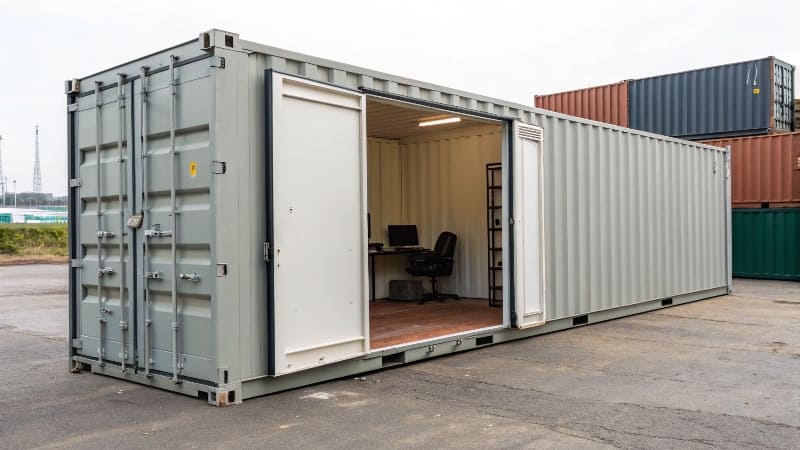
From my extensive container sales experience in the Caribbean region, I've observed that conversion costs often exceed initial container purchase price by 3-5 times for professional office standards.
Is It Cheaper to Build with Containers Than with Traditional Bricks?
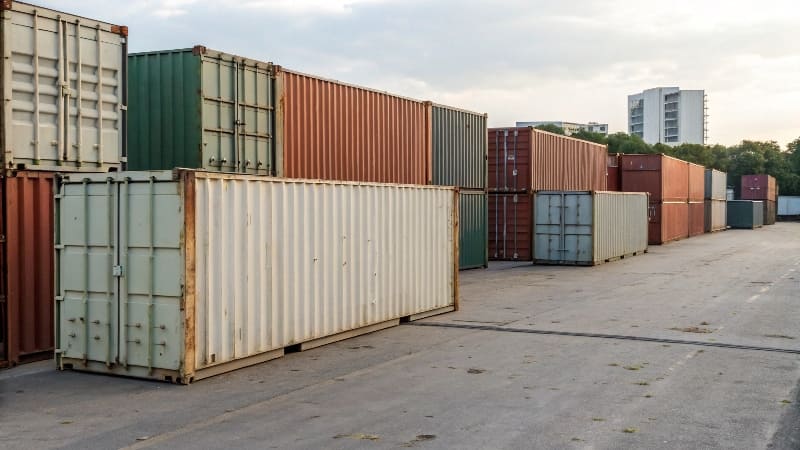
Container construction is typically 20-40% cheaper than traditional brick construction for simple structures but costs become comparable for complex buildings when including insulation, interior finishing, and foundation requirements, with container advantages in speed (2-4 months vs 6-12 months) and mobility while brick offers better thermal performance and local material availability.
Simple container structures cost $100-150 per square foot compared to $120-200 for traditional brick construction in Caribbean markets. Complex container projects approach $150-250 per square foot when fully finished to residential standards. Speed advantages reduce carrying costs and earlier occupancy provides financial benefits. Foundation requirements are lighter for containers reducing site preparation costs. Local labor costs favor traditional construction where skilled container conversion specialists are limited.
Cost Comparison by Building Type
Detailed cost analysis for different construction applications in Guyana.
| Building Type | Container Cost/sqft | Traditional Cost/sqft | Time Savings | Complexity Factor |
|---|---|---|---|---|
| Basic Storage | $80-120 | $100-140 | 70% faster | Low |
| Office Space | $120-180 | $150-220 | 60% faster | Moderate |
| Residential | $150-250 | $160-280 | 50% faster | High |
| Retail/Commercial | $180-300 | $200-350 | 40% faster | High |
| Multi-story | $200-350 | $220-400 | 30% faster | Very High |
Speed advantages are most significant for simpler building types.
Hidden Cost Factors
Additional costs that affect total project economics for both construction methods.
| Cost Factor | Container Impact | Traditional Impact | Advantage | Long-term Consideration |
|---|---|---|---|---|
| Foundation | Lighter/cheaper | Standard cost | Container | Equal lifespan |
| Insulation | Essential/expensive | Standard practice | Traditional | Energy efficiency |
| Utilities | Complex routing | Standard practice | Traditional | Maintenance access |
| Permits | Variable approval | Standard process | Traditional | Code compliance |
| Financing | Limited options | Standard available | Traditional | Investment value |
Traditional construction has advantages in system integration and financing.
Regional Market Factors
Specific factors affecting construction costs in Guyana market.
| Factor | Container Advantage | Traditional Advantage | Market Reality |
|---|---|---|---|
| Material Availability | Imported containers | Local bricks/blocks | Traditional wins |
| Skilled Labor | Limited specialists | Abundant workers | Traditional wins |
| Import Duties | High on containers | Lower on materials | Traditional wins |
| Speed to Market | Much faster | Standard timeline | Container wins |
| Resale Value | Limited market | Established market | Traditional wins |
Local market conditions favor traditional construction in most aspects.
Used vs. One-Trip Containers: Which is Better for a Home Project?
One-trip containers are better for home projects despite 25-40% higher cost due to superior structural integrity, minimal rust/corrosion, cleaner interiors requiring less remediation, and longer lifespan (20-25 years vs 15-20 years), while used containers suit temporary or budget-constrained projects where 5-8 years of service life meets requirements.
One-trip containers provide superior structural integrity with minimal wear from single ocean voyage use only. Used containers show varying degrees of rust, dents, and interior contamination requiring extensive preparation. Cost differential of $1,000-2,000 per container often justified by reduced preparation and longer service life. Structural modifications are safer and easier on one-trip containers with predictable metal thickness. Insurance and financing may favor newer containers for residential applications.

Container Condition Assessment
Key factors for evaluating container suitability for residential conversion.
| Assessment Criteria | One-Trip Rating | Used Container Rating | Impact on Project | Decision Weight |
|---|---|---|---|---|
| Structural Integrity | Excellent | Variable | Critical | High |
| Rust/Corrosion | Minimal | Moderate-Severe | Major | High |
| Interior Cleanliness | Excellent | Poor-Fair | Moderate | Medium |
| Modification Readiness | Excellent | Variable | Major | High |
| Remaining Lifespan | 20-25 years | 10-20 years | Critical | High |
Structural integrity and modification readiness are most critical for home projects.
Cost-Benefit Analysis
Financial comparison including total project lifecycle costs.
| Cost Factor | One-Trip Container | Used Container | Difference | Long-term Impact |
|---|---|---|---|---|
| Initial Purchase | $4,000-5,500 | $2,500-4,000 | +$1,500 | Upfront |
| Preparation Work | $500-1,000 | $2,000-4,000 | -$2,000 | Early project |
| Modification Costs | Standard | +15-25% | -$1,500 | Mid project |
| Lifespan Value | 20-25 years | 15-20 years | +5 years | Long term |
| Total Cost of Ownership | Lower | Higher | Advantage | Lifecycle |
Total cost of ownership favors one-trip containers for residential projects.
Application Suitability
Best use cases for each container type based on project requirements.
| Project Type | One-Trip Recommended | Used Container Acceptable | Primary Considerations |
|---|---|---|---|
| Permanent Residence | Yes | No | Structural integrity critical |
| Vacation Home | Yes | Possibly | Moderate use expectations |
| Rental Property | Yes | No | Investment return important |
| Temporary Housing | Possibly | Yes | Short-term use acceptable |
| Commercial Office | Yes | Possibly | Professional appearance |
Permanent residential projects strongly favor one-trip containers.
What Are the Hidden Costs of Shipping Container Home Construction?
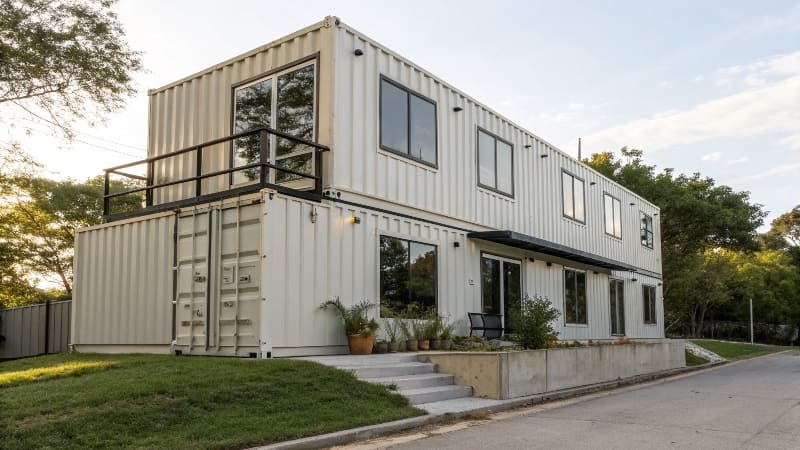
Hidden costs of container home construction include site preparation and foundation work ($3,000-8,000), professional structural modifications ($5,000-15,000), insulation and moisture barrier systems ($4,000-10,000), electrical and plumbing rough-ins ($6,000-12,000), permits and engineering approvals ($2,000-6,000), and crane/transportation services ($2,000-5,000), often adding 40-60% to initial budget estimates.
Site preparation costs include excavation, leveling, and foundation installation often underestimated in initial budgets. Professional structural modifications require certified welding and engineering approval for wall openings and joining multiple containers. Insulation systems are essential in tropical climates but add significant cost and complexity. Utility rough-ins require specialized routing through steel structures increasing labor costs. Permit processes may require additional engineering and architectural drawings for non-standard construction.
Major Hidden Cost Categories
Detailed breakdown of commonly overlooked expenses in container home projects.
| Cost Category | Typical Range | Budget Impact | Timing | Avoidability |
|---|---|---|---|---|
| Site Preparation | $3,000-8,000 | 10-15% | Early | Low |
| Structural Modifications | $5,000-15,000 | 15-25% | Early | Low |
| Insulation/Moisture Control | $4,000-10,000 | 12-18% | Mid | Medium |
| Utility Integration | $6,000-12,000 | 18-22% | Mid | Low |
| Permits/Engineering | $2,000-6,000 | 6-10% | Early | Low |
| Transportation/Crane | $2,000-5,000 | 5-8% | Early | Medium |
Utility integration represents largest hidden cost category.
Professional Service Requirements
Specialized services often required for container home construction.
| Service Type | Necessity Level | Cost Range | Selection Criteria | Project Impact |
|---|---|---|---|---|
| Structural Engineer | Essential | $2,000-5,000 | Container experience | High |
| Certified Welder | Essential | $3,000-8,000 | Structural certification | High |
| HVAC Specialist | Recommended | $4,000-10,000 | Insulation integration | Medium |
| Electrical Contractor | Essential | $3,000-6,000 | Steel structure experience | Medium |
| Crane Operator | Often required | $1,500-3,000 | Site access capability | Medium |
Structural engineering and certified welding are non-negotiable requirements.
Permit and Compliance Costs
Regulatory expenses that vary significantly by jurisdiction.
| Compliance Area | Cost Range | Complexity Level | Required Documentation | Approval Timeline |
|---|---|---|---|---|
| Building Permits | $500-2,000 | Moderate | Architectural drawings | 2-6 weeks |
| Structural Engineering | $1,500-4,000 | High | Certified calculations | 1-3 weeks |
| Electrical Permits | $200-800 | Low | Licensed contractor | 1-2 weeks |
| Plumbing Permits | $200-600 | Low | Licensed contractor | 1-2 weeks |
| Occupancy Certificate | $300-1,000 | Moderate | Final inspections | 2-4 weeks |
Structural engineering represents highest cost and complexity.
Cost Control Strategies
Methods to minimize hidden costs in container home construction.
| Strategy | Cost Savings | Implementation Difficulty | Risk Level | Effectiveness |
|---|---|---|---|---|
| Detailed Planning | 15-25% | High | Low | Very High |
| Pre-fabricated Systems | 10-20% | Medium | Medium | High |
| DIY Installation | 20-40% | Very High | High | Variable |
| Bulk Purchasing | 5-15% | Medium | Low | Medium |
| Phased Construction | 10-30% | Medium | Medium | High |
Detailed planning provides greatest cost control with lowest risk.
Conclusion
Basic 20ft office container conversion costs $15,000-25,000 USD in Guyana including container purchase, insulation, electrical systems, interior finishes, and windows/doors with higher-end conversions reaching $30,000-40,000. Container construction is 20-40% cheaper than traditional brick for simple structures but costs become comparable for complex buildings with advantages in speed and mobility while brick offers better thermal performance. One-trip containers are better for home projects despite 25-40% higher cost due to superior structural integrity and longer lifespan while used containers suit temporary or budget-constrained projects. Hidden costs include site preparation ($3,000-8,000), structural modifications ($5,000-15,000), insulation systems ($4,000-10,000), utility integration ($6,000-12,000), and permits ($2,000-6,000) often adding 40-60% to initial budgets. Success with container construction requires understanding that initial container cost represents only 15-20% of total project budget, speed and mobility advantages may not offset higher complexity costs in all applications, one-trip containers provide better long-term value despite higher upfront cost, and comprehensive planning is essential to control hidden costs that frequently exceed initial estimates, making detailed project scoping critical for realistic budgeting and successful container building projects.
