




How Much Does a 40ft High Cube Weigh?
When buyers first look at shipping containers, they often ask simple-sounding questions that reveal something deeper: “How much does it weigh?” “Is a high cube really worth it?”
A standard 40ft high cube weighs about 3,900–4,200 kilograms (8,600–9,300 pounds). This slightly exceeds a standard 40ft container’s weight by roughly 200 kilograms due to the added height and steel reinforcement.
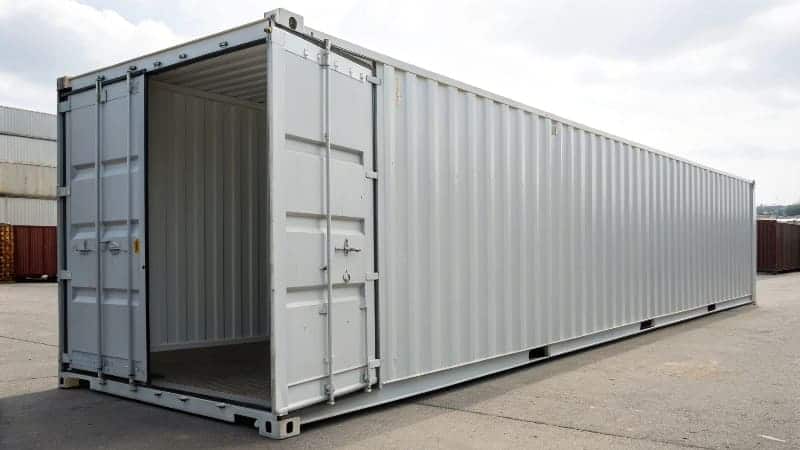
Through my years of dealing in containers, I’ve noticed that customers focus heavily on weight and price yet forget why these numbers matter—because they define what’s possible in logistics, design, and space efficiency.
How Much Is a 40ft High Cube?
When clients ask about price, I often have to explain that container cost is not globally fixed—it reflects steel market shifts, condition, and transportation costs.
A 40ft high cube container typically costs USD 3,500–6,000 for new units and USD 2,200–3,500 for used ones, depending on region, condition, and delivery distance.
Understanding Price Differences
In practice, the “premium” of a high cube is not only material—it’s about added utility. The extra one-foot height adds about 9% more space, improving shipping efficiency for lightweight or high-volume goods.
| Container Type | New Price Range (USD) | Used Price Range (USD) | Volume (m³) |
|---|---|---|---|
| 40ft Standard | 3,000–5,000 | 2,000–3,000 | 67 |
| 40ft High Cube | 3,500–6,000 | 2,200–3,500 | 76 |
For buyers converting containers into offices or homes, this extra space also makes insulation design and ventilation planning far easier and more comfortable.
What Is the Difference Between 40 Foot and 40 Foot High Cube?
At first glance, the only difference seems to be height. But that extra foot creates both functional and financial impact.
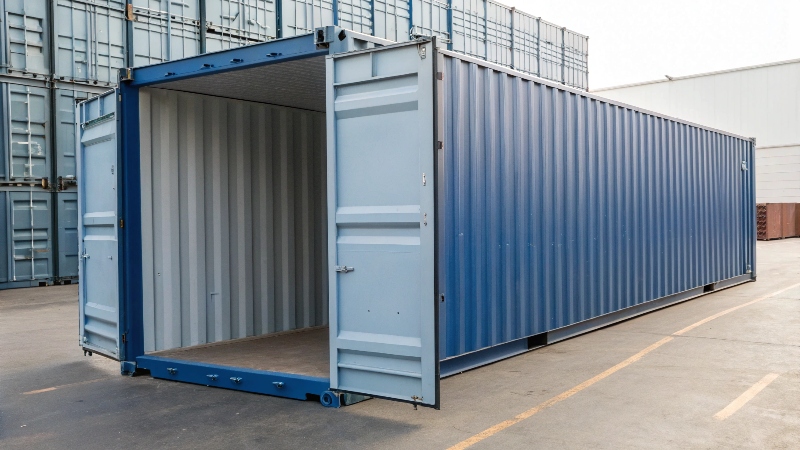
The 40ft high cube is 9 feet 6 inches tall, one foot taller than the 8 feet 6 inches height of a standard container. This results in more internal volume and slightly higher weight and cost.
How the Extra Foot Changes Everything
When I consulted on modular construction projects, I saw firsthand how adding 30 centimeters changed whole floor plans. Taller ceilings improve airflow, create more comfortable proportions, and simplify internal installations.
| Specification | 40ft Standard | 40ft High Cube |
|---|---|---|
| External Height | 8'6" (2.59 m) | 9'6" (2.89 m) |
| Internal Volume | ~67 m³ | ~76 m³ |
| Empty Weight | ~3,700 kg | ~3,900–4,200 kg |
| Cargo Capacity | 26,000 kg | 26,000 kg |
| Applications | Shipping, Storage | High-volume freight, Modular builds |
That one additional foot makes the high cube more adaptable—whether it’s for logistics optimization or creative re-use like container architecture.
What Is the Payload of a 40ft Container?
Payload capacity defines how much cargo weight a container can safely carry, and this is often misunderstood.
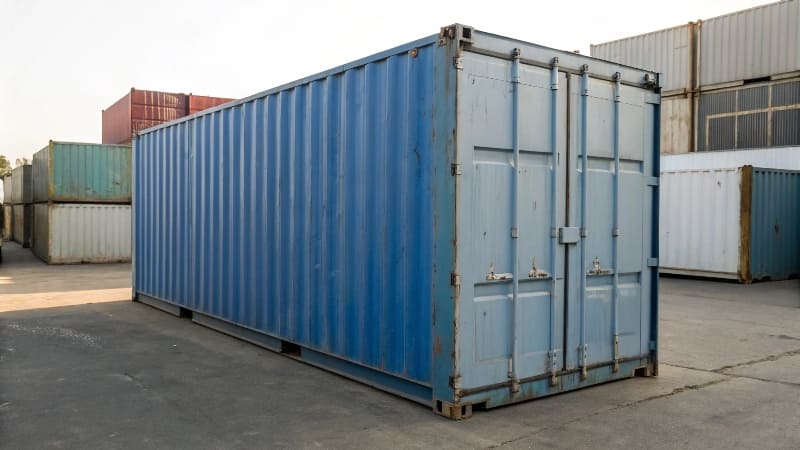
A 40ft high cube container’s payload capacity is about 26,000 kilograms (57,000 pounds). The total gross weight limit is approximately 30,480 kilograms, including the container itself.
Why Payload Matters in Real Applications
From a transport perspective, containers are engineered with a fixed maximum total mass. The “payload” is what’s left after deducting the container’s own weight. Maintaining this balance prevents structural stress or safety violations during hauling.
| Parameter | Standard 40ft | 40ft High Cube |
|---|---|---|
| Tare Weight | 3,700 kg | 3,900–4,200 kg |
| Payload | 26,780 kg | 26,280 kg |
| Gross Weight Limit | 30,480 kg | 30,480 kg |
In everyday logistics, this small difference rarely affects overall shipping performance, but for architectural or modular reuse, the stronger framing of high cubes supports heavier interior modifications safely.
Conclusion
A 40ft high cube container weighs around 3,900–4,200 kg and costs roughly USD 3,500–6,000 new. The main difference from a standard 40ft unit lies in its added one-foot height, giving about 9% more space without losing payload capacity (around 26,000 kg). In logistics or construction, that single extra foot transforms usability, efficiency, and spatial comfort—proving that even small dimensional changes can redefine both function and value.
