




How Many Windows Can I Cut in a 20ft Container Before It Loses Strength?
A 20ft container can safely accommodate 3-4 standard windows (36"x48" each) on the side walls before requiring structural reinforcement, with each opening removing approximately 15-20% of lateral strength, making steel frame reinforcement necessary when total opening area exceeds 25-30% of wall surface.
Structural integrity depends on opening size and placement rather than number alone with corner posts maintaining primary strength. Side wall corrugations provide lateral stiffness and cutting large openings removes critical structural elements. Professional assessment recommends maximum 25-30% wall opening before steel reinforcement required. Window placement should avoid corner areas within 24 inches of container corners to preserve structural continuity. Multiple small openings cause less structural impact than single large openings.
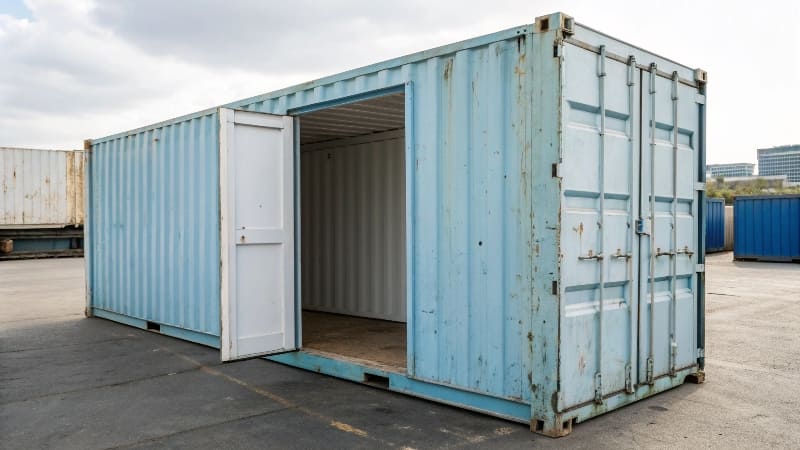
From my extensive experience in container modification and sales, I've observed that structural integrity depends more on strategic placement and proper reinforcement than absolute opening count.
Do I Need a Steel Frame Reinforcement for Large Glass Doors in Containers?
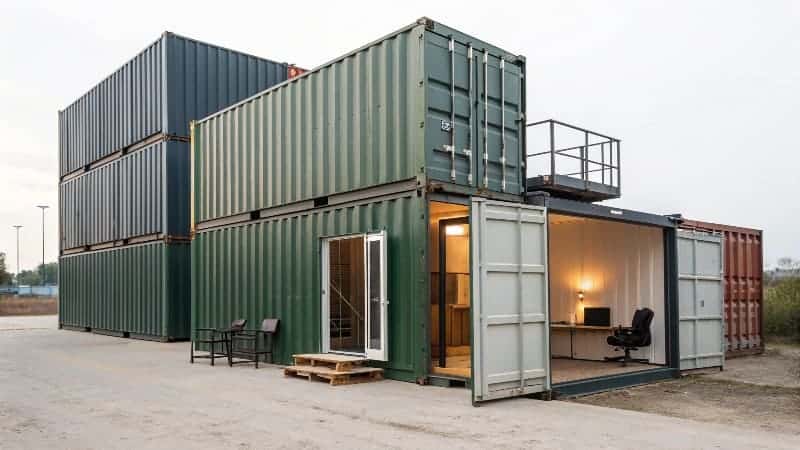
Yes, steel frame reinforcement is essential for large glass doors in containers because door openings typically exceed 30-40% of wall area, requiring structural steel frame installation around the opening perimeter and additional corner bracing to maintain container structural integrity and prevent wall distortion.
Large door openings create significant structural weakness removing critical wall sections that provide lateral stability. Steel frame reinforcement using rectangular steel tubing or structural angles restores load-bearing capacity around door perimeters. Corner bracing prevents container distortion under wind loads and thermal expansion. Professional engineering ensures proper reinforcement design matching door dimensions and structural requirements. Welded connections must integrate reinforcement with existing container structure for optimal load transfer.
Reinforcement Requirements
Large door openings require comprehensive structural reinforcement to maintain container integrity.
| Door Size | Opening Percentage | Reinforcement Type | Steel Requirements | Engineering Required |
|---|---|---|---|---|
| Standard Door (36"x80") | 15-20% | Frame reinforcement | 2"x4" tubing | Recommended |
| Patio Door (72"x80") | 25-30% | Frame + corner bracing | 3"x3" angles | Required |
| Large Glass (96"x80") | 35-40% | Comprehensive system | 4"x4" tubing | Required |
| Full Wall Opening | 50%+ | Major reinforcement | Engineered system | Critical |
| Multiple Openings | Variable | Cumulative assessment | Custom design | Required |
Large glass doors require comprehensive reinforcement beyond standard framing.
Structural Analysis
Different opening sizes create varying levels of structural impact requiring specific reinforcement approaches.
| Structural Impact | Standard Door | Patio Door | Large Glass Door | Full Wall Opening |
|---|---|---|---|---|
| Lateral Stiffness Loss | 10-15% | 20-25% | 30-40% | 50%+ |
| Corner Loading Increase | Minimal | Moderate | Significant | Critical |
| Reinforcement Complexity | Simple frame | Frame + bracing | Engineered system | Major modification |
| Cost Impact | $500-800 | $800-1500 | $1500-3000 | $3000+ |
| Installation Time | 1-2 days | 2-3 days | 3-5 days | 1-2 weeks |
Large glass doors create significant structural challenges requiring professional engineering.
Reinforcement Methods
Various reinforcement techniques provide different levels of structural restoration.
| Reinforcement Method | Application | Effectiveness | Cost Factor | Installation Complexity |
|---|---|---|---|---|
| Perimeter Framing | Small-medium openings | Good | Baseline | Moderate |
| Corner Bracing | Large openings | Very Good | +50% | Moderate |
| Full Frame System | Major modifications | Excellent | +100% | High |
| External Structure | Extreme cases | Excellent | +200% | Very High |
| Internal Reinforcement | Hidden systems | Good | +75% | High |
Full frame systems provide optimal reinforcement for large glass door installations.
Is It Safe to Stack Three Levels of Containers for a Hotel in Guyana?
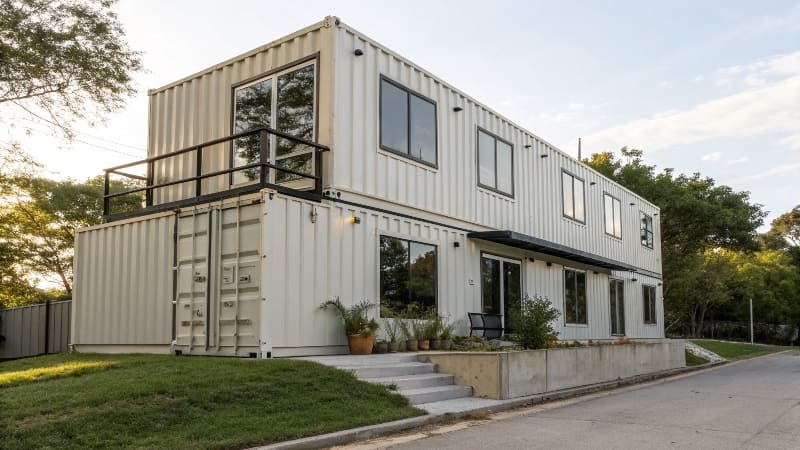
Yes, stacking three levels of containers is structurally safe for hotel applications in Guyana when properly engineered with adequate foundation support, corner post alignment, wind bracing, and compliance with local building codes, requiring professional structural engineering for seismic and wind load calculations.
Three-level stacking falls within container design limits as shipping containers are engineered for nine-high stacking during ocean transport. Foundation requirements include concrete pad footings under each corner post with proper drainage for tropical climate. Corner post alignment ensures vertical load transfer through container corner castings maintaining structural integrity. Wind bracing between container levels provides lateral stability against Caribbean wind loads. Local building codes require engineering certification and permit approval for commercial applications.
Structural Safety Factors
Container stacking safety depends on proper engineering and installation practices.
| Safety Factor | Single Level | Two Levels | Three Levels | Engineering Requirements |
|---|---|---|---|---|
| Vertical Load Capacity | Excellent | Very Good | Good | Standard engineering |
| Wind Resistance | Excellent | Good | Moderate | Enhanced bracing |
| Seismic Stability | Excellent | Good | Fair | Seismic analysis |
| Foundation Requirements | Basic | Moderate | Comprehensive | Professional design |
| Code Compliance | Simple | Moderate | Complex | Full engineering |
Three levels require comprehensive engineering but remain within safe design limits.
Foundation Design
Proper foundation design is critical for multi-level container stability in Guyana's climate.
| Foundation Type | Application | Load Capacity | Drainage Requirements | Cost Factor |
|---|---|---|---|---|
| Concrete Pads | Standard stacking | High | Good | Baseline |
| Deep Footings | Soft soil conditions | Very High | Excellent | +50% |
| Pile Foundation | Poor soil/high loads | Excellent | Superior | +100% |
| Raised Platform | Flood-prone areas | Good | Excellent | +75% |
| Combined System | Complex projects | Optimal | Superior | +150% |
Concrete pads with proper drainage provide adequate foundation for most applications.
Climate Considerations
Guyana's tropical climate requires specific design considerations for container stacking.
| Climate Factor | Impact | Design Response | Performance Benefit | Cost Implication |
|---|---|---|---|---|
| High Humidity | Corrosion risk | Enhanced ventilation | Extended lifespan | +10-15% |
| Heavy Rainfall | Water infiltration | Improved sealing | Moisture control | +15-20% |
| High Winds | Lateral loading | Additional bracing | Structural stability | +20-25% |
| Temperature Variation | Thermal expansion | Flexible connections | Reduced stress | +5-10% |
| Seismic Activity | Ground movement | Seismic engineering | Safety compliance | +25-30% |
High winds represent the primary design challenge for multi-level container structures.
How to Weld Internal Studs Without Damaging the Exterior Container Paint?
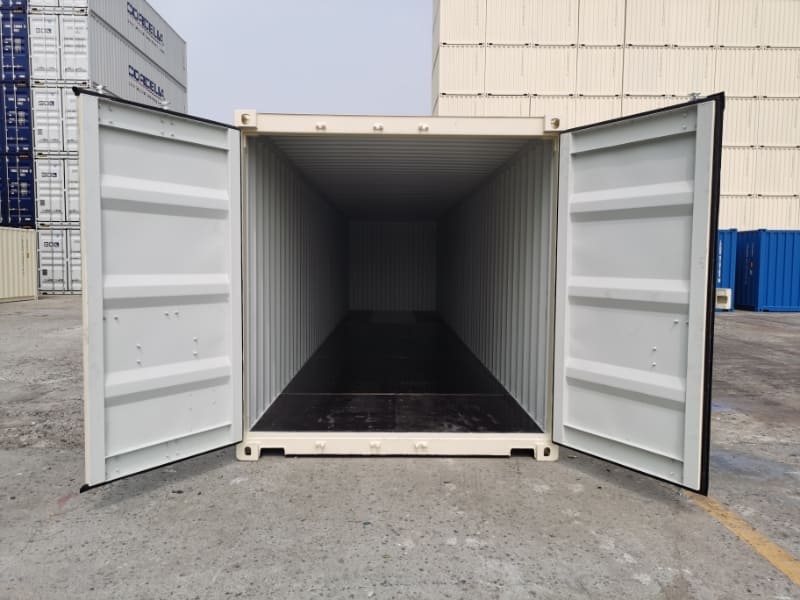
Weld internal studs using heat shields, controlled amperage welding, backing plates, and local cooling to prevent exterior paint damage, followed by touch-up painting of any affected areas using marine-grade container paint matching the original coating system.
Heat shield installation using ceramic blankets or metal plates protects exterior surfaces from radiant heat damage during internal welding operations. Controlled amperage welding with lower heat settings reduces heat transfer through container walls minimizing paint degradation. Backing plates distribute welding heat over larger surface areas preventing localized overheating. Local cooling using wet rags or compressed air rapidly dissipates heat from exterior surfaces. Touch-up painting addresses minor paint damage using compatible marine coatings matching original container finish.
Heat Protection Methods
Various techniques prevent exterior paint damage during internal welding operations.
| Protection Method | Effectiveness | Application | Cost | Installation Time |
|---|---|---|---|---|
| Ceramic Heat Shields | Excellent | All welding | $50-100/shield | 15 minutes |
| Metal Backing Plates | Very Good | Stud welding | $20-40/plate | 5 minutes |
| Wet Cooling Rags | Good | Spot protection | $5-10 | 2 minutes |
| Compressed Air Cooling | Moderate | Continuous cooling | Equipment dependent | Continuous |
| Low-Heat Welding | Good | Thin materials | Standard | Standard |
Ceramic heat shields provide optimal protection for extensive internal welding.
Welding Techniques
Proper welding techniques minimize heat transfer and paint damage.
| Welding Parameter | Standard Setting | Heat-Minimized Setting | Paint Protection Benefit | Quality Impact |
|---|---|---|---|---|
| Amperage | 120-150A | 80-100A | Reduced heat transfer | Adequate penetration |
| Welding Speed | Standard | 20% faster | Less heat buildup | Requires skill |
| Electrode Type | Standard | Low-heat | Better control | Good results |
| Duty Cycle | Continuous | Intermittent | Heat dissipation | Longer completion |
| Wire Feed Speed | Optimized | Reduced | Lower heat input | Adjusted penetration |
Reduced amperage significantly decreases heat transfer through container walls.
Paint Repair Procedures
Systematic paint repair maintains container corrosion protection and appearance.
| Repair Stage | Process | Materials Required | Time Required | Quality Result |
|---|---|---|---|---|
| Surface Preparation | Clean/sand affected area | Sandpaper, cleaner | 15-30 minutes | Critical foundation |
| Prime Application | Apply compatible primer | Marine primer | 30 minutes + dry | Corrosion protection |
| Base Coat | Match original color | Container paint | 45 minutes + dry | Color matching |
| Clear Coat | Protective finish | Marine topcoat | 30 minutes + dry | Durability |
| Quality Check | Inspect finish | Visual assessment | 10 minutes | Final approval |
Surface preparation is critical for successful paint repair adhesion and longevity.
Professional Best Practices
Industry standards ensure quality results with minimal exterior impact.
| Best Practice | Purpose | Implementation | Quality Benefit | Cost Impact |
|---|---|---|---|---|
| Pre-welding Planning | Heat management strategy | Design review | Optimal protection | Minimal |
| Sequential Welding | Heat distribution | Planned sequence | Even heating | Standard |
| Continuous Monitoring | Temperature control | Infrared thermometer | Real-time feedback | Equipment |
| Post-weld Inspection | Quality assurance | Visual/thermal check | Damage assessment | Time |
| Immediate Repair | Paint protection | Quick response | Corrosion prevention | Materials |
Pre-welding planning provides the foundation for successful internal modification work.
Conclusion
Container window cutting is safely limited to 3-4 standard openings or 25-30% wall area before requiring steel reinforcement to maintain structural integrity. Large glass doors require steel frame reinforcement using structural tubing and corner bracing because door openings exceed 30-40% wall area creating significant structural weakness. Three-level container stacking is structurally safe for hotel applications when properly engineered with adequate foundations, corner alignment, wind bracing, and building code compliance. Internal stud welding requires heat shields, controlled amperage, backing plates, and local cooling to prevent exterior paint damage followed by touch-up repairs using marine-grade coatings. Success with container modifications requires understanding that structural integrity depends on opening placement and reinforcement rather than absolute limits, large openings require comprehensive engineering solutions, multi-level stacking needs proper foundation and bracing systems, and welding techniques can preserve exterior finishes through proper heat management, making professional engineering and skilled installation critical for safe and durable container building applications.
