




How Many Times Do Shipping Containers Get Used?
Most people imagine containers as single‑use products, but they are actually one of the world’s most reused industrial assets.
Each unit can complete hundreds of voyages during its lifetime.
TRUSUS logistics insight: a container’s value lives in cycles, not in counts.
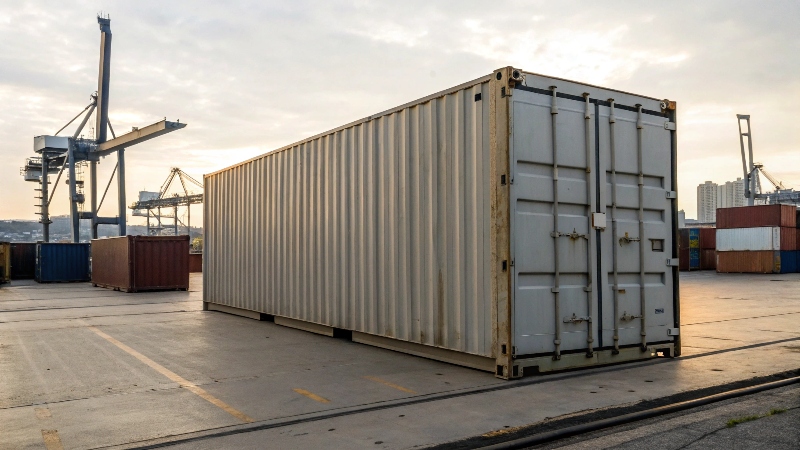
A standard shipping container is used 80 – 100 loading cycles per year and typically lasts 15 – 25 years.
That equals more than a thousand trips if properly maintained—far beyond what many imagine as a disposable tool.
Are Shipping Containers One‑Time Use?
No. One‑time (“one‑way”) containers exist only in special logistics routes where returning empties is inefficient.
Most containers circulate globally until they reach structural fatigue or market relocation.
TRUSUS reuse insight: “one trip” describes logistics strategy, not lifespan.
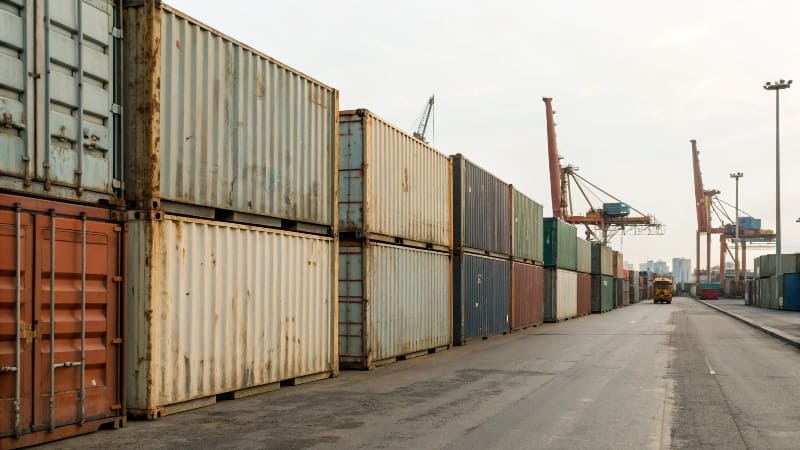
Container Use Cycle Overview
| Type of Use | Description | Typical Outcome |
|---|---|---|
| One‑way export | Sold at destination to avoid return cost | Joins local storage/modular markets |
| Standard rotation | Regular port‑to‑port shipping | 15 – 25 yr use |
| Lease operations | Managed fleet rotation | Repainted and re‑certified periodically |
| Post‑trade reuse | Converted for architecture or storage | New life cycle on land |
I often explain to clients that “one‑trip” is an economic decision.
The same box may serve ten more years in warehouse yards or modular construction once imported.
Do Shipping Containers Get Reused?
Yes, and they are designed exactly for that purpose.
From factories to ports, every panel and corner casting supports continuous loading stress under ISO standards.
TRUSUS sustainability insight: reusing steel boxes is the foundation of circular shipping.

TRUSUS Container Lifecycle Phases
| Lifecycle Stage | Typical Duration | Structural Status | Common Reuse Path |
|---|---|---|---|
| Marine Deployment | 10 – 20 yrs | Fully operational | Shipping cycles |
| Secondary Market | 5 – 10 yrs | Minor maintenance | Warehousing, on‑site storage |
| Structural Repurpose | Long‑term | Frame intact | Housing, pop‑ups, equipment rooms |
In my own work, I have seen Corten‑steel boxes with more than twenty years at sea remain solid after minor welding and repainting.
Reconditioning often costs less than 10 % of the original price while extending usability by another decade.
How Thick Is the Metal on a Shipping Container?
Shipping containers use Corten steel plates between 1.6 mm and 2.0 mm thick.
That might sound thin, but the corrugated design produces immense rigidity under stacking loads.
TRUSUS materials insight: strength comes from structure, not mass.

Structural Thickness Reference
| Component | Material | Typical Thickness | Function |
|---|---|---|---|
| Side Wall Panels | Corten Steel | 1.6 mm | Tensile skin, weather barrier |
| Front/Rear Walls | Corten Steel | 2.0 mm | End strength |
| Roof Panel | Corten Steel | 1.6 mm | Impact resistance |
| Floor Cross Members | Steel beams | 3 – 4 mm | Load distribution |
| Floor (Plywood or Bamboo) | Marine grade | 28 – 30 mm | Deck platform |
That thin metal, shaped into corrugations, can resist multi‑ton stacking forces, temperature swings, and long exposure to salt air.
When corrosion appears, a light sanding and coating can restore surface protection for years more service.
Conclusion
At TRUSUS, I view each container not as a box but as a reusable system—born from engineered steel and sustained by global circulation.
Its life is measured not by voyages, but by the durability of the network that keeps it moving.
