




How is a Shipping Container Delivered?
Shipping containers are delivered using specialized trucks with hydraulic tilt-bed systems or crane equipment, requiring proper site preparation and access planning for safe placement.
Container delivery uses tilt-bed trucks for ground-level placement or crane trucks for elevated positioning depending on site accessibility and final location requirements. Standard delivery requires 14-foot width clearance and firm, level ground supporting 67,000 pounds for 40-foot containers. Professional drivers perform site assessment before positioning containers within 100 feet of truck access using hydraulic tilting or crane lifting systems. Delivery scheduling coordinates with site preparation including utility clearance verification and neighbor notification. Final placement achieves precise positioning with container doors accessible and level foundation contact ensuring structural integrity and operational functionality.
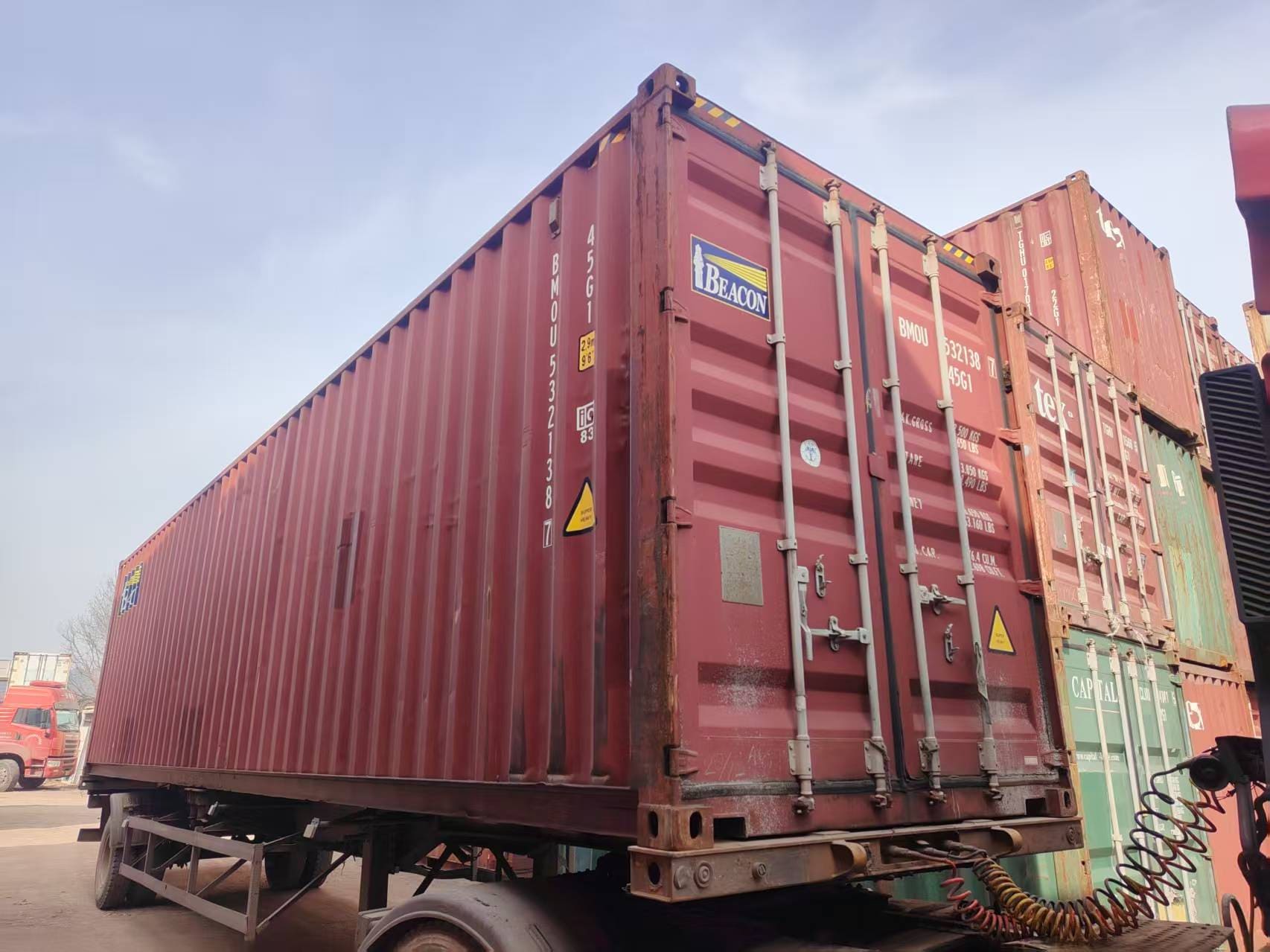
From my extensive experience in container sales and delivery coordination, I've learned that successful delivery depends on thorough advance planning and clear communication between all parties, with site preparation being the most critical factor determining delivery success.
What is the Process of Container Shipping?
Container shipping follows a systematic process from booking and loading to documentation, vessel transport, port handling, and final delivery to consignees.
Booking process initiates with freight forwarders securing vessel space and completing documentation including bills of lading. Container loading occurs at shipper facilities with cargo securing and customs sealing before transport to departure port. Port operations include container inspection, vessel loading, and departure clearance with GPS tracking throughout ocean transit. Destination port handling involves customs clearance and documentation verification before container release to consignees. Final delivery completes through inland transportation using trucks or rail systems with real-time tracking and delivery confirmation.

Shipping Documentation Requirements
Container shipping requires extensive documentation for legal compliance and cargo tracking.
| Document Type | Purpose | Issuing Party | Legal Status | Processing Timeline |
|---|---|---|---|---|
| Bill of Lading | Cargo ownership | Shipping line | Legal title | Same day |
| Commercial Invoice | Value declaration | Shipper | Required | Before loading |
| Packing List | Contents detail | Shipper | Supporting | Before loading |
| Certificate of Origin | Trade compliance | Chamber of Commerce | Variable | 2-5 days |
| Insurance Certificate | Risk coverage | Insurance company | Optional | 1-2 days |
| Customs Declaration | Import clearance | Customs broker | Mandatory | At destination |
Bill of Lading serves as the primary legal document controlling cargo ownership and release.
Port Operations Timeline
Container movement through ports follows structured operational sequences.
| Port Operation | Duration | Key Activities | Equipment Required | Critical Success Factors |
|---|---|---|---|---|
| Gate-In Process | 30-60 minutes | Document check, weighing | Truck scales, scanners | Documentation accuracy |
| Yard Storage | 1-14 days | Container positioning | Yard cranes, trackers | Space optimization |
| Vessel Loading | 2-6 hours | Crane operations | Ship-to-shore cranes | Loading sequence |
| Ocean Transit | 3-45 days | GPS monitoring | Vessel systems | Weather conditions |
| Discharge Operations | 2-6 hours | Unloading cranes | Port equipment | Berth availability |
| Customs Processing | 4-48 hours | Inspection, clearance | X-ray, physical exam | Documentation compliance |
Customs processing represents the most variable timeline factor in port operations.
Technology Integration
Modern container shipping relies heavily on digital systems for tracking and management.
| Technology System | Function | User Access | Real-time Updates | Industry Adoption |
|---|---|---|---|---|
| GPS Tracking | Location monitoring | Shippers/consignees | Continuous | 95%+ |
| EDI Systems | Document exchange | Trade partners | Batch updates | 90%+ |
| RFID Tags | Container identification | Port operators | At checkpoints | 60%+ |
| Blockchain | Document verification | Selected trades | Immutable records | 15%+ |
| IoT Sensors | Cargo monitoring | Premium services | Continuous | 25%+ |
GPS tracking systems provide the most widely adopted real-time visibility for container movements.
How Are Shipping Containers Transported on Land?
Shipping containers are transported on land using specialized truck trailers, rail systems, and intermodal combinations designed for efficient container handling and movement.
Truck transportation uses chassis trailers designed for 20-foot and 40-foot containers with twist-lock mechanisms securing containers during transport. Rail systems employ well cars and stack cars enabling double-stack configuration for improved efficiency. Intermodal transportation combines truck and rail with container transfer at specialized terminals. Specialized equipment includes side-lifters, reach stackers, and overhead cranes for container loading and positioning. Weight distribution systems ensure legal axle loads while GPS tracking provides real-time location monitoring throughout inland transportation networks.

Truck Transportation Specifications
Container truck transport requires specialized equipment and regulatory compliance.
| Truck Configuration | Container Capacity | Equipment Requirements | Weight Limits | Typical Applications |
|---|---|---|---|---|
| Single Chassis | One 20' or 40' | Standard tractor-trailer | 80,000 lbs gross | Local/regional delivery |
| Multi-Axle Trailer | One 40'+ heavy | Additional axles | 80,000+ lbs | Overweight containers |
| Side-Loader | One 20'/40' | Hydraulic lifting | 67,000 lbs | Self-loading delivery |
| Reach Stacker | Multiple handling | Telescopic boom | Variable | Terminal operations |
| Container Dolly | Two 20' containers | Specialized coupling | 80,000 lbs | Efficient pairing |
Single chassis configuration handles the majority of container land transportation.
Rail Transportation Advantages
Rail systems provide cost-effective long-distance container transportation.
| Rail System Type | Capacity | Efficiency Advantage | Cost Savings | Environmental Benefit |
|---|---|---|---|---|
| Well Cars | 1-2 containers | 75% less fuel per ton | 30-50% vs truck | 75% less emissions |
| Stack Cars | 2 containers | Double-stack efficiency | 40-60% vs truck | 80% less emissions |
| Intermodal Trains | 100+ containers | Bulk movement | 50-70% vs truck | 85% less emissions |
| Unit Trains | 200+ containers | Dedicated service | 60-80% vs truck | 90% less emissions |
Double-stack rail cars provide the highest efficiency for long-distance container transport.
Intermodal Terminal Operations
Intermodal facilities enable seamless transfer between transportation modes.
| Terminal Function | Equipment Used | Processing Time | Efficiency Metrics | Operational Challenges |
|---|---|---|---|---|
| Container Receipt | Gate systems | 5-15 minutes | 95% accuracy | Documentation |
| Mode Transfer | Overhead cranes | 2-5 minutes | 40 moves/hour | Equipment coordination |
| Storage Management | Yard tractors | Continuous | 5,000+ containers | Space optimization |
| Dispatch Operations | Computer systems | Real-time | 99% on-time | Weather delays |
| Maintenance Services | Repair shops | 1-24 hours | 98% availability | Parts inventory |
Overhead crane systems provide the fastest container transfer between rail and truck.
How to Prepare for a Shipping Container?
Preparing for shipping container delivery requires site assessment, foundation preparation, utility clearance, and access planning to ensure successful placement.
Site preparation includes ground leveling within 2-inch tolerance and foundation support for 67,000-pound weight distribution. Access route planning ensures 14-foot width clearance with overhead obstacles cleared to 16-foot minimum height. Utility location verification prevents damage to underground cables, pipes, and gas lines. Permit acquisition may be required for oversize loads or special delivery circumstances. Equipment coordination schedules crane services when ground-level delivery is impossible or elevated placement is required.

Site Assessment Requirements
Proper site evaluation prevents delivery complications and ensures container functionality.
| Assessment Factor | Specification | Measurement Method | Tolerance | Consequences of Non-Compliance |
|---|---|---|---|---|
| Ground Level | ±2 inches | Laser level/transit | Strict | Door operation issues |
| Load-Bearing Capacity | 67,000 lbs (40') | Soil analysis | Engineering | Ground settling/damage |
| Access Width | 14 feet minimum | Physical measurement | Critical | Delivery impossible |
| Overhead Clearance | 16 feet minimum | Height measurement | Critical | Route blockage |
| Drainage | Positive slope | Grade measurement | Important | Water accumulation |
Ground leveling within 2-inch tolerance ensures proper door operation and structural integrity.
Foundation Options
Different foundation types accommodate varying site conditions and container applications.
| Foundation Type | Cost Factor | Preparation Time | Durability | Best Applications |
|---|---|---|---|---|
| Gravel Pad | Low (1.0x) | 1-2 days | Good (10+ years) | Temporary placement |
| Concrete Piers | Medium (2-3x) | 3-5 days | Excellent (25+ years) | Permanent installation |
| Concrete Slab | High (4-6x) | 5-10 days | Excellent (25+ years) | Building conversion |
| Railroad Ties | Low-Medium (1.5x) | 2-3 days | Good (15+ years) | Semi-permanent |
| Helical Piers | High (5-8x) | 1-2 days | Excellent (25+ years) | Poor soil conditions |
Concrete pier foundations provide the best balance of cost, durability, and installation time.
Utility Clearance Procedures
Underground utilities must be located and protected before container placement.
| Utility Type | Clearance Distance | Detection Method | Protection Measures | Contact Requirements |
|---|---|---|---|---|
| Electrical Lines | 3 feet minimum | Electronic locating | Hand digging | Utility notification |
| Gas Lines | 5 feet minimum | Electronic/visual | Extreme caution | Mandatory marking |
| Water/Sewer | 2 feet minimum | Electronic locating | Standard precautions | Utility notification |
| Telecommunications | 1 foot minimum | Electronic locating | Care during excavation | 811 call required |
| Fiber Optic | 1 foot minimum | Electronic locating | Extra care | 811 call required |
Gas line clearance requires the strictest safety protocols with mandatory utility notification.
Delivery Coordination
Successful container delivery requires coordinating multiple parties and timeline factors.
| Coordination Aspect | Lead Time | Key Parties | Communication Requirements | Success Factors |
|---|---|---|---|---|
| Site Preparation | 3-7 days | Customer/contractor | Progress updates | Weather conditions |
| Delivery Scheduling | 2-5 days | Supplier/logistics | Confirmation calls | Equipment availability |
| Access Permits | 5-14 days | Local authorities | Application submission | Route restrictions |
| Utility Clearance | 2-3 days | 811 service | Location marking | Accurate mapping |
| Equipment Rental | 1-3 days | Crane companies | Availability confirmation | Site access |
Site preparation completion determines the critical path for successful delivery scheduling.
Special Delivery Considerations
Certain situations require additional planning and specialized equipment.
| Special Situation | Additional Requirements | Equipment Needed | Cost Impact | Timeline Impact |
|---|---|---|---|---|
| Tight Access | Route survey | Smaller equipment | +20-50% | +1-2 days |
| Elevated Placement | Crane services | Mobile crane | +$500-2000 | +1 day |
| Remote Locations | Extended transport | Special permits | +30-100% | +2-5 days |
| Soft Ground | Stabilization | Ground mats | +$200-800 | +1-2 days |
| Overhead Obstacles | Route planning | Height clearance | Variable | +1-3 days |
Elevated placement requirements create the highest additional cost and complexity factors.
Conclusion
Shipping containers are delivered using specialized tilt-bed trucks or crane equipment requiring 14-foot width clearance and firm, level ground supporting 67,000 pounds with professional drivers performing site assessment and hydraulic systems positioning containers within 100 feet of truck access. Container shipping process involves booking with freight forwarders, cargo loading with customs sealing, port operations including vessel loading and GPS tracking throughout ocean transit, destination port customs clearance and final delivery through inland transportation systems. Land transportation uses specialized chassis trailers with twist-lock mechanisms, rail systems employing well cars for double-stack efficiency and intermodal combinations with container transfer at specialized terminals using reach stackers, overhead cranes, and GPS tracking systems. Container preparation requires site assessment with ground leveling within 2-inch tolerance, foundation support calculations, access route planning with 14-foot width clearance and utility location verification with 811 service notification plus permit acquisition for oversize loads. Success with container delivery depends on understanding that this represents a complex coordination process requiring advance planning, proper site preparation, and clear communication between all stakeholders rather than simple transportation, with the most critical factors being accurate site assessment, foundation preparation, and utility clearance to ensure safe placement and operational functionality.
