




How Do You Determine The Grade Of Condition For Second-Hand Containers?
Second-hand container grading follows international standards using A-grade (excellent condition), B-grade (good condition), C-grade (fair condition), and D-grade (poor condition) classifications based on structural integrity, appearance, and functionality assessment. Professional grading ensures accurate pricing and appropriate application matching.
TRUSUS grading insight: systematic condition assessment protects buyers from unexpected costs and ensures containers match intended applications.
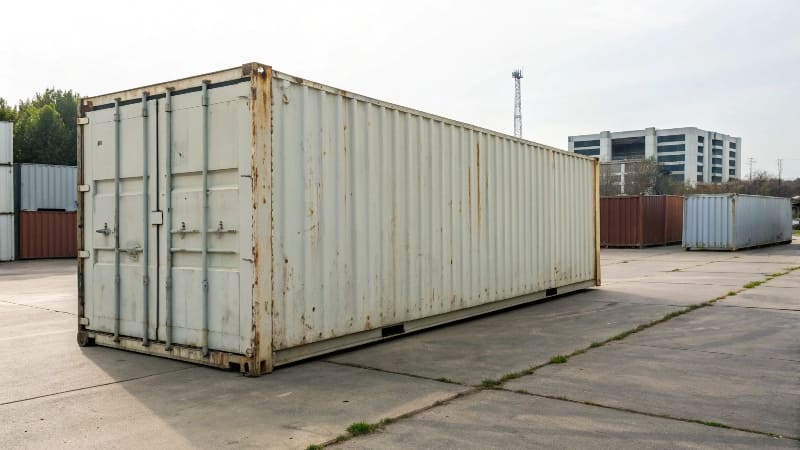
I increasingly see professional buyers demand standardized grading reports rather than relying on subjective condition descriptions.
Standardized grading protects investment value and ensures application suitability.
International Grading Standards
| Grade | Structural Condition | Appearance | Functionality |
|---|---|---|---|
| A-Grade | Excellent integrity | Minor surface wear | Fully operational |
| B-Grade | Good structural condition | Moderate cosmetic issues | Functional with minor defects |
| C-Grade | Acceptable structure | Significant wear/rust | Requires some repairs |
| D-Grade | Structural concerns | Heavy damage/corrosion | Major repairs needed |
Each grade serves different budget and application requirements.
Key Assessment Criteria
| Assessment Area | Critical Factors |
|---|---|
| Structural integrity | Frame, corner posts, roof |
| Weather tightness | Seals, gaskets, door function |
| Floor condition | Wood integrity, damage extent |
| Exterior condition | Paint, rust, dents |
| Interior condition | Cleanliness, odors, stains |
Comprehensive assessment ensures accurate grading.
Professional Inspection Process
| Inspection Stage | Focus Areas |
|---|---|
| External examination | Overall structural assessment |
| Internal inspection | Floor, walls, ceiling condition |
| Operational testing | Door function, locking mechanisms |
| Documentation review | Service history, certification status |
Systematic inspection prevents overlooked issues.
Common Condition Issues
| Issue Type | Grade Impact |
|---|---|
| Surface rust | B to C grade |
| Structural rust | C to D grade |
| Floor damage | Significant grade reduction |
| Door problems | Moderate grade impact |
| Water damage | Major grade reduction |
Understanding issues helps predict grading outcomes.
Grading Impact On Value
| Grade | Price Range | Best Applications |
|---|---|---|
| A-Grade | 80-100% of new | Premium shipping/storage |
| B-Grade | 60-80% of new | Standard shipping/conversion |
| C-Grade | 40-60% of new | Budget storage/modification |
| D-Grade | 20-40% of new | Scrap/parts/heavy conversion |
Grade directly correlates with market value and suitable uses.
Why Professional Grading Matters
| Subjective Assessment | Professional Standardized Grading |
|---|---|
| Inconsistent evaluation | Uniform assessment standards |
| Potential surprises | Predictable condition quality |
| Limited buyer protection | Documented condition guarantee |
Professional grading provides buyer confidence and market transparency.
The Industry Shift Behind Grading Questions
| Traditional Condition Assessment | Modern Standardized Grading |
|---|---|
| Subjective visual inspection | Systematic evaluation criteria |
| Seller-focused descriptions | Buyer-protection standards |
| Informal condition reports | Professional certification |
I increasingly see container markets adopt rigorous grading standards as buyers demand transparency and investment protection.
What Is Overweight For A 20 Ft Container?
A 20ft container becomes overweight when exceeding Maximum Gross Weight (MGW) of 30,480 kg (67,200 lbs) or local road transport limits, typically 26-28 tons depending on jurisdiction and transport regulations. Overweight containers face shipping restrictions, safety risks, and potential legal penalties.
TRUSUS weight insight: understanding multiple weight limits prevents costly shipping delays, safety violations, and legal complications.

I increasingly see shippers face expensive surprises from inadequate weight limit planning across different transport modes and jurisdictions.
Proper weight management prevents costly delays and safety violations.
Standard Weight Specifications
| Weight Category | 20ft Container Limit |
|---|---|
| Maximum Gross Weight (MGW) | 30,480 kg (67,200 lbs) |
| Tare Weight (empty) | 2,200-2,300 kg (4,850-5,070 lbs) |
| Maximum Payload | 28,180-28,280 kg (62,130-62,350 lbs) |
| Practical Load Limit | 27,000-27,500 kg (59,500-60,600 lbs) |
Different limits apply for different operational contexts.
Regional Transport Restrictions
| Region/Country | Road Transport Limit |
|---|---|
| United States | 36,000 kg (80,000 lbs total truck) |
| European Union | 26,000-30,000 kg (varies by country) |
| Australia | 28,000 kg (typical limit) |
| Asia-Pacific | 24,000-30,000 kg (varies significantly) |
Local regulations often impose stricter limits than container specifications.
Overweight Consequences
| Consequence Type | Impact |
|---|---|
| Shipping line penalties | Extra charges, delays |
| Port handling issues | Equipment limitations |
| Road transport violations | Fines, legal action |
| Insurance complications | Coverage limitations |
| Safety risks | Equipment damage, accidents |
Multiple serious consequences result from overweight violations.
Weight Distribution Requirements
| Distribution Factor | Requirement |
|---|---|
| Even load distribution | Prevent structural stress |
| Center of gravity | Maintain stability |
| Axle weight limits | Comply with transport regulations |
| Dynamic forces | Account for movement stresses |
Proper distribution prevents damage and ensures safe transport.
Weight Verification Methods
| Verification Method | Accuracy Level |
|---|---|
| Certified truck scales | Highest accuracy |
| Container weighbridges | Very accurate |
| Estimated calculations | Moderate accuracy |
| Portable scales | Variable accuracy |
Accurate verification prevents overweight violations.
Why Weight Compliance Matters
| Weight Non-Compliance | Proper Weight Management |
|---|---|
| Costly penalties and delays | Smooth transport operations |
| Safety risks | Secure transport |
| Legal complications | Regulatory compliance |
Proper weight management ensures safe, legal, cost-effective shipping.
The Industry Shift Behind Weight-Limit Questions
| Traditional Weight Management | Modern Precision Weight Control |
|---|---|
| Rough estimation methods | Precise verification systems |
| Reactive problem solving | Proactive compliance planning |
| Single-limit focus | Multi-jurisdictional awareness |
I increasingly see professional shippers implement comprehensive weight management systems addressing multiple regulatory requirements and transport modes.
How To Read A Container Number?
Container numbers follow ISO 6346 standards with owner code (3 letters), equipment category (U for containers), serial number (6 digits), and check digit (1 digit) providing identification, ownership, and verification information. Proper number reading enables tracking, verification, and equipment management.
TRUSUS numbering insight: container numbers contain critical information for tracking, ownership verification, and equipment history research.

I increasingly see logistics professionals use container number analysis for equipment verification, tracking optimization, and fraud prevention.
Proper number interpretation enables professional container management.
Container Number Structure
| Position | Code Type | Information |
|---|---|---|
| 1-3 | Owner Code | Company identification |
| 4 | Equipment Category | U = Container unit |
| 5-10 | Serial Number | Unique equipment identifier |
| 11 | Check Digit | Mathematical verification |
Each element provides specific identification information.
Common Owner Codes
| Owner Code | Company |
|---|---|
| MSK | Maersk Line |
| COS | COSCO Shipping |
| ONE | Ocean Network Express |
| EGL | Evergreen Line |
| HAP | Hapag-Lloyd |
Owner codes identify container operating companies.
Equipment Category Codes
| Code | Equipment Type |
|---|---|
| U | Freight container |
| J | Detachable freight container equipment |
| Z | Trailers and chassis |
| R | Reefer (refrigerated) equipment |
Category codes specify equipment type and capabilities.
Check Digit Calculation
| Calculation Step | Method |
|---|---|
| Position weighting | Each position has specific multiplier |
| Sum calculation | Total all weighted values |
| Division by 11 | Calculate remainder |
| Check digit result | Remainder becomes check digit |
Mathematical verification prevents number errors.
Information Extraction Methods
| Method | Information Gained |
|---|---|
| Owner code lookup | Operating company identification |
| Serial number analysis | Manufacturing period estimation |
| Check digit verification | Number accuracy confirmation |
| Database correlation | Equipment history and specifications |
Systematic analysis reveals comprehensive equipment information.
Why Number Reading Matters
| Basic Number Recognition | Professional Number Analysis |
|---|---|
| Simple identification | Comprehensive information extraction |
| Basic tracking capability | Advanced verification and research |
| Limited fraud protection | Enhanced security verification |
Professional number analysis provides operational advantages and security benefits.
The Industry Shift Behind Number-Reading Questions
| Traditional Container Handling | Modern Information-Driven Operations |
|---|---|
| Basic number recording | Comprehensive number analysis |
| Manual tracking methods | Automated information systems |
| Limited verification | Advanced fraud prevention |
I increasingly see logistics operators implement sophisticated container number analysis for operational efficiency and security enhancement.
Where Can I Track Containers?
Container tracking is available through shipping line websites, third-party tracking platforms, EDI systems, and specialized logistics software providing real-time location and status information. Multiple tracking sources ensure comprehensive visibility and backup information access.
TRUSUS tracking insight: diversified tracking sources provide redundancy and comprehensive visibility for professional container management.

I increasingly see logistics managers use multiple tracking platforms for comprehensive visibility and risk mitigation.
Comprehensive tracking ensures operational control and customer service excellence.
Primary Tracking Sources
| Source Type | Examples |
|---|---|
| Shipping lines | Maersk, MSC, CMA CGM direct portals |
| Third-party platforms | Container Tracking, SeaRates |
| EDI systems | Electronic data interchange |
| Logistics software | CargoSmart, INTTRA |
Multiple sources provide comprehensive tracking coverage.
Major Shipping Line Portals
| Shipping Line | Website Features |
|---|---|
| Maersk | Real-time tracking, schedule integration |
| MSC | Global tracking, vessel schedules |
| CMA CGM | Container status, documentation |
| COSCO | Tracking, booking management |
| Evergreen | Status updates, schedule information |
Direct carrier portals provide authoritative information.
Third-Party Tracking Platforms
| Platform | Advantages |
|---|---|
| Container Tracking | Multi-carrier aggregation |
| SeaRates | Rate comparison with tracking |
| ShipsGo | Real-time vessel positions |
| MarineTraffic | Vessel tracking integration |
Third-party platforms aggregate multiple carriers.
Advanced Tracking Technologies
| Technology | Capability |
|---|---|
| IoT sensors | Real-time condition monitoring |
| GPS tracking | Precise location data |
| Blockchain platforms | Immutable tracking records |
| API integrations | Automated system updates |
Advanced technologies provide enhanced tracking capabilities.
Tracking Information Types
| Information Type | Tracking Detail |
|---|---|
| Location status | Current position, port |
| Milestone events | Loading, departure, arrival |
| Document status | Customs, release |
| Vessel information | Ship name, schedule |
| Delivery status | Final delivery confirmation |
Comprehensive information supports operational decision-making.
Why Multi-Source Tracking Matters
| Single-Source Tracking | Multi-Source Tracking Strategy |
|---|---|
| Limited information access | Comprehensive visibility |
| Single point of failure | Redundant information sources |
| Carrier dependency | Independent verification |
Multi-source tracking provides operational resilience and comprehensive visibility.
The Industry Shift Behind Tracking Questions
| Traditional Tracking Methods | Modern Multi-Platform Tracking |
|---|---|
| Single carrier dependency | Multi-source information strategy |
| Manual status checking | Automated tracking integration |
| Limited visibility | Comprehensive supply chain transparency |
I increasingly see professional logistics operations implement sophisticated tracking strategies using multiple platforms for comprehensive visibility and operational control.
Conclusion
At TRUSUS, I see container management evolving from basic trade transactions toward professional asset management requiring standardized condition assessment, precise weight compliance, systematic number analysis, and comprehensive tracking strategies. Success demands treating containers as sophisticated assets requiring professional evaluation and management expertise.
