




Do You Need Planning Permission to Convert a Shipping Container?
Planning permission requirements for shipping container conversions depend on intended use, location, and duration of installation.
Planning permission requirements vary by jurisdiction with temporary installations under 28 days typically exempt while permanent commercial conversions require full building permits. Residential conversions need building permits in most areas while temporary retail or event uses often qualify for simplified permitting. Location zoning significantly affects approval requirements with commercial zones more permissive than residential areas.
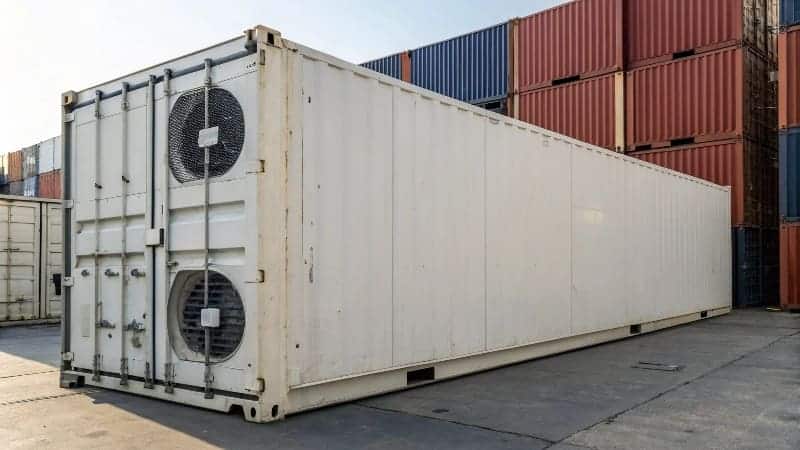
From my experience in new and used container sales, I've learned that container conversions represent more than structural modifications—they're evolving into mobile business platforms that challenge traditional boundaries between temporary structures and permanent commercial assets.
Can Shipping Containers Be Modified into Shops?
Shipping containers provide excellent platforms for retail shop conversions with proper planning and modifications.
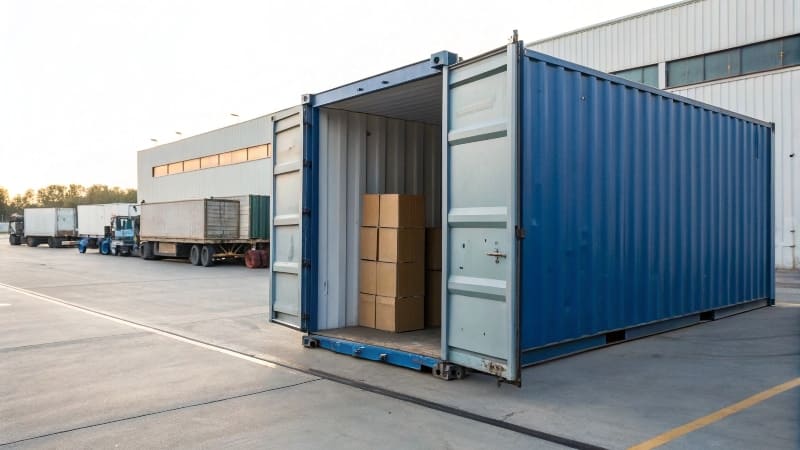
Shipping containers can be successfully modified into retail shops with proper structural modifications, utility installations, and regulatory compliance. Standard 20ft containers provide 160 square feet while 40ft containers offer 320 square feet of retail space suitable for boutiques, cafes, pop-up stores, and specialty retail. Modular nature allows multiple container combinations creating larger commercial spaces with flexible layouts.
Retail Space Configuration Options
Different container configurations serve various retail applications and customer flow requirements.
| Configuration Type | Floor Area | Best Applications | Customer Capacity | Investment Level |
|---|---|---|---|---|
| Single 20ft Container | 160 sq ft | Boutique, coffee cart | 5-8 customers | $15,000-35,000 |
| Single 40ft Container | 320 sq ft | Retail store, cafe | 10-15 customers | $25,000-50,000 |
| Double-Wide (2x20ft) | 320 sq ft | Restaurant, showroom | 15-25 customers | $35,000-70,000 |
| L-Shape Configuration | 480 sq ft | Multi-zone retail | 20-30 customers | $50,000-90,000 |
| Multi-Level Stack | 320-640 sq ft | Flagship store | 25-40 customers | $60,000-120,000 |
Single 40ft containers provide optimal balance of space, cost, and modification complexity for most retail applications.
Essential Modifications for Retail Use
Container retail conversions require specific modifications to create functional and attractive shopping environments.
| Modification Type | Cost Range | Functionality | Customer Impact | Code Requirements |
|---|---|---|---|---|
| Storefront Windows | $2,000-8,000 | Natural light, display | High visibility | Safety glass required |
| Entry Doors | $800-3,000 | Customer access | Accessibility | ADA compliance |
| HVAC Systems | $3,000-10,000 | Climate control | Comfort | Energy efficiency |
| Electrical Installation | $2,000-6,000 | Lighting, power | Functionality | Code compliance |
| Insulation Package | $1,500-4,000 | Comfort, efficiency | Environment | Building standards |
Storefront windows provide the highest impact modification for retail container conversions.
Retail Category Suitability
Different retail categories show varying degrees of success in container-based environments.
| Retail Category | Suitability Rating | Space Requirements | Typical Modifications | Success Factors |
|---|---|---|---|---|
| Food Service | Excellent | Kitchen equipment | Ventilation, plumbing | Health permits |
| Fashion Retail | Very Good | Display areas | Windows, lighting | Visual merchandising |
| Tech/Electronics | Good | Security features | Climate control | Product protection |
| Art/Crafts | Excellent | Display flexibility | Gallery lighting | Creative space |
| Services | Very Good | Work areas | Professional layout | Accessibility |
Food service applications demonstrate the highest success rates in container retail conversions.
Can You Modify a Shipping Container?
Shipping containers can be extensively modified while maintaining structural integrity through proper engineering.
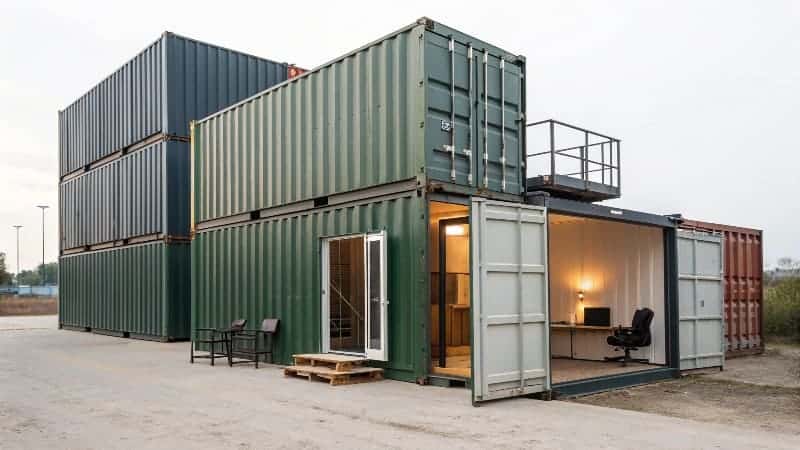
Shipping containers can be modified with structural cuts, additions, and installations while maintaining integrity through proper engineering and reinforcement. Steel construction allows welding modifications with load-bearing calculations ensuring safety while weatherproof design facilitates utility integration. Professional modification maintains warranty and resale value compared to amateur alterations reducing asset value.
Structural Modification Guidelines
Container modifications must respect structural integrity while achieving functional requirements.
| Modification Type | Structural Impact | Engineering Required | Cost Factor | Reversibility |
|---|---|---|---|---|
| Door/Window Cuts | Medium | Recommended | 1.2-1.5x | Difficult |
| Wall Removal | High | Always required | 1.5-2.0x | Impossible |
| Roof Modifications | High | Always required | 1.4-1.8x | Difficult |
| Floor Cuts | Medium | Recommended | 1.3-1.6x | Difficult |
| External Additions | Low | Case dependent | 1.1-1.3x | Possible |
Professional engineering ensures modifications maintain container structural integrity and safety standards.
Utility Integration Methods
Modern container modifications require sophisticated utility integration for functional commercial spaces.
| Utility System | Integration Method | Cost Range | Complexity Level | Maintenance Requirements |
|---|---|---|---|---|
| Electrical Systems | Internal routing | $2,000-6,000 | Medium | Annual inspection |
| Plumbing | Floor/wall routing | $3,000-8,000 | High | Regular maintenance |
| HVAC | Roof/wall units | $3,000-12,000 | High | Seasonal service |
| Internet/Data | Cable management | $500-2,000 | Low | Minimal |
| Security Systems | Integrated wiring | $1,000-4,000 | Medium | System updates |
Electrical system integration provides the foundation for all other utility installations in container modifications.
Modification Quality Standards
Quality modification work ensures long-term performance and value retention in container conversions.
| Quality Factor | Assessment Method | Industry Standard | Impact on Value | Verification Process |
|---|---|---|---|---|
| Welding Quality | Visual/X-ray inspection | AWS standards | High | Professional certification |
| Weatherproofing | Water testing | No penetration | Critical | Performance testing |
| Insulation Performance | Thermal imaging | R-value targets | Medium | Energy assessment |
| Finish Quality | Visual inspection | Commercial grade | High | Customer experience |
| Code Compliance | Official inspection | Local codes | Legal requirement | Permit approval |
Weatherproofing quality determines long-term performance and maintenance costs for modified containers.
How to Turn a Shipping Container into a Business?
Converting shipping containers into businesses requires systematic planning addressing legal, financial, and operational requirements.
Turn shipping containers into businesses through market research, permit acquisition, professional modification, location selection, and operational planning. Business planning includes target market analysis, financial projections, and operational workflows while regulatory compliance covers permits, licenses, and safety requirements. Location selection affects foot traffic, accessibility, and long-term success with marketing strategy driving customer acquisition.
Business Development Framework
Successful container businesses follow systematic development processes addressing all operational aspects.
| Development Phase | Duration | Key Activities | Success Metrics | Critical Dependencies |
|---|---|---|---|---|
| Market Research | 2-4 weeks | Customer analysis, competition | Market validation | Industry data |
| Business Planning | 4-6 weeks | Financial models, operations | Feasibility confirmation | Market research |
| Permit/Legal | 6-12 weeks | Licenses, approvals | Regulatory compliance | Local authorities |
| Design/Modification | 8-16 weeks | Container conversion | Functional space | Professional contractors |
| Launch Preparation | 4-8 weeks | Marketing, staffing | Market readiness | Completed construction |
Market research quality determines viability and success probability for container-based businesses.
Location Strategy Considerations
Container business success heavily depends on location selection and site characteristics.
| Location Factor | Impact Level | Evaluation Criteria | Cost Implications | Long-term Considerations |
|---|---|---|---|---|
| Foot Traffic | Critical | Daily pedestrian count | Rent premiums | Customer base |
| Accessibility | High | Parking, public transport | Infrastructure costs | ADA compliance |
| Zoning Compliance | Critical | Permitted uses | Legal requirements | Operational limits |
| Utility Access | High | Power, water, sewer | Connection costs | Operational capability |
| Competition Density | Medium | Similar businesses | Market saturation | Differentiation needs |
Foot traffic analysis provides the strongest predictor of retail container business success.
Financial Planning Requirements
Container businesses require comprehensive financial planning addressing startup and operational costs.
| Cost Category | Percentage of Budget | Typical Range | Financing Options | ROI Timeframe |
|---|---|---|---|---|
| Container Purchase | 15-25% | $3,000-15,000 | Cash, financing | Asset value |
| Modifications | 40-60% | $15,000-75,000 | Construction loans | Operational necessity |
| Permits/Legal | 5-10% | $2,000-10,000 | Operating capital | Compliance requirement |
| Equipment/Inventory | 15-25% | $5,000-25,000 | Equipment loans | Revenue generation |
| Working Capital | 10-15% | $3,000-15,000 | Line of credit | Cash flow |
Modification costs represent the largest financial investment in container business development.
Operational Success Factors
Container business operations require attention to unique factors affecting customer experience and efficiency.
| Operational Factor | Optimization Strategy | Customer Impact | Cost Management | Scalability Potential |
|---|---|---|---|---|
| Space Efficiency | Layout optimization | Comfort, flow | Inventory management | Limited expansion |
| Climate Control | Efficient HVAC | Customer comfort | Energy costs | System capacity |
| Storage Solutions | Vertical utilization | Product availability | Space costs | Inventory limits |
| Customer Flow | Entry/exit design | Experience quality | Staffing efficiency | Capacity constraints |
| Brand Presentation | Container aesthetics | First impression | Marketing costs | Recognition value |
Space efficiency optimization creates competitive advantage in container-based retail operations.
Regulatory Compliance Framework
Container businesses must navigate complex regulatory requirements varying by location and business type.
| Compliance Area | Regulatory Body | Typical Requirements | Inspection Frequency | Penalty Risks |
|---|---|---|---|---|
| Building Safety | Local building dept | Code compliance | Annual | Closure orders |
| Business License | City/county | Operating permits | Renewal periods | Fines |
| Health Permits | Health department | Food safety (if applicable) | Quarterly | Closure |
| Fire Safety | Fire marshal | Safety systems | Annual | Operations halt |
| Accessibility | ADA compliance | Access requirements | Complaint-based | Lawsuits |
Building safety compliance represents the highest risk area requiring professional attention in container businesses.
Conclusion
Planning permission requirements vary by jurisdiction with temporary installations under 28 days typically exempt while permanent commercial conversions require full building permits and location zoning significantly affecting approval requirements. Shipping containers can be successfully modified into retail shops with proper structural modifications and regulatory compliance providing 160-320 square feet of retail space suitable for boutiques, cafes, and specialty retail with modular nature allowing multiple container combinations. Containers can be extensively modified while maintaining structural integrity through proper engineering with steel construction allowing welding modifications and weatherproof design facilitating utility integration. Converting containers into businesses requires systematic planning addressing market research, permit acquisition, professional modification, location selection, and operational planning with business planning including target market analysis and regulatory compliance covering permits and safety requirements. Success with container businesses depends on understanding that containers represent mobile commercial platforms requiring comprehensive planning that addresses regulatory compliance, location strategy, financial planning, and operational efficiency rather than simple structural modifications.
