




Do Shipping Containers Have Roll-Up Doors?
Yes, shipping containers can be equipped with roll-up doors through aftermarket modification, although standard containers normally use swing cargo doors designed for transport sealing and structural strength. Roll-up doors are mainly added for commercial, storage, or service applications.
TRUSUS container insight: roll-up doors represent a shift from transport-focused container design toward convenience-focused space applications.
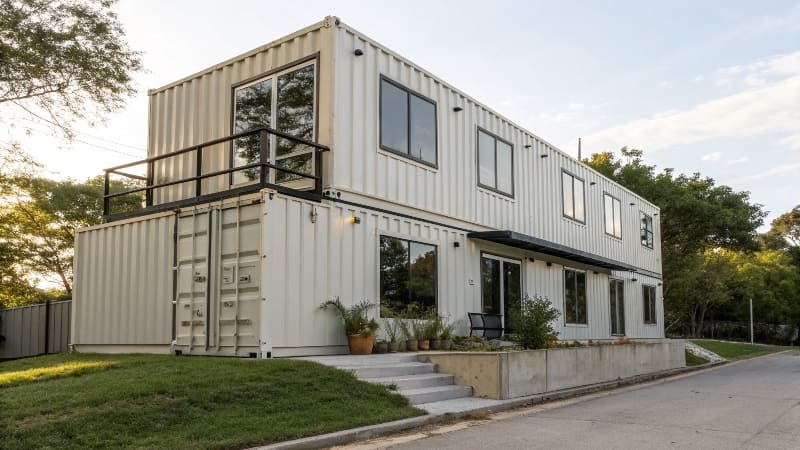
Standard shipping containers were originally engineered for global cargo transportation.
Their rear swing doors support several transport requirements:
- High structural rigidity
- Marine sealing performance
- Cargo security
- Full-width loading access
But modern container applications have expanded far beyond logistics.
Common Roll-Up Door Applications
| Application | Why Roll-Up Doors Are Used |
|---|---|
| Mobile retail shops | Frequent customer access |
| Tool storage containers | Fast daily operation |
| Pop-up restaurants | Partial opening flexibility |
| Site workshops | Space-saving entry |
Compared with standard cargo doors, roll-up systems allow:
- Faster opening and closing
- Adjustable opening height
- Easier single-person operation
- Cleaner storefront appearance
Main Modification Components
| Component | Function |
|---|---|
| Reinforced steel frame | Maintains structural stability |
| Roll-up barrel housing | Stores rolling curtain |
| Side guide rails | Controls movement |
| Weather sealing strips | Improves water resistance |
From my experience, the installation itself is technically straightforward.
The real challenge is balancing:
- Convenience
- Structural integrity
- Weather resistance
- Long-term durability
Container roll-up doors work best when the project prioritizes accessibility more than marine-grade sealing performance.
What Are The Disadvantages Of Roll-Up Doors On Containers?
Roll-up doors on containers reduce structural rigidity, weaken sealing performance, increase maintenance needs, and often provide lower security than standard container cargo doors. Convenience usually comes with trade-offs in durability and protection.
TRUSUS engineering insight: every roll-up door modification changes the original structural and environmental performance of the container.
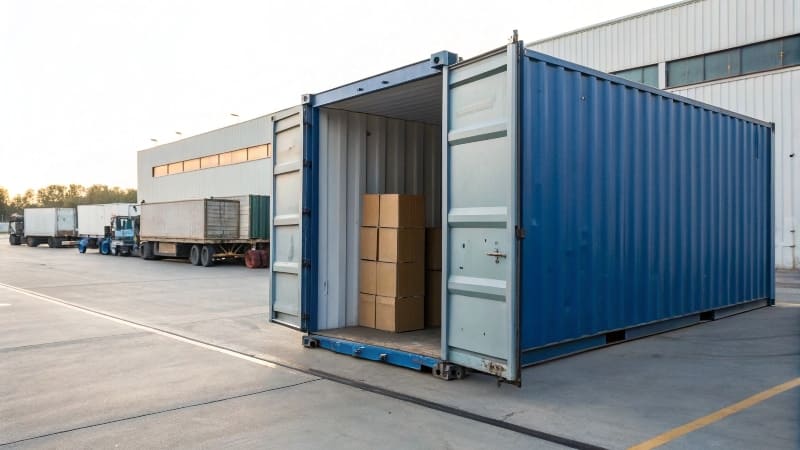
Many buyers focus mainly on operational convenience.
But container structures were not originally designed around roll-up systems.
Main Structural Limitations
| Issue | Impact |
|---|---|
| Door opening enlargement | Reduces torsional strength |
| Additional moving parts | Increases wear |
| Container flex movement | Affects rail alignment |
| Reduced frame stiffness | Weakens overall rigidity |
Standard cargo doors form part of the container’s structural shell.
Replacing them with roll-up systems changes load distribution.
Common Sealing Problems
| Problem | Cause |
|---|---|
| Water leakage | Rail and curtain gaps |
| Air infiltration | Reduced compression sealing |
| Condensation | Thermal bridging |
| Dust intrusion | Lower airtightness |
Compared with factory cargo doors, roll-up systems generally provide weaker weather protection.
This becomes more serious in:
- Coastal environments
- Heavy rain zones
- Cold climates
- Dusty industrial sites
Operational Drawbacks
| Drawback | Result |
|---|---|
| Metal vibration noise | Louder operation |
| Frequent lubrication needs | Higher maintenance |
| Mechanical failure risk | More service calls |
| Reduced theft resistance | Lower security level |
I often explain that roll-up doors are optimized for accessibility, not for marine transport performance.
That distinction is important when customers plan long-term outdoor applications.
Can You Install An Electric Motor Directly On A Container Roll-Up Door?
Yes, electric motors can be installed directly on container roll-up doors using properly matched power systems, mounting brackets, control units, and safety protection devices. Industrial-grade systems are strongly recommended for outdoor container applications.
TRUSUS automation insight: electric roll-up systems succeed when the motor, controls, and container structure are engineered together as one integrated system.
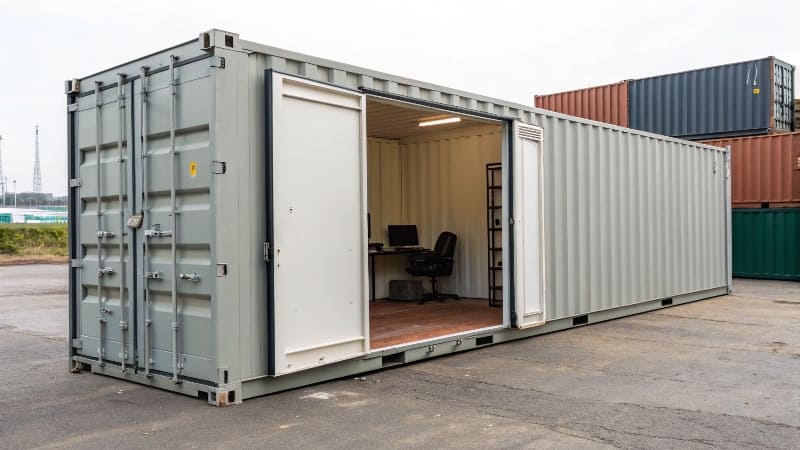
Electric operation has become increasingly popular in modern container projects.
Especially in commercial applications, automation improves convenience and workflow efficiency.
Main Electric System Components
| Component | Function |
|---|---|
| Drive motor | Raises and lowers door |
| Control panel | Local operation |
| Remote controller | Wireless access |
| Limit switches | Prevent over-travel |
| Emergency release | Manual operation during power loss |
Power systems vary depending on application type.
Common Power Configurations
| Power Source | Typical Use |
|---|---|
| 220V grid power | Commercial installations |
| 24V DC solar system | Remote locations |
| Battery backup systems | Emergency operation |
Motor sizing depends on:
- Door dimensions
- Curtain material weight
- Daily operating cycles
- Wind exposure conditions
Important Safety Features
| Safety Feature | Purpose |
|---|---|
| Obstacle sensors | Prevent accidents |
| Auto-stop protection | Motor safety |
| Locking system integration | Security enhancement |
| Grounding protection | Electrical safety |
From my experience, electric roll-up systems can achieve very high reliability when industrial-grade hardware is selected.
However, harsh environments require extra attention to:
- Corrosion protection
- Waterproof wiring
- Salt-air resistance
- Maintenance access
Container environments are often tougher than standard building installations.
That changes the equipment selection process significantly.
Is A Container Roll-Up Door Wind-Rated And Secure?
Container roll-up doors can be wind-rated and reasonably secure when reinforced properly, but they generally do not match the structural strength and security level of standard container cargo doors. Performance depends heavily on system design and reinforcement quality.
TRUSUS performance insight: roll-up door systems can be upgraded significantly, but they still operate within practical engineering limits.
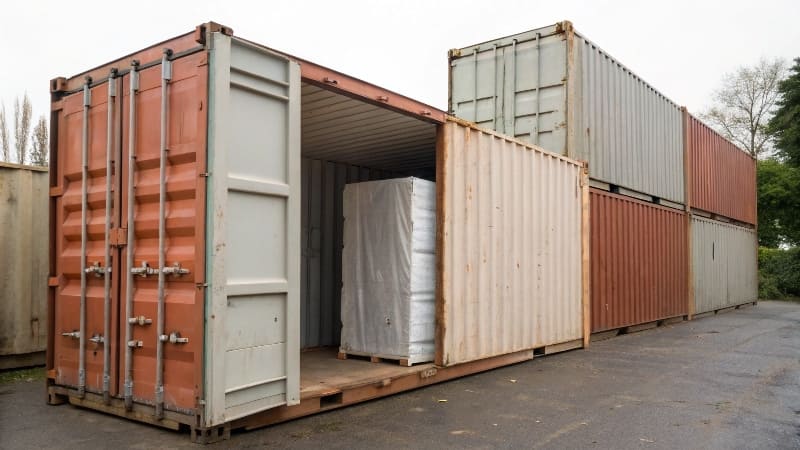
Shipping containers often operate in harsh environments:
- Open construction sites
- Coastal regions
- High-wind industrial areas
- Mobile transport applications
Standard building roll-up doors may not be sufficient in these conditions.
Typical Wind Rating Levels
| Door Type | Approximate Wind Resistance |
|---|---|
| Light-duty roll-up door | Low |
| Commercial-grade roll-up door | Moderate |
| Reinforced industrial door | Higher |
But shipping containers themselves are originally engineered for extremely demanding transport conditions.
That creates a difficult comparison.
Container Cargo Door Advantages
| Feature | Cargo Doors |
|---|---|
| Structural rigidity | Very high |
| Marine sealing | Excellent |
| Theft resistance | Strong |
| Transport durability | Excellent |
Roll-up doors require additional reinforcement to approach similar performance levels.
Reinforcement Methods
| Reinforcement | Benefit |
|---|---|
| Heavy-duty guide rails | Better wind resistance |
| Multi-point locking | Improved security |
| Reinforced steel framing | Structural support |
| Wind bars | Reduced curtain flexing |
Security is another important concern.
Security Comparison
| Security Factor | Roll-Up Door | Cargo Door |
|---|---|---|
| Pry resistance | Moderate | High |
| Cutting resistance | Moderate | High |
| Lock strength | Moderate | Very high |
| Forced entry delay | Lower | Higher |
I usually recommend combining roll-up systems with:
- CCTV monitoring
- Alarm systems
- Smart access control
- Reinforced locking hardware
The industry trend is clear.
Containers are evolving from transport equipment into flexible service spaces.
But every convenience upgrade introduces new engineering compromises that must be understood carefully.
Conclusion
At TRUSUS, I see container roll-up doors as part of the broader transformation from standardized shipping containers into customized functional spaces. Their success depends on balancing accessibility, automation, structural safety, weather resistance, and long-term operational reliability.
