




Do Shipping Container Homes Get Struck by Lightning?
Shipping container homes are no more likely to get struck by lightning than conventional houses. The metal shell acts like a Faraday cage—if lightning hits, the current flows around the exterior and safely to the ground, protecting people inside. The key is proper grounding—electrical grounding rods and bonding systems dissipate energy harmlessly.
Container homes have a steel exterior that conducts electricity efficiently. When grounded correctly, lightning flows over the shell, not through it. modular container structures include integrated grounding points to meet international electrical safety standards.
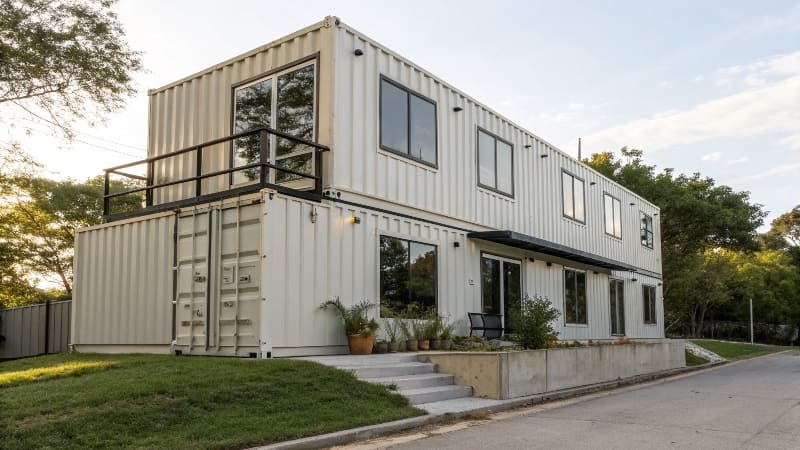
From experience, the danger isn’t the container’s material—it’s neglecting grounding. With grounding rods connected to the base frame and proper electrical bonding, container houses remain safe even in severe storms.
What Is the Advantage of Being Able to Load Containers Directly?
The main advantage of direct loading is time and cost efficiency. Containers can be transferred straight from ship to truck or train without unpacking cargo. This intermodal system reduces handling risk, labor, and damage, forming the backbone of global trade. In construction, it means modular units can move and install quickly.
Direct loading ensures seamless transition between transport modes. Containers retain cargo integrity, cutting damage risk and processing time. In modular construction, this logic becomes fast assembly with ready-fit units.
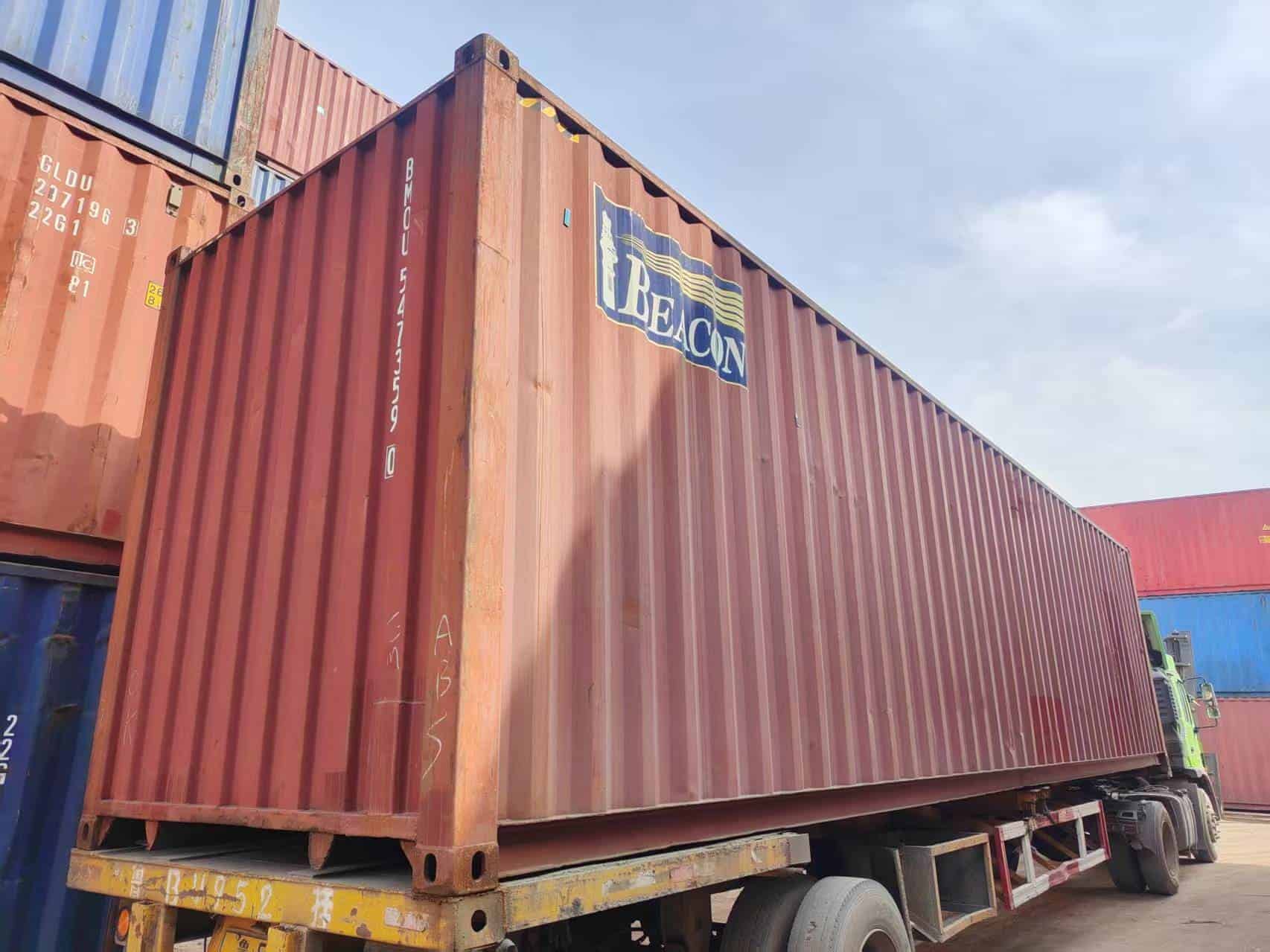
Logistics Efficiency Chain
| Step | Method | Benefit | Outcome |
|---|---|---|---|
| Ship to truck | Direct crane lift | No cargo unpacking | Faster delivery |
| Truck to site | Rapid offload | Reduced downtime | Cost savings |
| Stack or link | Pre-fit design | Scalable structure | Modular construction |
| Service ready | Electrical pre-installed | Quick deployment | Functional unit |
Efficiency begins at port logistics and continues through modular installation.
Building-Level Advantages
| Feature | Description | Effect |
|---|---|---|
| Mobility | Easy relocation | Relocatable housing |
| Standardization | Known dimensions | Predictable design |
| Scalability | Stack and link options | Expandable space |
| Simplicity | Unified interface | Fewer custom fittings |
Standardized geometry enables smooth transport and rapid space creation.
Why Don't We Intentionally Build Tornado-Proof Homes?
Absolute tornado-proof homes are rare because the cost, materials, and engineering exceed realistic needs for most regions. Instead, modern architecture focuses on safe rooms, anchoring methods, and repairable structures. Shipping container homes aim for resilience—maintaining form and recoverability instead of indestructibility.
Tornado-proof design focuses on impact limits, not immunity. container deliver ductile steel framing, allowing controlled deformation rather than catastrophic collapse.
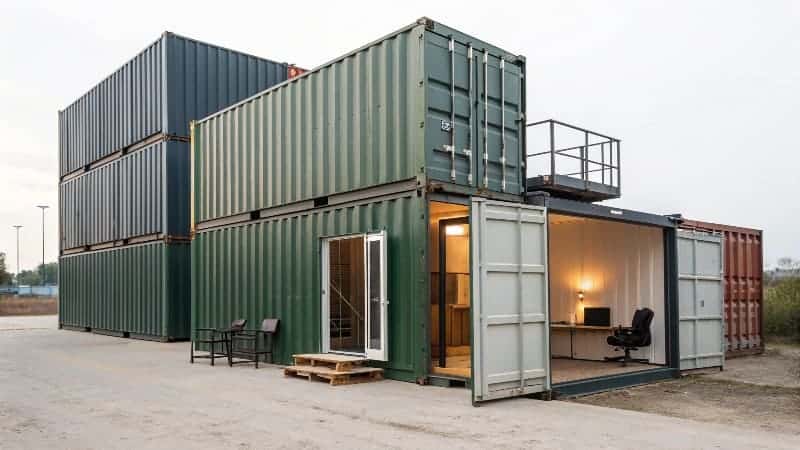
Anti-Storm Design Logic
| Level | Design Focus | Method | Result |
|---|---|---|---|
| Anchoring | Ground attachment | Welded plates + rods | Anti-lift protection |
| Structural ductility | Energy absorption | Reinforced steel shell | Controlled deformation |
| Safe zones | Compartment layout | Interior reinforced core | Occupant safety |
| Repair modularity | Replace damaged cells | Interchangeable panels | Quick rebuild |
Real safety lies in recoverable integrity, not indestructibility.
Cost–Risk Balance
| Goal | Engineering Complexity | Cost Implication |
|---|---|---|
| Tornado-proof | Extremely high | Not feasible |
| Tornado-resistant | Controlled damage | Affordable |
| Quick recovery | Modular system | Practical choice |
What Are the Negatives of Shipping Container Homes?
Shipping container homes, while strong and modular, have drawbacks like poor insulation, condensation risk, and restricted space. Metal walls retain heat and cold easily, requiring thermal modification. Also, fabrication and cutting alter the frame’s integrity if not properly reinforced.
Main limits include thermal performance, condensation control, and layout flexibility. TRUSUS retrofit systems use foam insulation, composite panels, and frame strengthening to counter these issues.
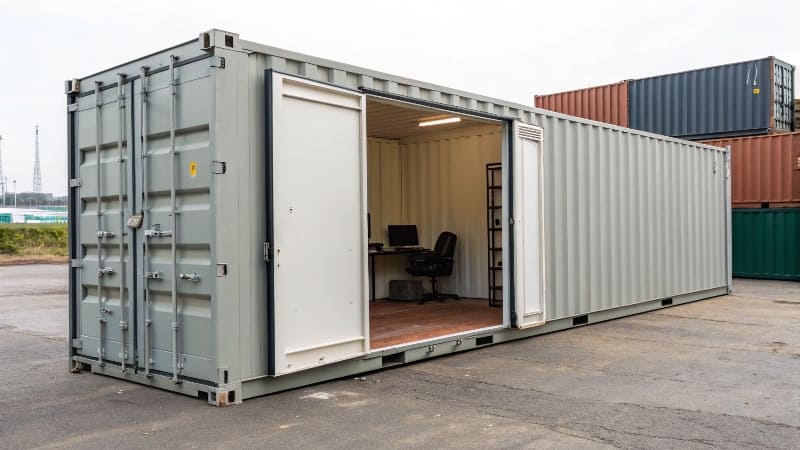
Comfort and Environmental Solutions
| Performance Gap | Comfort Effect | TRUSUS Solution |
|---|---|---|
| Temperature peaks | Overheating or chilling | Insulated cladding system |
| Poor moisture control | Damp interiors | Breathable vapor membrane |
| Noise | Resonance from steel | Acoustic gypsum paneling |
| Aesthetic repetition | Industrial look | Decorative facades |
| Energy cost | Inefficient HVAC | Optimized airflow design |
Container comfort depends on smart thermal and acoustic planning, not just structure.
Conclusion
Shipping container homes are electrically safe, efficiently transported, and resilient, yet not perfect. With proper grounding, they resist lightning damage. Their direct-load capability defines modern logistics efficiency. Tornado-proofing remains unrealistic, but resistance and quick repair are feasible. Common negatives—heat, moisture, and narrow layouts—are engineering challenges, not deal‑breakers. As I see it, container architecture transforms industrial boxes into sustainable, adaptive living systems—bridging strength, mobility, and climate intelligence across environments.
