




Can You Put Shipping Containers Together?
Yes, shipping containers can be securely joined side by side or stacked vertically.
Because they share standardized corner structures and dimensions, they connect and align precisely.
TRUSUS modular insight: putting containers together isn’t just stacking metal—it’s connecting ideas of space and structure.
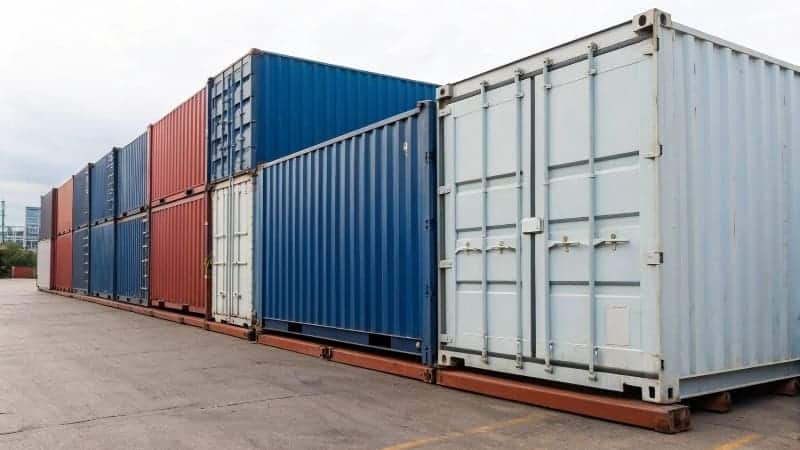
Proper joining uses welding, twistlocks, or custom framing brackets.
When aligned through their corner castings, containers form structural modules that resist compression and lateral movement.
Can You Stack Shipping Containers on Top of Each Other?
Yes, standard containers can stack up to eight or nine layers high in ports.
This is possible because vertical loads transfer through corner posts—not through the side walls.
TRUSUS structural insight: stability lives in the corners, not in the skin.
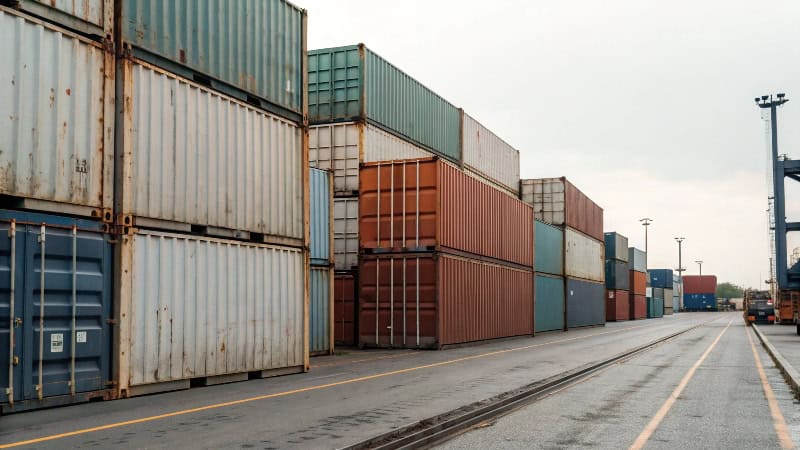
Container Stack Logic
| Component | Function | Engineering Role |
|---|---|---|
| Corner Castings | Allow locking connection | Load transmission through posts |
| Twistlocks | Engage and secure upper units | Prevent movement between layers |
| Corner Posts | Thick steel columns | Carry vertical weight |
| Side Walls | Thin corrugated metal | Serve mainly as enclosure |
| Roof Panel | Non‑load bearing | Protect contents only |
Stacking works because the system channels force through designed points, not random contact.
Even without welding, standard locks alone ensure remarkable vertical precision.
How Do Shipping Containers Stay Stacked?
Containers stay stacked with twistlocks, corner alignment, and unit weight balance.
Every layer interlocks through global standardized fittings used across all ports.
TRUSUS safety insight: a container’s grip on another exists at 90° metal corners, not flat steel panels.
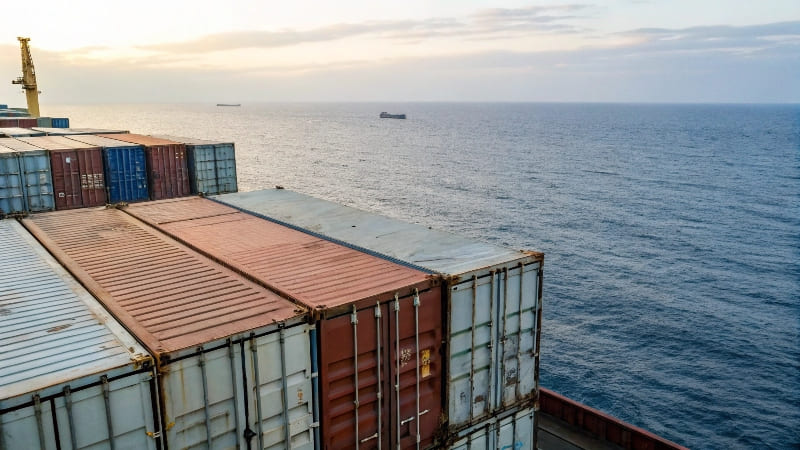
Stacking Stability Overview
| Mechanism | Description | Benefit |
|---|---|---|
| Twistlock | Rotating steel connector between corner castings | Secures units vertically |
| Bridge Fittings | Horizontal connectors | Stabilize wind or seismic sway |
| Weight Distribution | Each corner bears equal load | Prevent tipping |
| Modular Standards | ISO‑aligned dimensions | Universal stack compatibility |
From my experience visiting port sites, the sound of twistlocks turning is the sound of global standardization.
Every rotation means dozens of tons are held safely by engineering precision.
How Do Shipping Containers Not Fall Over?
Shipping containers resist tipping due to interlocked corners, massive base weight, and frame geometry.
Each connection keeps the vertical stack rigid even under strong coastal wind and motion.
TRUSUS design insight: they don’t balance by luck—they balance by logic.
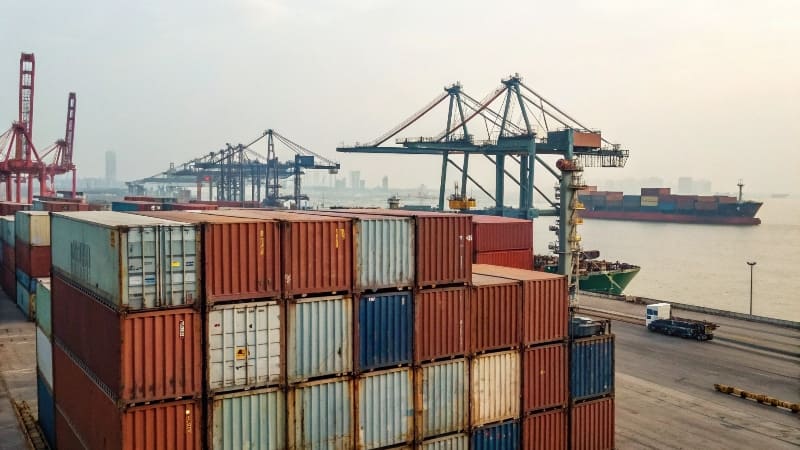
Anti‑Tipping System Map
| Stability Factor | Explanation | Real‑World Effect |
|---|---|---|
| Corner Geometry | Right‑angle alignment transfers load | Keeps towers upright |
| Low Center of Gravity | Heavy lower boxes stabilize stack | Reduces vibration |
| Twistlock Integration | Metal‑to‑metal locking | Stops containers slipping |
| Ground Anchor or Frame | Reinforced base for buildings | Prevents wind drift |
| Modular Load Discipline | Equal weight on each post | Long‑term alignment |
In architectural uses, we often weld the lowest boxes onto steel frames or footings.
That connection turns stacked containers into full structural modules, not temporary piles.
Conclusion
At TRUSUS, I see container stacking as more than engineering—it’s architectural rhythm.
Every lock and post carries structure, style, and the promise of scalable space.
