




Can Tornadoes Pick Up Shipping Containers?
When people ask me if a tornado can pick up a shipping container, I know they’re picturing massive steel boxes flying through the air. It sounds impossible—but physics says otherwise.
Yes, strong tornadoes can lift or overturn shipping containers, especially empty ones. An EF3 or stronger tornado (winds above 200 km/h or 135 mph) can generate enough uplift and rolling force to displace an unsecured container easily. Anchoring, weight, and terrain all affect whether it moves or stays.
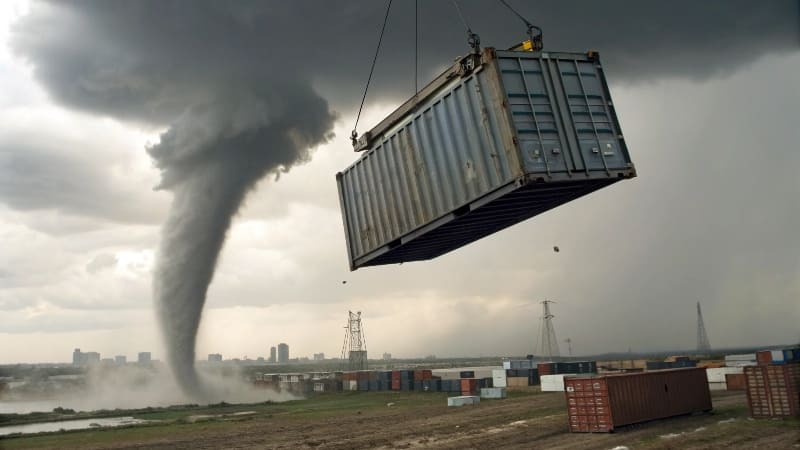
From my commercial yard experience, I’ve seen empty containers roll several meters in strong storms. Their strength protects them from breaking, but lack of anchorage makes them vulnerable to displacement.
How Much Wind Can a Shipping Container Withstand?
The next question people ask is about structural limits—how much wind can a container itself withstand before deforming.
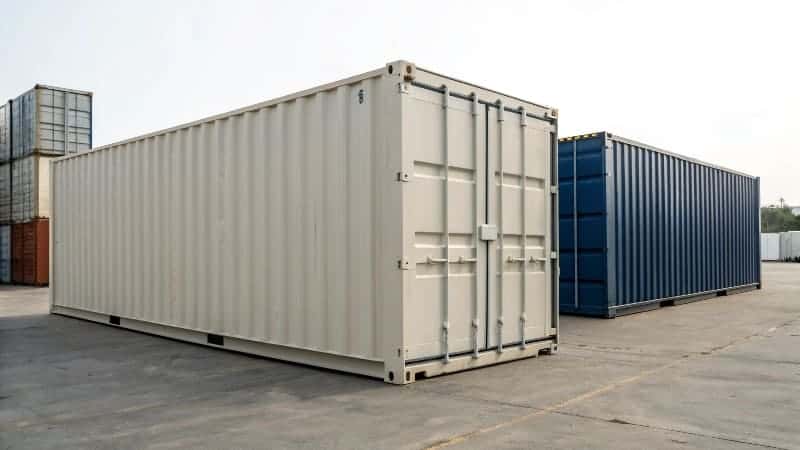
A standard shipping container can resist wind speeds up to 160–180 km/h (100–110 mph) without structural damage when properly secured. The corrugated steel and reinforced corner posts handle pressure well, but lateral stability drops when not anchored.
Comparing Wind Load Resistance
I've tested containers against simulated wind loads for clients using engineering data and field setups. Strength isn’t the issue; anchoring and design are.
| Container Type | Anchored Wind Resistance | Unanchored Wind Resistance | Notes |
|---|---|---|---|
| 20-ft Standard | Up to 110 mph (177 km/h) | Around 70 mph (113 km/h) | Most stable when weighted down |
| 40-ft Standard | 100–105 mph (160–169 km/h) | Around 65 mph (105 km/h) | Large surface area increases roll risk |
| Modified Container (with doors/windows) | Varies | Often <90 mph (145 km/h) | Openings reduce rigidity |
| Stacked Containers | Up to 90 mph when locked | Varies widely | Must use interlocks and ground anchors |
The steel itself remains intact beyond those speeds, but movement begins when wind finds leverage under or around the box. Proper base connections transform the container from a movable object into a fixed structural unit.
Can a Shipping Container Home Withstand a Tornado?
Many clients building container homes ask this question hoping for a simple yes.
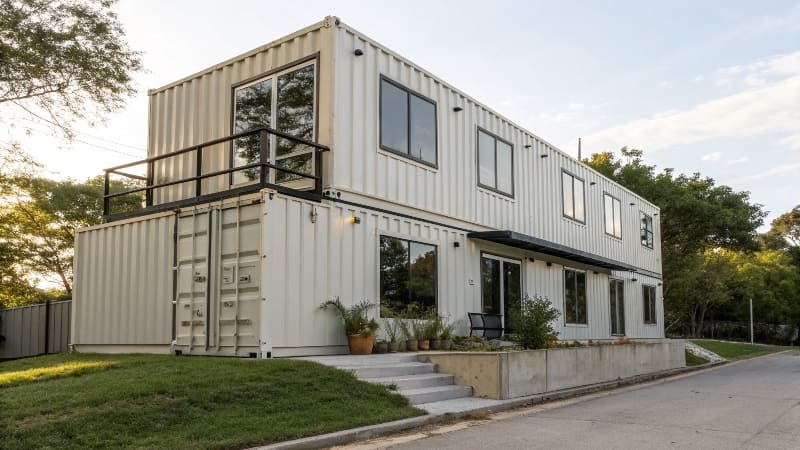
A well-built and anchored container home can withstand moderate tornado winds, but not direct hits from EF3 or stronger storms. To survive safely, the system must include reinforced foundations, interlocked modules, and aerodynamic layouts that reduce wind uplift.
Building for Tornado Resilience
In my own projects, we always emphasize system thinking—the container’s steel shell helps, but the survival comes from how that shell interacts with the ground, anchors, and drainage.
| Design Factor | Purpose | Effect in Tornado |
|---|---|---|
| Anchored Concrete Foundations | Prevents displacement or flipping | Keeps entire structure grounded |
| Interlocking Corners | Links multiple containers | Distributes wind load evenly |
| Low Profile Design | Minimizes wind resistance area | Reduces uplift and overturning |
| Reinforced Roof and Sealed Corners | Avoids structural breach | Keeps internal stability |
| Safe Room Core (extra steel layer) | Personal protection zone | Withstands debris impact |
A single container structure can resist tornado edges if reinforced, but full preparation for extreme EF4–EF5 winds calls for underground shelters or hybrid systems combining containers with reinforced concrete.
Are Shipping Containers Flood Proof?
When tornadoes are discussed, floods follow—and many assume steel containers automatically resist water damage.
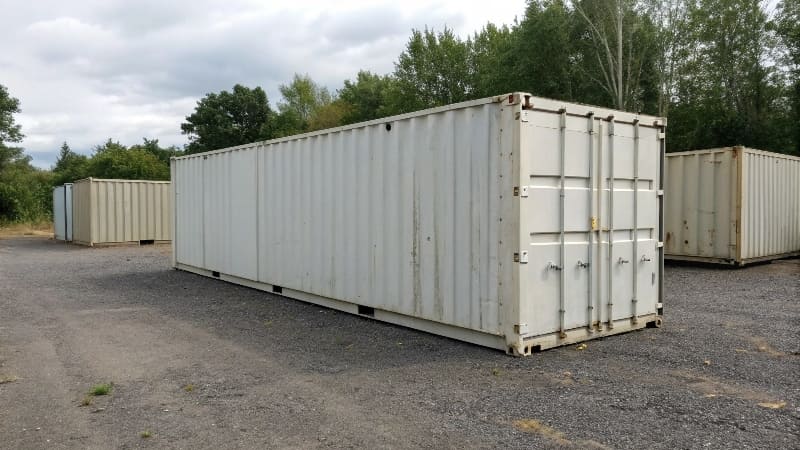
Shipping containers are water-resistant but not flood proof. Their welded steel walls prevent seepage, yet they are vulnerable to buoyant force. With enough water depth, an empty or lightly loaded container can float away or even tip.
Understanding Flood Behavior and Prevention
I’ve seen flooded yards where sealed containers floated several meters downstream. Preventing movement means integrating anchorage and elevation systems.
| Factor | Risk | Recommendation |
|---|---|---|
| Buoyancy | Floating in deep water | Anchor through reinforced footings |
| Corrosion Exposure | Long-term water damage | Use protective coatings and drainage |
| Interior Leakage | Seam rust or vent entry | Seal all vents above flood level |
| Foundation Scour | Soil erosion around supports | Build on raised piles or concrete slabs |
Containers protect contents well against rain but require anchoring and elevation systems to resist true flood conditions. Think of them as strong—but not self-sufficient—until combined with proper site design.
Conclusion
Tornadoes can move even the toughest containers if they aren’t anchored. A typical steel unit withstands up to 160–180 km/h winds securely fixed, but no standalone box can resist direct tornado impact. Container homes need firm foundations and interlocked layouts to ensure safety. Floods bring floating risks, not leaks—anchorage and elevation solve that. In short, containers are tough materials, but true resilience comes from system design, not just steel strength.
