




Can Container Units Be Easily Transported by Barge to Remote Sites?
Container units can be easily transported by barge to remote sites using standard 20ft and 40ft containers on deck cargo barges, with typical capacity of 12-24 TEU per barge depending on size, requiring proper lashing and weight distribution, suitable for inland waterways with minimum 2.5m depth and accessible loading facilities at destination sites.
Standard container dimensions allow efficient barge loading with multiple units per single voyage. Deck cargo barges accommodate 12-24 TEU capacity depending on barge size and waterway restrictions. Weight distribution requires proper placement to maintain stability and prevent listing during transport. Lashing systems secure containers against wave action and movement using standard ISO container corner fittings. Waterway access needs minimum 2.5m depth for loaded barges with suitable landing facilities for crane offloading.
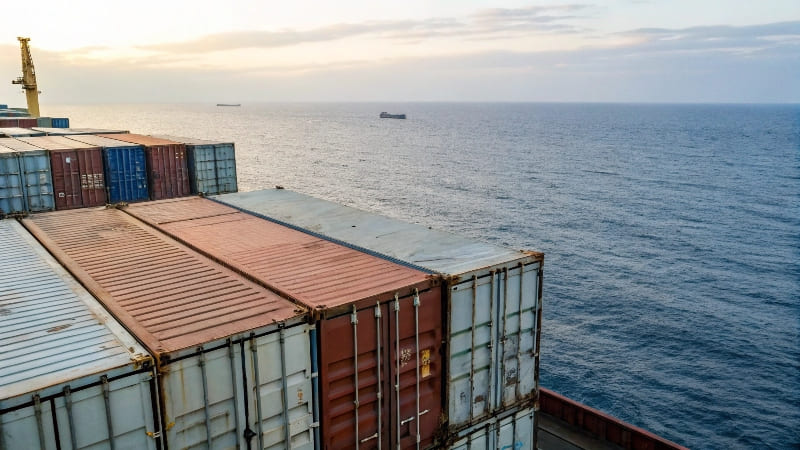
From my extensive experience with container logistics, I've found that barge transport offers the most cost-effective solution for delivering multiple units to remote inland locations.
Best Materials for Spill-Proof Industrial Container Flooring?
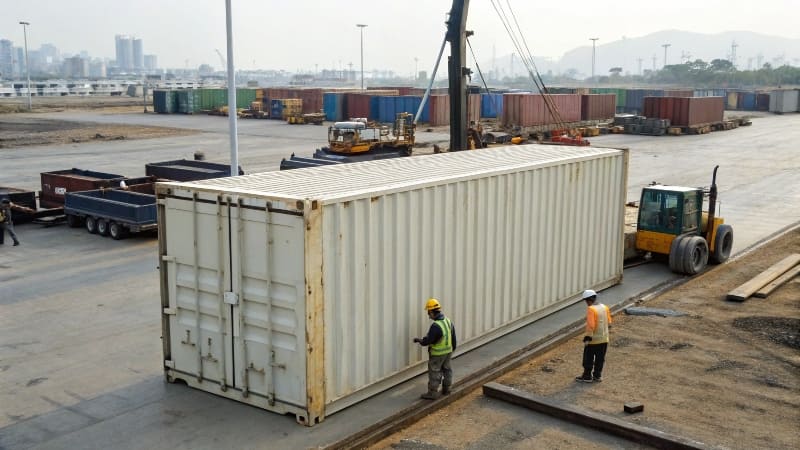
Best materials for spill-proof industrial container flooring include epoxy-coated steel plates, polyurea spray coatings over existing floors, or specialized vinyl sheet systems with welded seams, providing chemical resistance, easy cleanup, and containment capacity, with secondary containment curbing and drainage systems integrated for maximum spill protection and environmental compliance.
Epoxy-coated steel plates provide maximum durability with chemical resistance and impact protection for heavy industrial applications. Polyurea spray coatings create seamless surfaces over existing container floors with excellent adhesion and abrasion resistance. Vinyl sheet systems with welded seams offer flexible installation and easy maintenance for moderate chemical exposure. Secondary containment requires raised curbing around floor perimeter and integrated drainage to collection points. Environmental compliance demands proper material selection based on specific chemicals and regulatory requirements.
Flooring Material Performance Comparison
Chemical resistance and durability characteristics of different spill-proof flooring options.
| Flooring Material | Chemical Resistance | Durability Rating | Installation Cost | Maintenance Level |
|---|---|---|---|---|
| Epoxy-Coated Steel | Excellent | Very High | High | Low |
| Polyurea Coating | Very Good | High | Medium | Low |
| Vinyl Sheet System | Good | Medium | Medium | Medium |
| Polyurethane Coating | Good | Medium | Low | Medium |
| FRP Panels | Excellent | High | High | Low |
Epoxy-coated steel provides best overall performance for harsh industrial environments.
Secondary Containment Requirements
Regulatory compliance specifications for industrial container spill containment systems.
| Containment Feature | Specification | Regulatory Basis | Design Standard | Testing Requirement |
|---|---|---|---|---|
| Containment Volume | 110% of largest vessel | EPA 40 CFR 264 | Professional engineer | Leak testing |
| Curb Height | 150mm minimum | Local fire code | Structural design | Load testing |
| Drainage System | Positive slope 1:100 | Environmental regs | Hydraulic design | Flow verification |
| Access Prevention | Locked valve system | Safety regulations | Fail-safe design | Operational testing |
| Material Compatibility | Chemical resistance chart | MSDS requirements | Laboratory testing | Field verification |
Professional engineering required for regulatory compliance and system certification.
Chemical Compatibility Matrix
Material selection guide for specific industrial chemical exposure conditions.
| Chemical Category | Epoxy Steel | Polyurea | Vinyl System | FRP Panel | Recommended Application |
|---|---|---|---|---|---|
| Petroleum Products | Excellent | Very Good | Fair | Excellent | Fuel storage/transfer |
| Acids (pH 1-6) | Good | Excellent | Good | Excellent | Chemical processing |
| Bases (pH 8-14) | Very Good | Good | Very Good | Good | Cleaning operations |
| Solvents | Fair | Good | Excellent | Very Good | Paint/coating work |
| Hot Liquids (80°C+) | Excellent | Very Good | Poor | Good | Process heating |
Material selection must match specific chemical exposure conditions.
Requirements for Blast-Proof Container Offices on Offshore Sites?
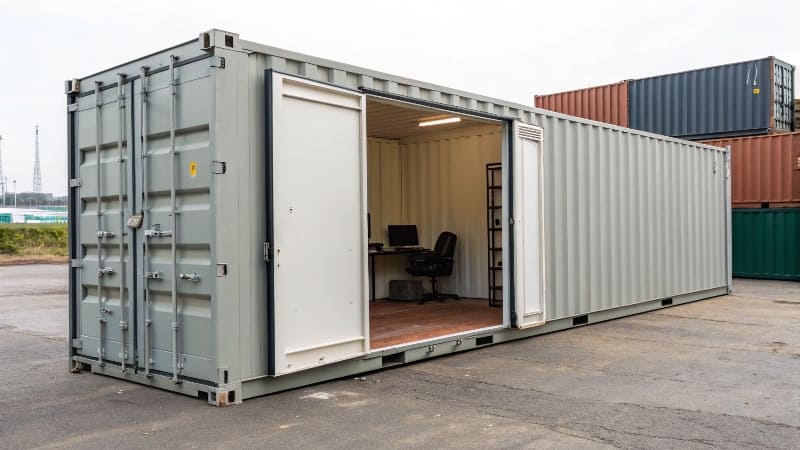
Blast-proof container offices for offshore sites require reinforced steel construction meeting API RP 752 standards with blast-resistant windows, pressure relief panels, reinforced door frames, interior blast-resistant walls, specialized ventilation systems with automatic shutoffs, and certification for 1.0 bar blast overpressure with personnel protection to ensure worker safety in petrochemical environments.
Reinforced steel construction meets API RP 752 standards for blast resistance with enhanced structural design and blast calculations. Blast-resistant windows use laminated safety glass in reinforced frames to prevent fragmentation during pressure events. Pressure relief panels provide controlled failure points to prevent structural collapse while protecting occupants. Interior blast walls create progressive collapse resistance and safe refuge areas within office spaces. Specialized HVAC systems include automatic isolation valves and blast dampers to prevent gas ingress.
Blast-Resistance Specifications
Engineering requirements for offshore blast-proof container office construction.
| Safety Feature | Specification | Design Standard | Testing Requirement | Certification |
|---|---|---|---|---|
| Blast Overpressure | 1.0 bar resistance | API RP 752 | Full-scale testing | Third-party |
| Wall Construction | 12mm steel minimum | DNV-GL standard | Material testing | Class society |
| Door Systems | Blast-resistant frames | API RP 752 | Dynamic testing | Manufacturer |
| HVAC Protection | Auto-isolation valves | NFPA 69 | Functional testing | Fire authority |
Third-party certification required for offshore safety compliance.
Structural Design Requirements
Enhanced construction specifications for blast-resistant container offices.
| Construction Element | Standard Requirement | Blast-Proof Enhancement | Load Rating | Safety Factor |
|---|---|---|---|---|
| Wall Thickness | 3mm steel | 12mm reinforced | 1.0 bar overpressure | 2:1 minimum |
| Frame Reinforcement | Standard welding | Full penetration welds | Dynamic loading | 3:1 minimum |
| Foundation System | Pad foundations | Anchored to platform | Uplift resistance | 4:1 minimum |
| Roof Construction | Standard profile | Blast-resistant design | Pressure loading | 2.5:1 minimum |
| Floor System | Plywood decking | Steel plate flooring | Fragment protection | Not applicable |
Enhanced welding and material specifications critical for blast resistance.
Life Safety Systems
Critical safety systems for blast-proof offshore container offices.
| Safety System | Requirement | Response Time | Backup System | Maintenance Interval |
|---|---|---|---|---|
| Gas Detection | H2S/LEL monitoring | <10 seconds | Battery backup | Monthly |
| Emergency Lighting | 90-minute operation | Instant activation | Dual power source | Quarterly |
| Communication | Two-way radio system | Always available | Satellite backup | Weekly |
| Emergency Escape | Two exit routes | Immediate access | Blast-resistant doors | Daily inspection |
| Fire Suppression | FM-200 clean agent | <10 seconds discharge | Manual activation | Semi-annual |
Redundant safety systems essential for offshore survival.
How to Design a Multi-Container Base Camp for 50 Workers?
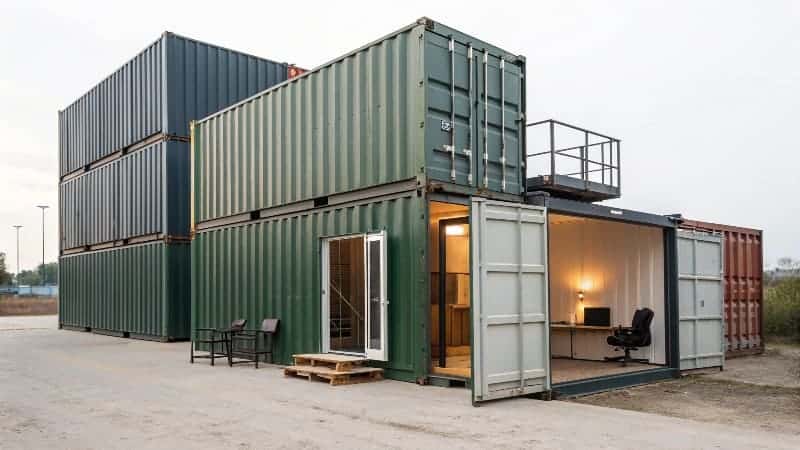
Design a multi-container base camp for 50 workers using 15-20 containers arranged in functional zones: accommodation (8 containers for sleeping quarters), administration (2 containers for offices), dining (2 containers for kitchen/mess hall), recreation (1 container), utilities (2 containers for power/water), with central courtyard layout, covered walkways, and modular expansion capability for efficient camp operations.
Accommodation containers provide sleeping quarters for 6-8 workers each using bunk bed configurations with individual storage and privacy partitions. Administration zones include management offices, meeting rooms, and communication centers in dedicated containers. Dining facilities combine commercial kitchen and mess hall areas with proper ventilation and food storage. Recreation areas provide common spaces for off-duty activities and worker welfare. Utility containers house power generation, water treatment, and waste management systems.
Container Allocation by Function
Functional distribution and sizing requirements for 50-worker base camp design.
| Function Area | Container Count | Capacity per Unit | Total Capacity | Special Requirements |
|---|---|---|---|---|
| Sleeping Quarters | 8 units | 6-8 workers | 48-64 beds | Privacy, ventilation |
| Administration | 2 units | Office space | Management/HR | Communication systems |
| Kitchen/Dining | 2 units | 50+ meals | Food service | Commercial equipment |
| Recreation | 1 unit | Common area | Social space | Entertainment systems |
| Utilities | 2 units | Camp services | Power/water/waste | Technical equipment |
| Storage | 1 unit | Equipment/supplies | General storage | Climate control |
| Medical | 1 unit | First aid | Basic healthcare | Emergency equipment |
| Laundry | 1 unit | Washing facilities | Personal hygiene | Water/drainage |
Total 18 containers provide complete camp functionality for 50 workers.
Site Layout Planning
Optimal arrangement strategies for multi-container base camp efficiency and safety.
| Layout Consideration | Design Strategy | Safety Benefit | Operational Advantage | Cost Impact |
|---|---|---|---|---|
| Central Courtyard | U-shaped arrangement | Emergency assembly | Social interaction | Minimal |
| Covered Walkways | Weather protection | Safe movement | Year-round access | Medium |
| Functional Zoning | Grouped by use | Fire separation | Operational efficiency | Low |
| Utility Distribution | Centralized systems | Maintenance access | Cost effectiveness | High savings |
| Expansion Areas | Reserved space | Future growth | Scalable operations | Planning cost |
Functional zoning improves operations and emergency response.
Infrastructure Requirements
Essential services and utilities for 50-worker container base camp operations.
| Infrastructure System | Capacity Requirement | Backup Provision | Distribution Method | Maintenance Schedule |
|---|---|---|---|---|
| Electrical Power | 150kW generator | 100% backup | Underground cables | Weekly inspection |
| Water Supply | 5000L/day | Storage tanks | Pressurized system | Daily testing |
| Wastewater Treatment | 4000L/day capacity | Holding tanks | Gravity/pump system | Monthly service |
| Communication | Satellite internet | Radio backup | Distributed network | Continuous monitoring |
| Waste Management | Segregation/collection | Contract service | Central collection | Daily pickup |
Redundant systems ensure continuous operations in remote locations.
Regulatory Compliance
Health, safety, and accommodation standards for worker base camps.
| Compliance Area | Regulation | Standard Required | Inspection Frequency | Certification |
|---|---|---|---|---|
| Accommodation Standards | Local labor law | 4m² per person minimum | Monthly | Labor authority |
| Fire Safety | NFPA codes | Detection/suppression | Quarterly | Fire marshal |
| Health Facilities | WHO guidelines | Medical/sanitation | Weekly | Health inspector |
| Food Service | HACCP standards | Commercial kitchen | Daily | Food authority |
| Environmental | Local EPA rules | Waste management | Semi-annual | Environmental agency |
Regular inspections ensure compliance and worker welfare.
Conclusion
Container units can be easily transported by barge to remote sites using standard 20ft and 40ft containers on deck cargo barges with 12-24 TEU capacity, requiring proper lashing and weight distribution for waterways with minimum 2.5m depth. Best materials for spill-proof industrial container flooring include epoxy-coated steel plates, polyurea spray coatings, or vinyl sheet systems with welded seams providing chemical resistance and containment capacity with secondary containment curbing. Blast-proof container offices for offshore sites require reinforced steel construction meeting API RP 752 standards with blast-resistant windows, pressure relief panels, and certification for 1.0 bar blast overpressure with specialized ventilation systems. Multi-container base camp for 50 workers uses 15-20 containers arranged in functional zones including accommodation (8 containers), administration (2 containers), dining (2 containers), utilities (2 containers) with central courtyard layout and covered walkways. Success with container applications requires understanding that standard dimensions enable efficient multi-modal transport including barge delivery to remote locations, industrial applications demand specialized flooring systems with proper chemical resistance and containment features, offshore safety requires engineered blast-resistant construction meeting strict regulatory standards, and base camp design needs systematic functional zoning with proper infrastructure and regulatory compliance, making container systems highly versatile solutions for diverse industrial and residential applications when properly engineered and configured.
