




Are Shipping Containers Durable?
When customers ask me about container durability, they're often surprised by how robust these structures really are.
Shipping containers are extremely durable, designed to withstand harsh ocean transport conditions including heavy loads, salt spray, extreme temperatures, and violent storms. A standard container can last 15-20 years in marine service and 50+ years with proper maintenance on land.
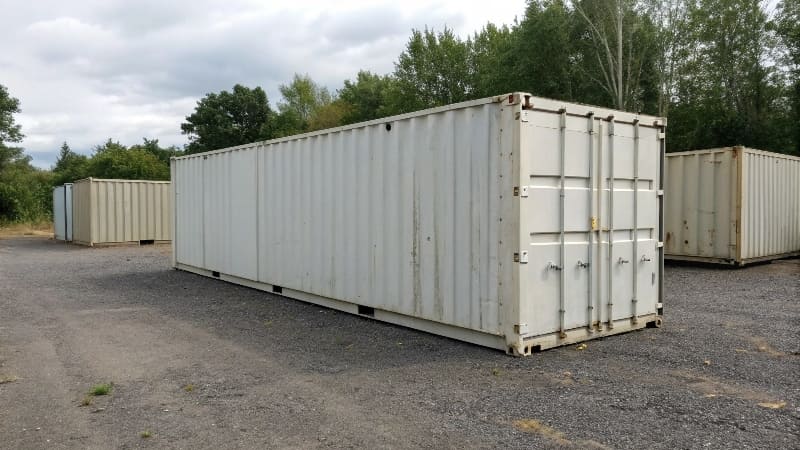
From years of selling both new and used containers, I've learned that their durability often exceeds customer expectations—these aren't just metal boxes, but engineered structures built to international safety standards.
Can Bullets Penetrate a Shipping Container?
This question reveals concerns about security and protection that go beyond typical container applications.
Small caliber bullets can penetrate container walls, but larger caliber rounds may not fully penetrate the corrugated steel construction. Container walls are 14-16 gauge steel (1.6-2.0mm thick), providing moderate ballistic resistance but not designed for security applications.

Ballistic Resistance Analysis
Through security testing data and field reports, container ballistic performance varies significantly by ammunition type and impact angle.
| Ammunition Type | Penetration Result | Wall Damage | Security Rating |
|---|---|---|---|
| .22 Caliber | Full penetration | Small hole | Minimal protection |
| 9mm Handgun | Full penetration | Moderate damage | Limited protection |
| .45 ACP | Full penetration | Larger hole | Limited protection |
| 5.56 Rifle | Full penetration | Significant damage | Poor protection |
| .308 Rifle | Full penetration | Major damage | Poor protection |
| 12 Gauge Slug | Partial/full penetration | Severe deformation | Variable protection |
Corrugated construction provides some deflection and energy absorption, but containers should not be considered bulletproof without additional armor plating.
How Much Wind Can a Shipping Container Withstand?
Wind resistance depends on container condition, foundation, and anchoring systems.
Properly anchored shipping containers can withstand winds up to 175+ mph (Category 5 hurricane), but unanchored containers become dangerous in winds over 50-60 mph. The key factor is foundation design and secure anchoring, not just container strength.
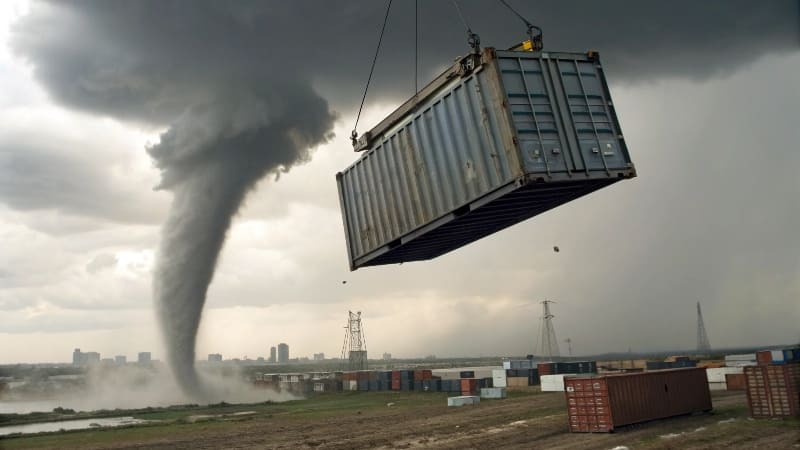
Wind Resistance Factors
Through hurricane damage assessments and engineering analysis, several factors determine actual wind performance.
| Condition | Wind Resistance | Critical Factors | Safety Measures |
|---|---|---|---|
| Properly Anchored | 175+ mph | Foundation, anchor bolts | Professional engineering |
| Weighted Only | 80-100 mph | Container weight, shape | Additional ballast needed |
| Empty/Unanchored | 50-60 mph | Light weight, sail effect | Immediate anchoring required |
| Modified Container | Variable | Openings, structural changes | Structural assessment needed |
| Stacked Configuration | Reduced | Interlocking, foundation | Special twist-lock systems |
Foundation and anchoring are more critical than container strength—even the strongest container becomes a projectile without proper securing.
What Is the Best Foundation for a 40 Foot Shipping Container?
Foundation selection affects container longevity, stability, and usability for various applications.
Concrete pier foundations are best for 40-foot containers, providing proper drainage, level support, and long-term stability. This system elevates the container above ground moisture while distributing weight evenly across all four corners plus center supports.
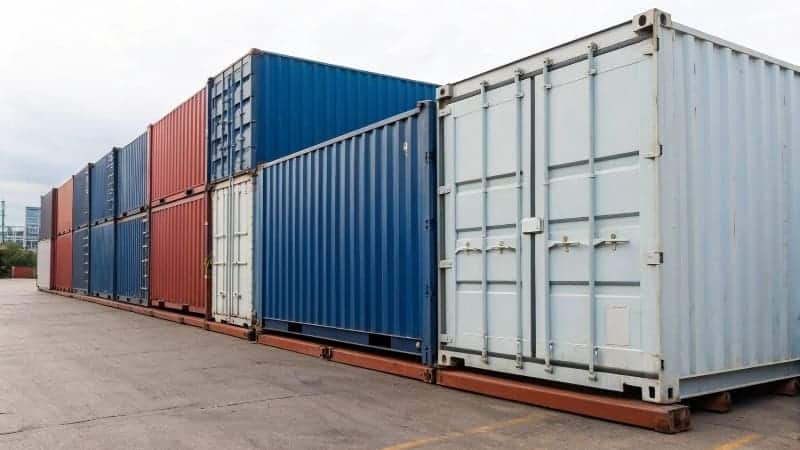
Foundation Comparison Analysis
Through installation experience and long-term performance monitoring, certain foundation types consistently outperform others.
| Foundation Type | Cost Range | Durability | Drainage | Best Application |
|---|---|---|---|---|
| Concrete Piers | $2,000-4,000 | Excellent (50+ years) | Excellent | Permanent installations |
| Concrete Slab | $3,000-6,000 | Excellent | Good with drains | High-traffic areas |
| Gravel Pad | $500-1,500 | Good (10-15 years) | Very good | Temporary/budget builds |
| Ground Contact | $0-500 | Poor (5-8 years) | Poor | Storage only, not recommended |
| Steel Piers | $1,500-3,000 | Very good | Excellent | Quick installation needed |
| Concrete Footings | $2,500-5,000 | Excellent | Excellent | Engineered/permitted structures |
Proper support spacing requires piers at all four corners plus center supports to prevent container floor deflection and structural stress.
Foundation Installation Requirements
Based on successful installations and engineering recommendations, specific requirements ensure optimal performance.
| Support Location | Load Requirement | Spacing | Foundation Size |
|---|---|---|---|
| Corner Posts | 60,000 lbs each | Must align precisely | 24"x24"x8" minimum |
| Center Supports | 40,000 lbs each | 8-10 feet from corners | 18"x18"x6" minimum |
| Frost Protection | Below frost line | Local code requirement | Varies by climate |
| Drainage | 6" minimum elevation | Around entire perimeter | Gravel/french drain |
Professional surveying ensures level installation—containers require precise leveling within 1/4 inch to prevent structural stress and door operation problems.
Conclusion
Shipping containers are extremely durable, designed for harsh marine environments and capable of lasting 50+ years with proper maintenance. While small caliber bullets can penetrate container walls, the corrugated steel construction provides moderate protection not found in typical buildings. Properly anchored containers withstand hurricane-force winds up to 175+ mph, but unanchored units become dangerous in winds over 50-60 mph. Concrete pier foundations are optimal for 40-foot containers, providing proper drainage, support distribution, and long-term stability at reasonable cost. Success with container applications depends more on proper installation and foundation work than on container strength alone, making professional planning essential for safe, durable installations.
