




Are Shipping Container Walls Load Bearing?
Shipping container walls are not load bearing.
Structural strength comes from the corner posts and frame beams that form a unified stress path.
TRUSUS structural insight: stability sits in the frame, not the skin.
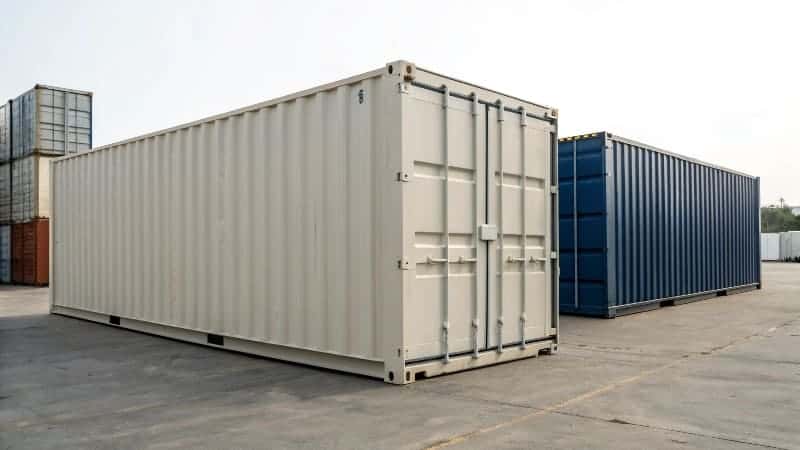
The corrugated steel walls resist minor pressure but do not carry vertical loads.
Cutting large windows or doors changes stress flow, so builders must reinforce corners or add beams when converting containers into rooms or offices.
What Is the Best Way to Load a Shipping Container?
The best way is balanced and secure loading.
Heavy cargo should be placed near the floor and center line to keep the container stable during lifting or transport.
TRUSUS logistics insight: balance first, volume second.
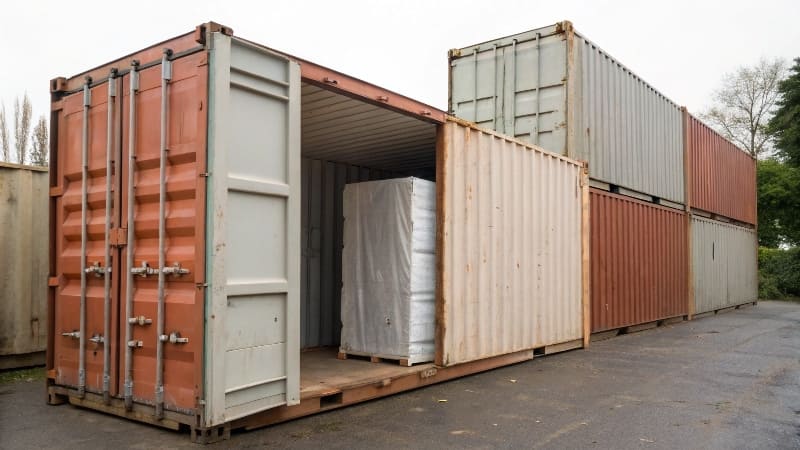
Container Loading Principles
| Principle | Description | Effect | Risk if Ignored |
|---|---|---|---|
| Weight distribution | Place heavy items low and centered | Prevents tipping | High during crane lift |
| Load restraint | Use straps or locking bars | Avoid item movement | Cargo damage |
| Floor load capacity | Even pressure along floor | Preserves structure | Floor bending |
| Stacking alignment | Follow side and roof strength path | Smooth load transfer | Uneven stress on panels |
I remember inspecting a misloaded unit years ago—one side bowed under unequal weight, forcing us to re‑stack midnight shipments. Since then, I always tell clients: “Load placement is engineering, not guessing.”
Which Shipping Container Is Used to Transport or Store Heavy Items?
Heavy‑duty containers with reinforced floors and stronger side beams are used for heavy items.
They include steel‑plated floors and additional lifting points.
TRUSUS equipment insight: engineered strength is an asset class in itself.
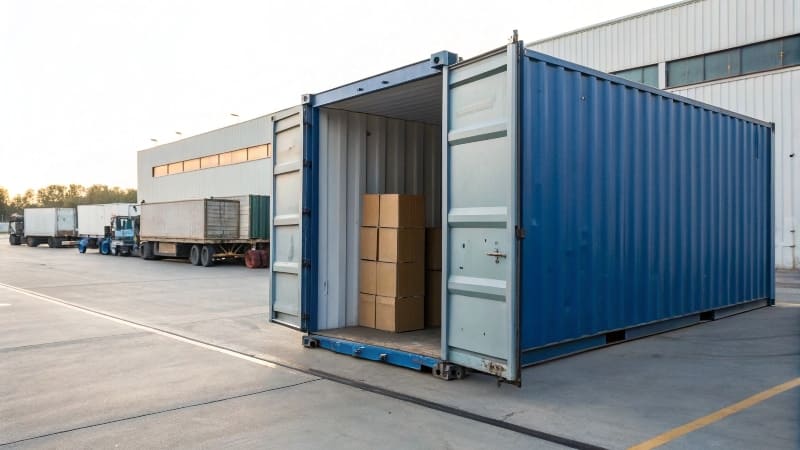
Heavy Container Matrix
| Type | Purpose | Structure | Common Use |
|---|---|---|---|
| Standard 20ft | General cargo | Regular steel floor | Everyday goods |
| Heavy‑duty 20ft | Industrial loads | Reinforced frame | Machinery, stone |
| Open‑top | Over‑height cargo | Removable roof | Construction equipment |
| Flat‑rack | Oversize weight | Heavy platform + upright posts | Vehicles or modules |
I worked with a manufacturer who shipped a full cement mixer inside a reinforced 20‑foot box. The container looked ordinary, but its upgraded chassis made every ton of weight predictable and safe.
What Is the Best Way to Move a 40‑Foot Shipping Container?
Use professional lifting equipment—cranes, side‑loaders, or hydraulic trailers.
Dragging or pushing risks twisting the frame or bending flooring beams.
TRUSUS mobility insight: movement defines value when done with precision.

Moving Strategy Table
| Method | Equipment | Advantage | Limitation |
|---|---|---|---|
| Crane lift | Top corner locks | Precise control | Requires space |
| Side‑loader | Hydraulic arms | Quick handling | Limited access width |
| Tilt‑bed trailer | Sliding platform | Cost‑efficient | Needs ground clearance |
| Skid system | Rollers or tracks | Site moving | Short‑distance only |
During a relocation project, I saw workers gently tilt a 40‑foot unit off a flatbed using hydraulic arms. Watching its balance remain perfect convinced me that logistics can be graceful engineering.
Conclusion
At TRUSUS, I see every container not as a simple steel box but as a calibrated structure.
Its strength lies in precision, its movement in balance, and its value in lasting trust.
